
Steve Hoffman Discusses Quantum Technology Adoption in U.S. Defense
THE SO WHAT
Defense talking openly about “operationalizing” quantum is a signal that the window between lab demos and field experimentation is narrowing. Dual-use startups in sensing, secure comms, and optimization should map defense pathways now—requirements are being written while the tech is still fluid.
READ THE SOURCE
MORE FROM THE WIRE
 Deep & Emerging Tech
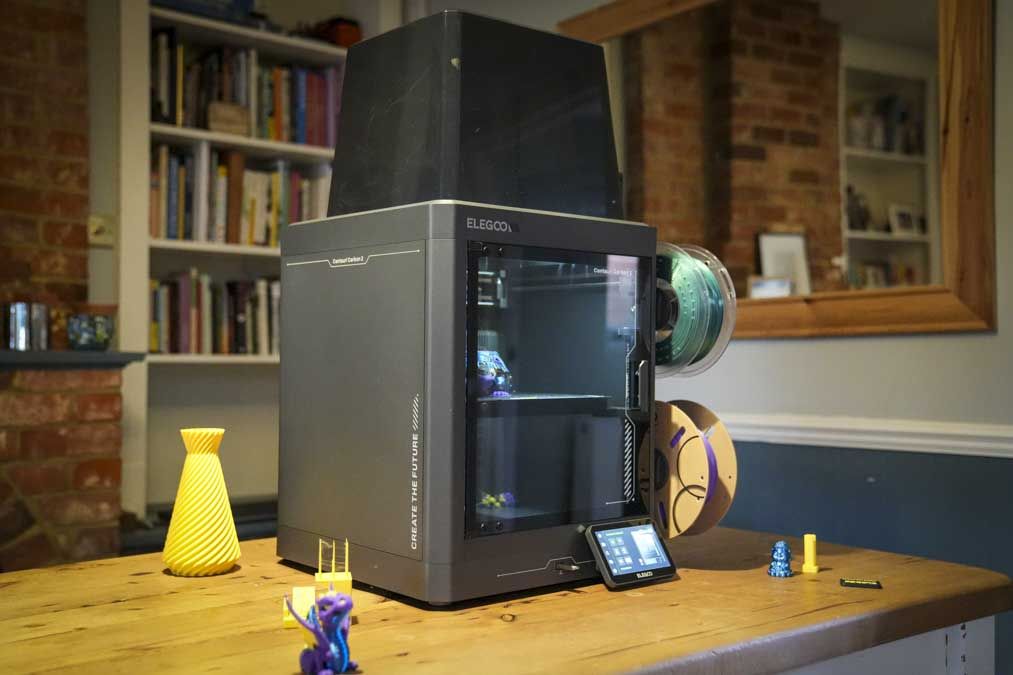
'One of the best-value 3D printers on the market': Elegoo's Centauri Carbon 2 Combo gets a limited-time price drop — and it's our favorite budget multi-color 3D printer to pass our workshop tests
Multi-color, workshop-tested 3D printing at budget pricing compresses the gap between hobbyist and professional prototyping. Hardware teams can push more iteration in-house instead of waiting on outsourced runs.
 Deep & Emerging Tech
Italy Courts IonQ as Rome Seeks Deeper U.S. Quantum Ties
Italy courting IonQ and other U.S. quantum players is another data point that quantum is being treated as strategic infrastructure, not just research. If you're in Europe with quantum-adjacent IP or workloads, expect more government-backed partnership programs and incentives to surface.
 Deep & Emerging Tech
Xanadu and AMD Launch Backline for Low-Latency Quantum-Classical Computing
A Xanadu–AMD open platform for low-latency quantum–classical communication is about shrinking the control loop, not just raw qubit counts. Early adopters should start treating quantum as a co-processor design problem and involve HPC architects, not just physicists.
 Deep & Emerging Tech
The data storage crisis has a biological fix. It starts by making less DNA, not more.
The core insight from DNA storage research is that most data is cold and over-specified—templates and reuse matter more than raw capacity. Infra leaders should be asking where they can standardize and deduplicate data schemas now, instead of assuming cheaper storage will bail them out later.