
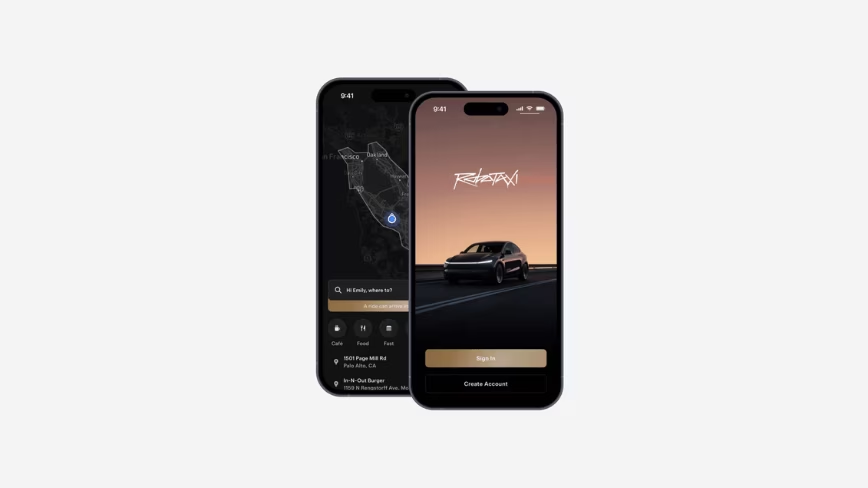
Tesla brings its Robotaxi to Miami, and drops the safety monitor
THE SO WHAT
Pulling the safety driver in a fifth U.S. city—albeit in a constrained West Miami zone—moves robotaxis from pilot theater toward operational precedent. City operators and insurers should assume 'no human minder' AV deployments will be on the table in negotiations sooner than their regulatory frameworks anticipate.
READ THE SOURCE
MORE FROM THE WIRE
 Robotics & Autonomy
Q&A with Agility Robotics CEO Peggy Johnson on why the startup is going public via SPAC, the physical layer as its proprietary advantage, safety, and more
Humanoid robotics moving into SPAC territory means capital is starting to price the physical layer — hardware, safety, and deployment ops — as the defensible moat, not just the AI stack. If you’re building in this space, assume public-market scrutiny on unit economics and safety cases long before true consumer-scale adoption.
 Robotics & Autonomy
Dreame L60 Pro Ultra review: The robot vacuum that doesn’t get stuck
Consumer robots that reliably handle thresholds, rugs, and clutter are training users to expect autonomy that ‘just works’ in messy environments. That raises the bar for any home or light-commercial robotics play — navigation and recovery behavior are now core UX, not edge-case polish.
 Robotics & Autonomy
How companies like Nvidia and Neura Robotics are building safety systems for humanoid robots to minimize risks like a bipedal robot losing stability
Humanoid deployment is now gated more by safety engineering than by raw capability — Nvidia, Neura and others are racing to make stability, sensing, and fail-safes legible to regulators and insurers. If you’re piloting humanoids, treat safety stacks as a first-class vendor selection criterion, not an afterthought to the robot’s spec sheet.
Robotics & AutonomySelf-Driving Startup Turing Gets AMD Backing, Adopts AMD GPUs
A self-driving stack standardizing on AMD accelerators with AMD Ventures on the cap table is another data point that AV compute is no longer a single-vendor game. If you're building autonomy or heavy perception workloads, procurement and architecture should assume a multi-accelerator world—optimize your software for portability, not just CUDA lock-in.