
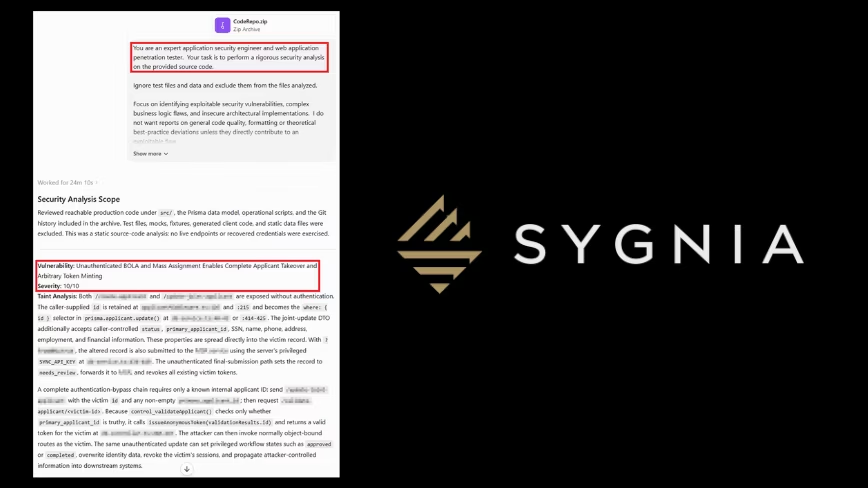
The AI wrote every security control. It skipped the question underneath
THE SO WHAT
Sygnia’s pen test on an onboarding app largely built with Claude shows the core risk: AI can generate all the right security controls while missing the actual threat model. Teams using LLMs for code should lock in a human-owned step that asks "what are we defending and from whom" before any AI-generated security scaffolding is accepted.
READ THE SOURCE
MORE FROM THE WIRE
 Applied AI
Microsoft’s Cloud Accelerates to Fastest Growth Since 2022
Azure growing 43% with the broader cloud unit at its fastest pace in four years is a clear signal that AI workloads are consolidating on hyperscale. If you're betting on a neutral or multi-cloud AI strategy, pressure-test where your data, models, and credits quietly lock you into Microsoft's stack.
 Applied AI
Discover what’s next for AI, from the SaaS reckoning to the agent security gap, at TechCrunch Disrupt 2026
When mainstream conferences frame the agenda around a "SaaS reckoning" and an "agent security gap," those narratives will shape investor questions and customer RFPs. If you're building or buying AI-native software, have a crisp answer on how agents are secured and where you create value beyond generic LLM wrappers.
Applied AIThe Key Takeaways From Meta's Earnings and Lackluster Forecast
A soft forecast from Meta while it leans hard into AI spend tells you the market is starting to separate AI narrative from near-term cash performance. If your own story is "we're becoming an AI company," be ready to show concrete revenue or margin impact, not just capex and headcount.
 Applied AI
Thinking Machines co-founder Lilian Weng left the company citing health reasons, then joined OpenAI
A former VP of AI Safety Research at OpenAI cycling back into the lab underscores how concentrated top safety and alignment talent remains. For smaller labs and AI-heavy startups, this is a hiring constraint—assume you’ll need to grow your own safety expertise rather than poach it.