

The FCC bans all robot vacuums made outside the U.S.
THE SO WHAT
Treat this less as a vacuum story and more as a template for how regulators may handle foreign mobile robots and sensors in homes and offices. If your product has cameras, mics, or mapping and crosses borders, assume data residency and hardware origin will become gating constraints, not afterthoughts.
READ THE SOURCE
MORE FROM THE WIRE
 Robotics & Autonomy
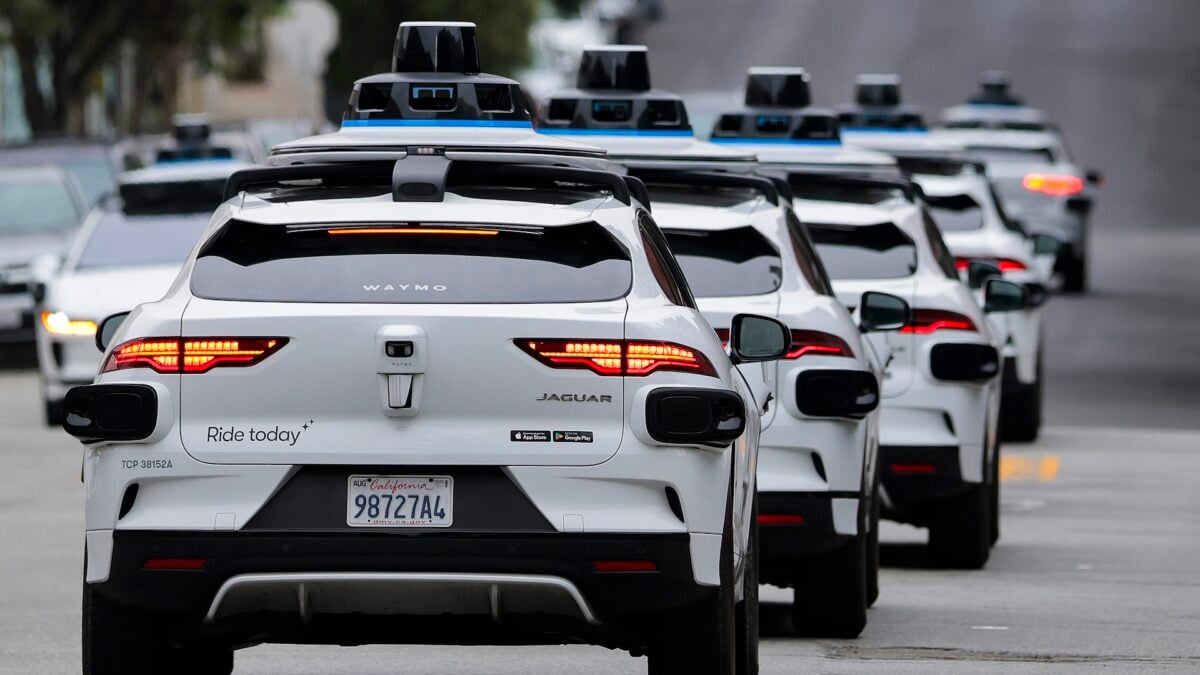
Waymo Returns to Freeways After Recall
Regulators allowing Waymo back onto Phoenix freeways after a recall is a data point that AV incidents are being managed, not halted. If you operate in logistics or mobility, assume freeway autonomy keeps inching forward and start mapping where human-driven contracts are most exposed first.
 Robotics & Autonomy
The FCC's ban on foreign "advanced robotic devices" includes any new ground-based, software-controlled wireless robot over 4.4 pounds, including robot vacuums
A broad FCC ban that sweeps in any foreign ground robot over 4.4 pounds—down to vacuums—turns autonomy hardware into a regulatory and supply-chain risk category overnight. If your roadmap touches connected robots, you now need a country-of-origin and radio stack strategy, not just a BOM.
 Robotics & Autonomy
Ukraine military to get DragonFire-style drone-killing lasers within months
Drone-killing lasers arriving at the front within months—even with real-world ranges shrinking from 5 km to under 1—show how quickly directed-energy moves from demo to deployment under pressure. Any organization relying on drones, from logistics to inspection, should start modeling contested airspace as the default, not the edge case.
 Robotics & Autonomy
BMW is cutting 8,000 jobs and handing its cars’ brains to Qualcomm
BMW cutting 8,000 jobs while outsourcing its compute stack to Qualcomm is the auto playbook in one move—shed internal cost, rent intelligence from a specialist. If you build complex hardware, decide now which “brains” you truly need to own versus which can live on a supplier’s roadmap for a decade.