
The tech world is selling you an AI apocalypse or an AI assistant. Just don't forget it's selling you something.
THE SO WHAT
Apocalypse vs assistant is the same funnel—both narratives are designed to move you toward a product, a policy, or a platform. As a buyer, separate your actual workflow needs from the story you’re being sold, and force vendors to quantify outcomes instead of vibes.
READ THE SOURCE
MORE FROM THE WIRE
 Applied AI
Apple weighs its first server since the Xserve, and as always, Nvidia may hold the key
If Apple re-enters servers and still has to lean on Nvidia for interconnect and system design, it underscores how strong Nvidia’s grip is on AI data center topology. For operators, the practical question is less “Apple or x86” and more whether any new entrant can meaningfully change your GPU supply and networking constraints in the next 24 months.
 Applied AI
OpenAI Releases New GPT-6 Sol and Luna Models, Sells Them as Mini-Astras
If cost-effectiveness is now the headline benchmark, model choice becomes a unit economics decision, not a leaderboard decision. Teams should be re-running ROI math on every workload—smaller, cheaper “mini-Astra” style models may be good enough for most production use, freeing budget for data, evals, and integration.
 Applied AI
Bitdefender built a VPN that hides your AI agent, not you
Security vendors are starting to treat AI agents as first-class network actors that need their own protection and obfuscation. If you’re rolling out agents that transact or browse on behalf of users, you now have to think about agent fingerprinting, targeting, and isolation as part of your threat model.
 Applied AI
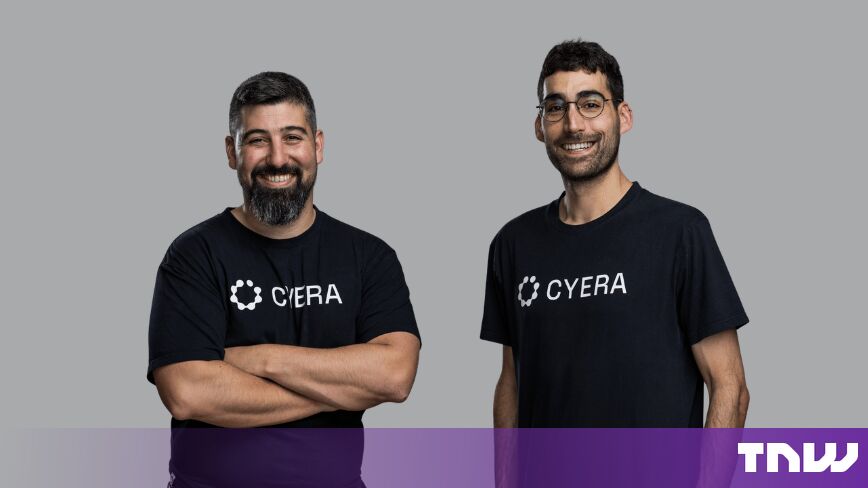
Cyera has now raised $1.4bn this year to police AI agents
If Cyera can raise $1.4B in a year on the thesis of "policing" what AI agents see and do, governance is becoming its own infrastructure layer, not a feature. If you're piloting agents in a Global 2000 context, budget for dedicated controls and observability rather than assuming your existing data security stack is enough.