
The three layers of agentic AI security: A defense-in-depth architecture for autonomous agents
THE SO WHAT
Security vendors are formalizing agentic AI as a three-layer problem—environment, orchestration, and model—rather than just app-level guardrails. If you’re piloting agents that can take real actions, you now have a reference architecture excuse to push for budget and cross-team ownership.
READ THE SOURCE
MORE FROM THE WIRE
 Applied AI
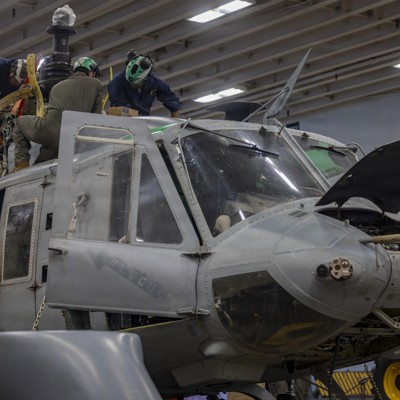
Can AI help the Marines simplify sustainment in the Pacific?
If the Marines can get a theater-level “logistics decision engine” working, AI moves from staff toy to operational nerve system—routing fuel, ammo, and spares across contested Pacific distances in real time. Defense and heavy-industry operators should read this as validation that multi-echelon supply optimization is now an AI-native problem, not a spreadsheet problem.
 Applied AI
An Anthropic researcher just gave us a peek at self-improving AI
Automated systems that can iteratively reduce misaligned behaviors across 10 benchmarks without hurting overall performance point toward continuous self-tuning models, not static releases. For operators, that raises the bar on evals and governance—your risk surface becomes the training loop itself, not just the model snapshot.
 Applied AI
Well it's about time - McKinsey report says AI is 'on the road to ROI' at last
McKinsey calling AI “on the road to ROI” and highlighting agentic AI is a signal that board decks will now demand hard numbers, not pilots and promises. If you own an AI line item, come prepared with 6–12 month payback stories and a plan to move from copilots to agents in at least one workflow.
 Applied AI
James Pond Creator Says He Hopes Publishers of Legacy Collection ‘Choke on an AI-Generated Fishbone’
Creator backlash against AI-generated assets in legacy IP is a reminder that contracts and rights frameworks are lagging the tooling. If you’re touching old catalogs with new generative workflows, get explicit on consent and compensation before you ship.