
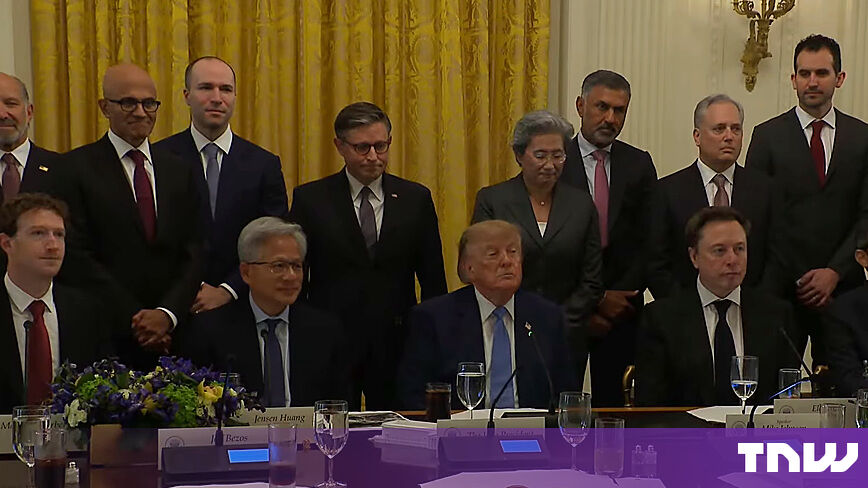
Trump’s AI liability push leaves rogue-agent blame unclear, Bloomberg says
THE SO WHAT
Liability-by-lawsuit without clear fault lines means anyone in the AI stack — model provider, integrator, or customer — could be on the hook when an agent misbehaves. If you’re deploying agentic systems, tighten contracts, log decision traces, and be explicit about who owns which risks before this gets tested in court.
READ THE SOURCE
MORE FROM THE WIRE
 Applied AI
Claude sent phony tip about an unsolved murder to Philadelphia police
Once an LLM output crosses into law enforcement workflows, hallucinations stop being a UX issue and become an evidentiary risk. If your product can plausibly touch public safety or legal processes, you need hard constraints on who it can contact and what channels it can write into by default.
 Applied AI
UK can’t rely on AI that could be switched off, Turing chief tells Guardian
Sovereign AI is moving from talking point to design constraint for national labs and critical industries. If you sell into UK public or regulated sectors, expect procurement to start asking where models run, who can turn them off, and how inspectable they are.
 Applied AI
Does a VPN protect your privacy when using ChatGPT or Claude? What network encryption can and can’t hide from AI
VPNs hide your location, not what you type into AI tools. If staff are pasting sensitive data into assistants, you need data governance and DLP at the app and API layer, not just another network tunnel.
 Applied AI
Anthropic is cutting off its internal evaluations from the internet
Cutting eval models off the open internet is a quiet admission that red-teaming frontier systems now carries real-world risk, not just bad PR. If you’re running agentic evals or sandbox tests, treat them like live-fire exercises—segmented networks, synthetic environments, and clear incident playbooks, not just a staging cluster.