
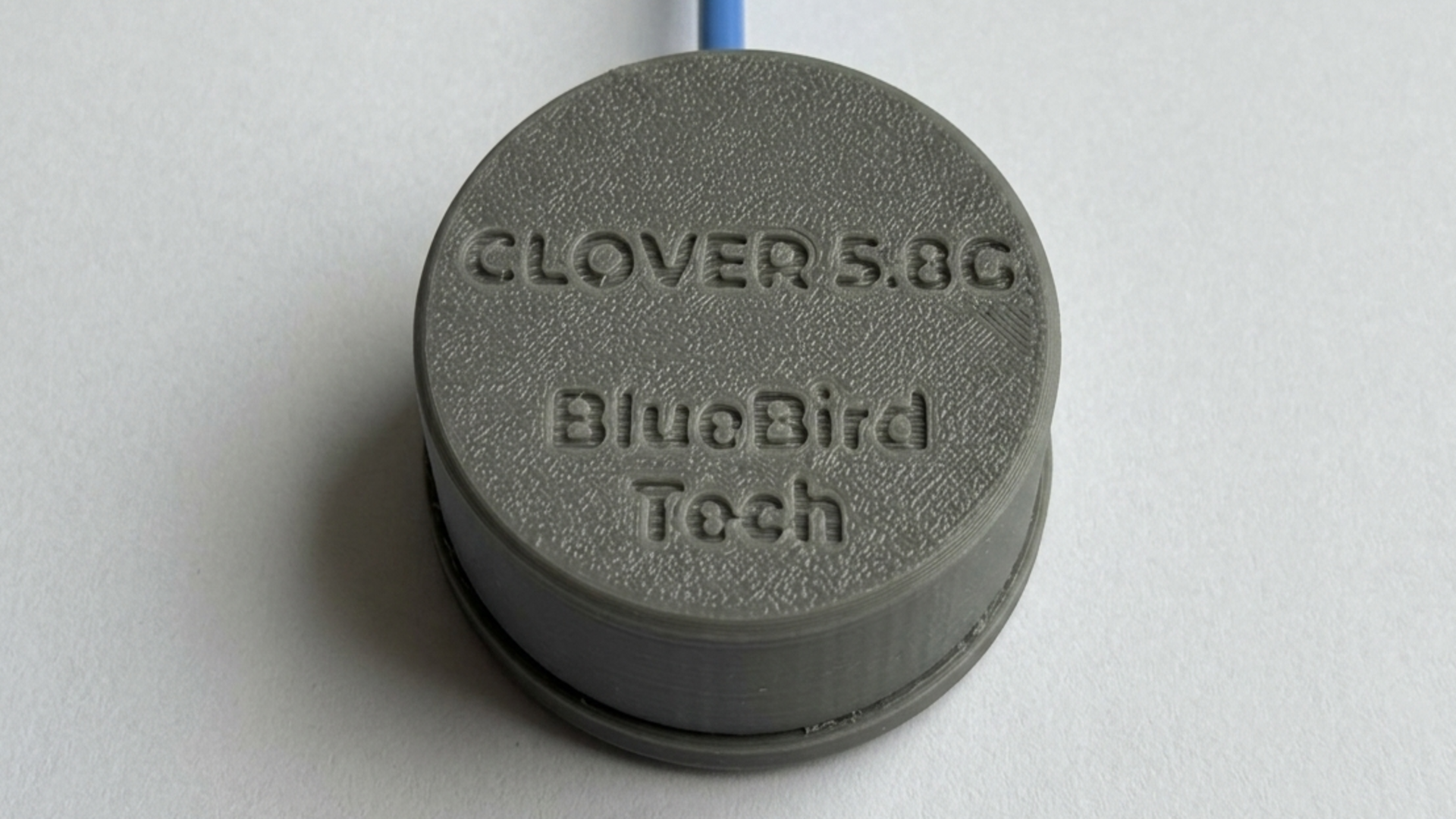
Ukraine's new secret drone weapon could be this 25g antenna, capable of transmitting over an incredible range
THE SO WHAT
Ultra-light, long-range comms hardware like BlueBird Tech’s 25 g antenna shifts more capability to the edge — small drones and ground robots can operate farther from operators and infrastructure without bulky payload tradeoffs. Defense and industrial robotics teams should assume comms range and resilience will improve faster than airframes, and design autonomy and tactics around that curve.
READ THE SOURCE
MORE FROM THE WIRE
 Robotics & Autonomy
The US Navy finally has a carrier with a built-in center for drones and other unmanned aircraft
A carrier designed around MQ-25 and unmanned ops signals that drones are now a core aviation asset, not an add-on. Defense and dual-use vendors should assume persistent demand for autonomy stacks, secure comms, and fleet management that can scale across both manned and unmanned platforms.
 Robotics & Autonomy
LG’s humanoid robot arrives in 2027, running Nvidia’s Isaac GR00T
A 2027 LG humanoid built on Jetson Thor, Isaac GR00T, and Halos is another data point that general-purpose robots are being productized on Nvidia’s full-stack template. If you run large physical operations, start mapping where a biped could slot into workflows so you’re ready to pilot when OEMs show up with off-the-shelf platforms.
 Robotics & Autonomy
Bloomberg This Weekend | Conditions Aboard the USS Abraham Lincoln, Up Close with a Drone Swarm
Mainstream coverage of carrier operations and drone swarms normalizes autonomous systems as standard military infrastructure, not exotic tech. For dual-use and adjacent vendors, the bar on reliability, security, and explainability will be set by defense expectations, then bleed into commercial contracts.
 Robotics & Autonomy
Why robots that can’t communicate naturally won’t be adopted
If robots can’t hear and communicate in human terms, they stall at pilot — not because of capability, but because they don’t fit existing workflows. Robotics teams should treat audio perception and conversational interfaces as core stack elements, not nice-to-have UX polish.