
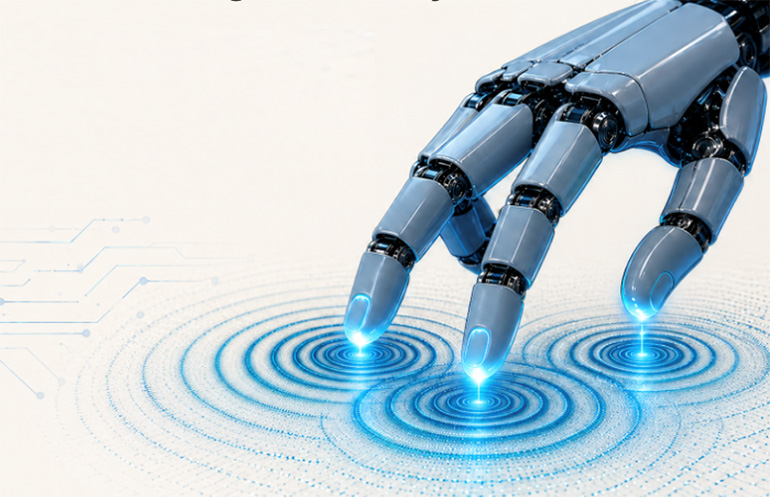
Ultrasound offers a scalable path to tactile intelligence for physical AI
THE SO WHAT
Ultrasound-based tactile sensing for robotic hands is a bet that perception can scale without the wear and tear of traditional skins and force sensors. If you’re evaluating physical AI vendors, start asking how their tactile stack will hold up under millions of cycles and what that does to your maintenance model.
READ THE SOURCE
MORE FROM THE WIRE
 Robotics & Autonomy
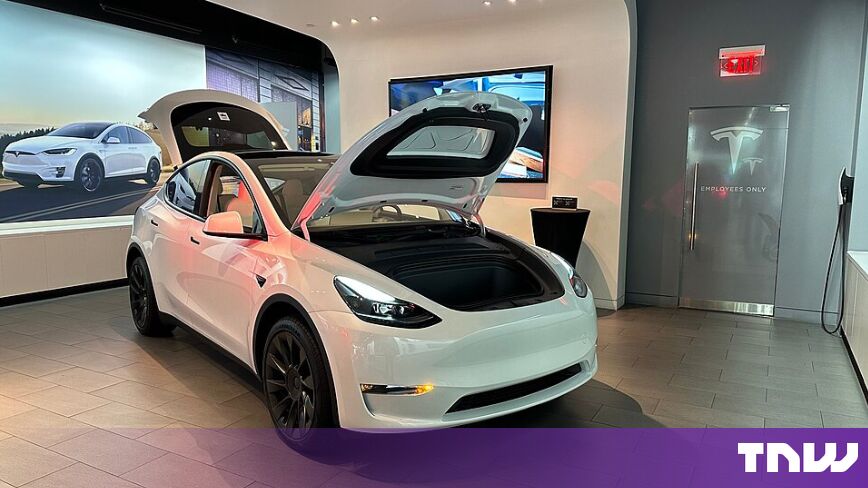
Lawmaker demands federal action after 43 Tesla drivers were filmed asleep at the wheel
Regulators are being handed viral evidence that consumer autonomy is outrunning supervision — 43 filmed sleeping drivers is an easy narrative hook for tighter rules. If your product relies on human-in-the-loop safety, assume the bar for monitoring, logging, and intervention proof will rise, not just for cars but for any semi-autonomous system.
 Robotics & Autonomy
Ukraine's army is turning Humvees into remote-controlled vehicles connected by Starlink
Turning US-supplied Humvees into Starlink-linked ground robots is a template for rapidly converting legacy fleets into low-cost, semi-disposable unmanned systems. Defense and industrial operators should be mapping where bolt-on teleop kits can extend asset life and reduce human exposure long before full autonomy is ready.
 Robotics & Autonomy
One brick at a time: How Monumental uses robotics to build walls
Robots laying walls brick-by-brick moves construction automation from demos to specific, repeatable tasks. If you run projects with high masonry or repetitive build elements, it’s time to map which segments could be handed to robotics within a 2–3 year window.
 Robotics & Autonomy
Popular cloud storage provider iDrive wants to power the next generation of autonomous vehicles with a $1,500 learning platform
A $1,500 licenseable driver-assistance stack is a shot at commoditizing the lower tiers of autonomy for OEMs that missed the in-house wave. If you build for automotive, assume more mid-market brands will bolt on third-party ADAS rather than fund their own perception stack—optimize for integration, validation, and data feedback loops, not bespoke algorithms.