
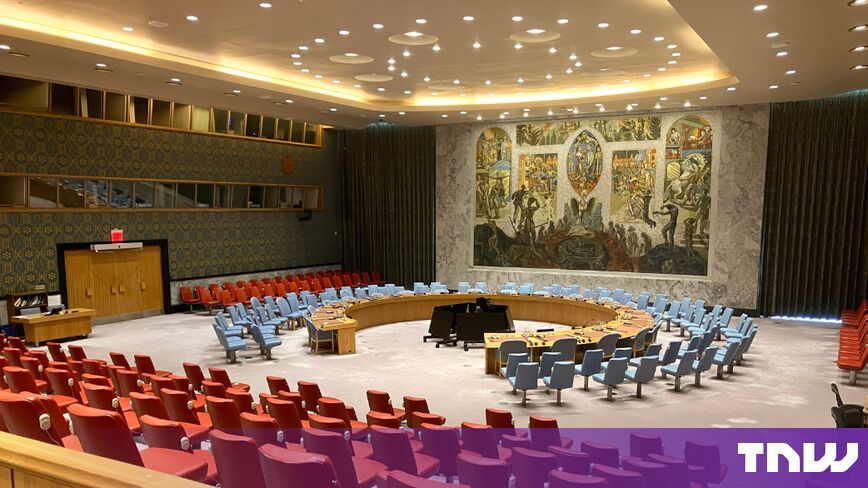
US rejects global AI governance at UN Security Council
THE SO WHAT
The US pushing AI governance back to national regulators signals a fragmented rulebook rather than a single global regime. If you operate across borders, plan for a patchwork: separate compliance tracks, data residency constraints, and potentially divergent safety obligations by jurisdiction.
READ THE SOURCE
MORE FROM THE WIRE
 Applied AI
Ringg’s AI agents resolve up to 65% of customer calls with OpenAI
If GPT-5.6 can handle 65% of calls across channels at 90% lower unit cost than GPT-4.1, the economics of front-line support are tilting from augmentation to replacement. CX leaders should be modeling what happens when the marginal cost of an incremental support interaction rounds toward zero and quality becomes the only real constraint.
 Applied AI
Anthropic says its biology lab has already found something big
Anthropic keeping Claude out of its own biology lab while hinting at “something big” is a live demonstration of internal capability throttling. Expect more dual-track roadmaps — one for what’s technically possible, another for what governance and risk teams will actually allow into production.
 Applied AI
OpenAI’s Colin Jarvis says enterprise AI is stuck on deployment, not models
If 80% of enterprise AI failures are deployment, not model quality, the bottleneck has shifted to integration, governance, and change management. This week’s move is to stop model shopping and instead map where data access, approvals, and verification actually block rollout.
 Applied AI
10 ways to use Metas Muse AI app, from flight credits to outfit ideas
Muse being used for refunds, shopping, and recipes is another proof point that consumer assistants are becoming commerce and support front-ends. If you own a consumer brand, you need to assume the first touch is happening inside someone else’s agent — and design offers and flows for that surface.