
Why China's DeepSeek, Qwen and Moonshot Are a Worry for US AI Rivals
THE SO WHAT
Chinese foundation models that are cheaper, more adaptable, and nearly as proficient put price pressure on Western AI stacks — especially for cost-sensitive, multilingual, or APAC-heavy workloads. Global operators should start modeling a world where best-price/acceptable-quality models are not US-based and data residency plus geopolitics become first-order vendor filters.
READ THE SOURCE
MORE FROM THE WIRE
 Applied AI
Beyond general-purpose AI: why sovereignty matters in critical services
AI in critical services is drifting from ‘best model wins’ to ‘who controls the stack and data jurisdiction’. If you run healthcare, finance, or public infra, you need a sovereignty stance in your vendor strategy this year, not as an afterthought in legal.
 Applied AI
Korea Jettisons Startup From High-Stakes Sovereign AI Contest
Sovereign AI is consolidating around a few national champions, not a broad startup field. If you’re building core models in a country with an active state program, assume procurement and regulatory gravity will favor a small, politically durable set of players.
 Applied AI
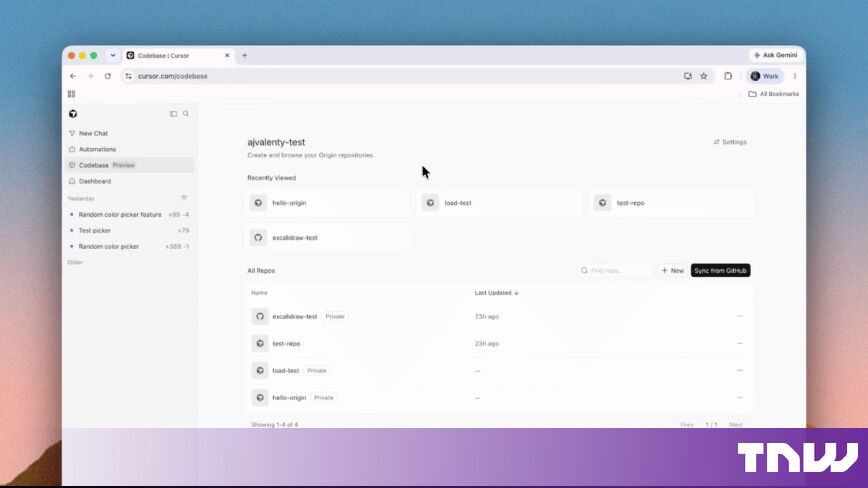
Cursor Origin is on by default for paid users, and its data terms are unpublished
An AI dev tool quietly turning on its own code hosting by default — with unpublished data terms — is a reminder that “product surface” and “training corpus” are now the same thing. Engineering leaders need a standing policy on where source can live and how AI vendors can use it, not case-by-case exceptions.
 Applied AI
GitHub disputes Wiz’s claim that Copilot Autofix wrote a Snowflake flaw
Blaming Copilot Autofix for Snowflake’s flaw collapsed under scrutiny, but the real story is now on the record: AI agents can already find and weaponize critical bugs. Security teams need to assume adversaries are running AI-first exploit pipelines and upgrade their own testing, code review, and red-teaming to match that tempo.