
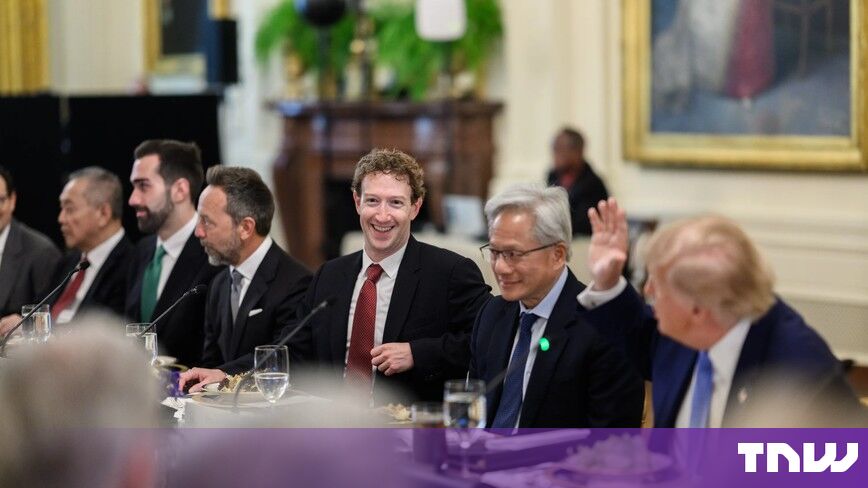
Zuckerberg drafted Trump’s AI accord, but Microsoft and Amazon didn’t sign
THE SO WHAT
A presidential AI accord drafted by a major platform CEO—with other giants declining to sign—shows AI governance is becoming a venue for strategic differentiation, not just compliance. Expect fragmented standards and accords, and plan for a world where your AI risk posture is partly defined by which ecosystem you align with.
READ THE SOURCE
MORE FROM THE WIRE
 Applied AI
Google DeepMind’s watermarked AI proteins still work in the lab
DeepMind is baking provenance into the substrate of biology itself—watermarking amino acid sequences and 3D structures means AI-designed proteins can be traced long after they leave your lab. If you’re doing synthetic bio or pharma, assume regulators and major partners will start expecting this kind of traceability in your design pipelines.
 Applied AI
If an AI agent is attesting your controls, who’s attesting the agent?
Once AI agents start attesting your security and compliance controls, the audit surface shifts from checklists to model behavior, training data, and oversight. Security and risk teams need to define how they’ll validate agent decisions and log explainability before delegating core assurance work.
 Applied AI
ECB’s Lagarde Says Europe Must Develop Its Own AI Capabilities
Lagarde calling for Europe to build its own AI capabilities frames models as monetary and strategic infrastructure, not just tech exports. European operators should expect more public money, regulation, and preference for regional stacks—and plan for a more fragmented vendor landscape.
 Applied AI
OpenAI’s 2017 plan to auction AGI to China and Russia, per The Atlantic
The reported 2017 idea of auctioning future AGI rights to governments—including China and Russia—shows how fluid governance thinking was even inside frontier labs. For policymakers and operators, the lesson is to treat current alignment and access frameworks as contingent and worth stress-testing, not settled doctrine.