


Autonomous trucks moved closer to California highways. Robotaxis became ticketable infrastructure. Tesla’s long-haul EV finally hit production. Google pushed Gemini into cars. Stripe gave AI agents a wallet. Apple reminded the market that AI does not have to be loud to be powerful. Spotify started treating human provenance as platform infrastructure.
The connective tissue: autonomy is exiting the lab and entering regulated, costed, litigated reality, across roads, wallets, contracts, creative systems, and enterprise workflows.
The leverage is shifting from “we have AI” to “we own the workflow, the data, the payment layer, the distribution surface, and the regulatory position around it.”
Open agents, vertical stacks, hybrid infra, and embedded AI are the tools. Labor, compliance, capital allocation, and provenance are the constraints.
If your 2026 plan assumes AI is a feature and autonomy is still somewhere in the future, you’re already behind. The operators winning this cycle are treating autonomy as a line item in P&L, a clause in contracts, a permission layer in wallets, and a column in their regulatory risk matrix, not a slide in the strategy deck.
AUTONOMY / MOBILITY
Road autonomy just became a policy and P&L problem, not a demo.
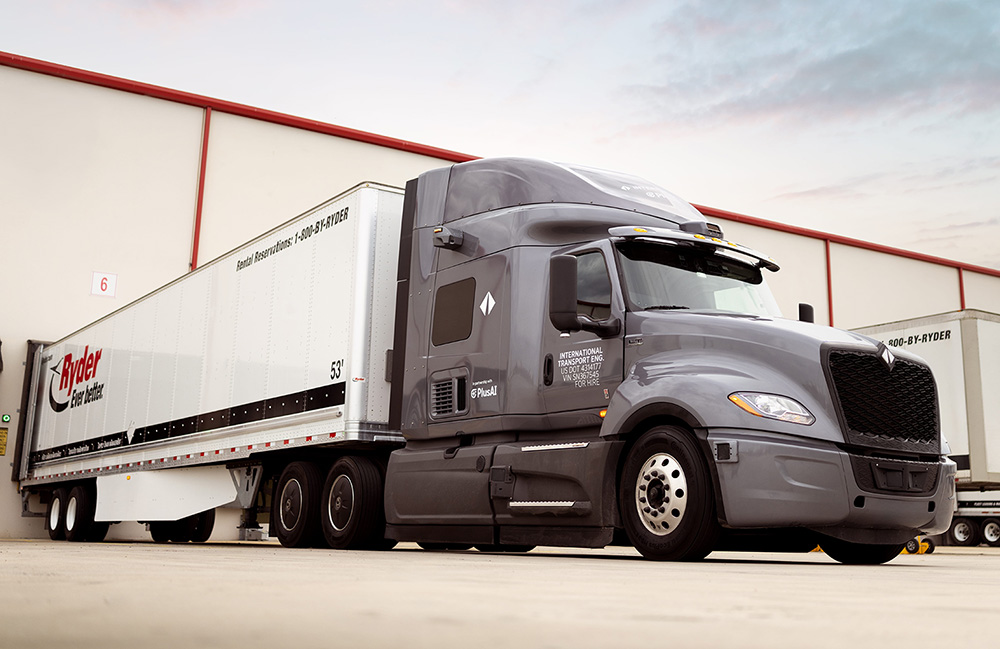
California lawmakers opened the gate for autonomous trucks in the state, expanding safety and oversight requirements and clearing a path for commercial AV freight operations, per The Robot Report.
This moves heavy-duty AVs from pilot exemptions into a governed category, with explicit expectations around safety, reporting, and labor impact.
The Bet: California is assuming AV freight can be made legible and governable fast enough to justify the labor and safety tradeoffs.
So What? AV freight in California is now a scheduling and pricing input, not a science project. Carriers will show up with rate cards that assume higher asset utilization and different driver mixes. Labor negotiations in logistics and warehousing will start to price in driver-optional lanes. If you run volume through California corridors, your cost structure and service design are now exposed to AV-driven repricing.
The Risk: Regulatory whiplash, a high-profile incident, or labor pushback could trigger new constraints after you have re-architected lanes. Vendor concentration risk is real: if you build around one AV partner and they stall, your network breaks.
Action: • Map your California lanes and identify which are most attractive for early AV deployment: long-haul, repeatable routes with stable demand. • Demand lane-level AV scenarios from your top 3 carriers: pricing, SLAs, labor assumptions, and escalation plans. • Start internal work on driver-light operations: supervision, yard management, handoff processes, and customer notification flows.
California authorized police to ticket robotaxis and require a 30-second operator response, turning AV fleets into accountable traffic participants with clear enforcement hooks, per Gizmodo.
The key detail: ticketing authority starts July 1, 2026.
The Bet: Regulators are treating AVs as normal drivers with enhanced oversight, not as exempt experiments.
So What? The operating model for AV fleets just changed. You now need 24/7 human coverage that can respond in 30 seconds with authority to act. That is a virtual driver support desk with legal exposure, not just fleet ops. For cities and insurers, AVs become measurable risk units: tickets, incident rates, and response times become inputs to policy, premiums, and routing.
The Risk: If your AV vendor underinvests in human-in-the-loop operations, your brand and customers eat the downside: stranded vehicles, unresolved incidents, and regulatory friction.
Action: • Ask AV partners for their 24/7 incident response metrics and staffing plan. • Update incident playbooks for AV-specific flows: who talks to law enforcement, who authorizes remote actions, who notifies customers. • For city and mobility leaders, start collecting structured data on AV tickets and incidents now.
Google’s Gemini AI assistant is coming to millions of vehicles, bringing more conversational AI into the driving experience, per TechCrunch.
This is not autonomy in the strict driving sense. It is something adjacent and important: the car becoming an AI interface.
The Bet: The vehicle cabin becomes one of the next high-frequency surfaces for AI assistants.
So What? Cars are turning into ambient operating environments. Navigation, infotainment, commerce, maintenance, messaging, and driver support will increasingly route through conversational agents. That creates a new control point: whoever owns the assistant layer in the vehicle can shape user behavior, data capture, and service discovery.
The Risk: OEMs that outsource the assistant layer risk losing the customer relationship inside their own vehicles. Google does not need to own the car if it owns the interface drivers use every day.
Action: • If you are in mobility, map which customer interactions are moving from app/UI to assistant. • Treat in-vehicle AI as a distribution and data strategy, not a feature request. • If you are an OEM or mobility platform, define what must remain first-party before the assistant layer abstracts it away.
The first Tesla Semi rolled off the production line, seven years after announcement, moving long-haul EVs into actual fleet procurement territory, per TechRadar.
This is the shift from pilot units to production capacity that can support scaled deployments over the next few years.
The Bet: Freight operators will trade range and charging complexity for fuel and maintenance savings, and will accept a multi-year transition path.
So What? If your logistics model assumes diesel as the default through 2030, your margin assumptions are stale. Shippers with ESG pressure and tight margins will start demanding EV options on key lanes. The competitive edge moves to whoever can integrate charging, routing, and maintenance into a coherent operating model, not whoever buys the first batch of trucks.
The Risk: Charging infrastructure and grid constraints can lag truck deployment, creating underutilized assets and broken service promises. Residual value risk is also real: early EV trucks could become obsolete faster than your depreciation schedule.
Action: • Run lane-by-lane TCO comparisons for EV vs. diesel on your top 10 routes. • Start conversations with utilities and charging providers now. Grid access and site permits will be the bottleneck. • If you are a shipper, add EV capability and emissions reporting to your next carrier RFP.
AI STACK / INFRASTRUCTURE
The AI stack is fragmenting by design: portfolios, not platforms.
Pinterest is rebuilding its AI stack around a multimodal mix of OpenAI, Alibaba, and open-source models to cut compute costs and improve flexibility, per Business Insider.
They are treating AI infrastructure as a portfolio, routing workloads based on cost, latency, and performance instead of locking into a single vendor.
The Bet: Model performance will commoditize enough that orchestration and workload routing become the primary levers for cost and quality.
So What? Single-vendor AI strategies are now a margin leak and a resilience risk. Large consumer platforms are building internal model routers and swapping in open models where they can match quality at lower cost. If you are still hardwiring to one closed API, you are paying a premium for convenience and exposing yourself to pricing and policy changes you do not control.
The Risk: Portfolio complexity can outpace your team’s ability to manage it. Without strong evals and observability, you will ship regressions and inconsistent behavior.
Action: • Inventory AI workloads by type: retrieval, generation, ranking, moderation, summarization, workflow execution. • Identify which workloads truly require top-tier closed models. • Stand up a basic routing layer with evals for one or two workloads this quarter.
Stripe introduced Link as a digital wallet AI agents can use, letting users connect cards, banks, and subscriptions, then authorize agents to spend through approval flows, per TechCrunch.
This is one of the day’s biggest signals.
AI agents are moving from recommendation to execution, and execution needs payment authority.
The Bet: Agentic commerce will require a permissioned wallet layer, not just browser automation and saved cards.
So What? The next wave of AI agents will not just search, summarize, and recommend. They will book, buy, renew, cancel, reorder, subscribe, and negotiate. That turns payments into an agent governance layer. Spend controls, approvals, transaction trails, merchant permissions, and identity become core infrastructure for AI execution.
The Risk: Without strong controls, agentic commerce becomes a fraud, chargeback, compliance, and UX nightmare. The companies that move too fast will create trust failures. The companies that move too slowly will lose transaction volume to platforms with safer rails.
Action: • Map where agents could initiate spend inside your product or workflow. • Define approval thresholds, audit trails, refund flows, and human override requirements now. • Treat payments, identity, and permissions as part of your AI architecture, not a checkout detail.
Nemotron Labs’ OpenClaw framework, an open agent harness, crossed 100,000+ GitHub stars, with Nvidia positioning it as a reference pattern for building agentic systems across organizations, per the NVIDIA Blog.
OpenClaw standardizes how agents plan, act, and integrate with tools, turning “agent platform” from proprietary magic into open plumbing.
The Bet: The ecosystem will converge on a small set of open agent patterns, and value will move up to domain data, integrations, and governance.
So What? If your product’s differentiation is “we orchestrate agents,” you are on borrowed time. Power users can now wire credible coding and workflow agents together using open harnesses. The defensible layer is shifting to proprietary data, tight integration into systems of record, robust evals, and safety controls.
The Risk: Open agents wired into production systems without guardrails are a security and compliance nightmare, especially when non-engineers start experimenting.
Action: • Have your infra team review OpenClaw and similar frameworks. • Decide whether you standardize on an open agent pattern internally. • Update vendor evaluations: ask what they add beyond open agent frameworks.

PLATFORM / ECOSYSTEM
Apple showed what “AI-native, but not AI-first” looks like at scale.
Apple’s earnings reinforced a quieter AI strategy: iPhone still prints, Services keeps compounding, and AI is being embedded into the device and operating system layer rather than sold as a standalone model platform, per TechCrunch.
The real signal is not “Apple beat.” It is that Apple does not need to compete loudly at the model layer if it controls the distribution surface.
The Bet: Users will not choose models. They will stay inside ecosystems where AI becomes ambient.
So What? The AI battleground is splitting. OpenAI, Google, Anthropic, and others fight for model and agent layers. Apple owns device, UX, identity, payments, subscriptions, and ecosystem behavior. That gives Apple a different kind of leverage: not the loudest AI narrative, but the most defensible daily surface area.
The Risk: If Apple under-delivers on AI experience, it risks looking slow in a market rewarding visible capability. But if the experience works, competitors will struggle to pry users away from an AI layer embedded into the hardware, OS, and services they already use.
Action: • If you build consumer products, assume AI distribution will be mediated by ecosystem owners. • Design for embedded AI surfaces, not just chat interfaces. • If you do not own distribution, know which platform’s AI layer your product will have to negotiate with.

VERTICAL AI / CAPITAL
Vertical stacks are becoming infrastructure, and Nvidia wants to sit in the middle.
Swedish legal tech startup Legora raised another $50M in an NVentures-led Series D extension, on top of a prior $600M round, at a roughly $5.6B valuation, to scale its AI-native legal workflow platform, per TechCrunch.
Legora is building end-to-end tooling for law, from document analysis to drafting, tightly integrated into firm workflows.
The Bet: Legal is big enough, standardized enough, and margin-rich enough to support a dedicated AI infrastructure layer, and Nvidia is betting vertical workloads will drive GPU demand as much as horizontal platforms.
So What? Vertical AI is no longer “copilot features” inside generic tools. It is full-stack workflow replacement with its own cap table and infra strategy. If you are a law firm or in-house team waiting for general-purpose copilots to mature, you may be negotiating against peers already standardized on specialized stacks with better domain performance and integrated processes.
The Risk: Deep integration into a single vertical stack creates switching costs and pricing exposure. Overfitting to current legal workflows could also age poorly if billing models, regulation, or court technology shifts.
Action: • If you run a legal org, run a bake-off between generic copilots and at least one vertical platform. • Measure workflow compression and billing impact, not just accuracy. • For B2B founders, ask whether you are building a feature on top of horizontal tools or a vertical workflow that can justify infrastructure-level investment.
CREATOR ECONOMY / AUTHENTICITY
Human provenance is becoming platform infrastructure. The first wave will be messy.
Spotify introduced verified artist badges to help distinguish humans from AI, using signals like artist presence on and off platform, including concerts, merch, social accounts, and profile links, per TechCrunch.
The direction is right. The execution problem is real.
The Bet: As generative music scales, human provenance becomes a trust signal for platforms, fans, advertisers, labels, and rights holders.
So What? Music platforms are no longer just ranking songs. They are classifying authorship. That classification will shape discovery, monetization, licensing, playlisting, and cultural legitimacy.
But binary labels built on imperfect signals risk misclassifying the very artists they claim to protect. Modern music production is already hybrid: pitch correction, software instruments, sample manipulation, AI-assisted ideation, mastering tools, synthetic textures, and distribution-normalized audio all blur the line between tool and creator.
The question is not simply: “Was AI present?”
The better question is: “Who initiated the work, who made the creative decisions, and who holds authorship?”
The Risk: Platforms may confuse production artifacts with authorship evidence. Detection systems can help flag content for review, but they should not define authorship on their own. If the industry treats detection as judgment, independent artists, anonymous projects, bedroom producers, experimental scenes, disabled artists, and AI-assisted but human-led creators may get penalized first.
We will be writing more on this soon: provenance, authorship, and why “AI-generated” is too blunt a label for the creative stack now emerging.
Action: • Separate AI-generated spam from legitimate AI-assisted creative work. • Treat human provenance as a trust system, not a badge campaign. • Build verification paths for emerging, anonymous, independent, and non-touring artists. • Audit the numbers before designing enforcement around them.
LABOR / ORG DESIGN
AI leverage is repricing talent and reshaping who is core.
Disney is cutting stock-based compensation for some tech employees, reducing equity from roughly 35% to 25% of base for certain roles, as part of a broader compensation reset, per Business Insider.
The move reflects both equity cost discipline and a reassessment of how much premium the company needs to pay for tech talent in an AI-leveraged environment.
The Bet: Brand, mission, and role scope can substitute for some portion of equity, especially as AI amplifies the output of smaller, more senior-heavy teams.
So What? If a top-tier brand can reprice tech equity, others will follow. The era of RSUs as the primary retention tool for broad non-core roles is weakening. Operators need a sharper narrative around autonomy, impact, and upside. They also need to be explicit about which roles are AI leverage multipliers and pay accordingly.
The Risk: Mis-executed comp cuts will trigger quiet attrition from exactly the people you need most: the builders who can wield AI to compound output.
Action: • Segment your tech org into AI leverage multipliers and AI beneficiaries. • Align equity and cash accordingly. Do not bluntly cut across the board. • Rewrite recruiting around ownership of AI-enabled systems, not just title and comp.
Meta’s HR chief told employees she cannot rule out further layoffs, while leadership maintains AI automation is not the primary driver behind recent 10%+ cuts, per Techmeme.
The message: margin discipline and portfolio focus are driving headcount decisions, with AI as an enabler, not the stated cause.
The Bet: Large platforms can reshape their cost base over multiple years without blaming AI directly, preserving narrative optionality while they retool around new leverage points.
So What? Every non-core function at scaled tech companies is now under review, not just for automation, but for strategic relevance. Vendors selling into these orgs should expect slower cycles, more scrutiny on renewals, and a bias toward tools that drive revenue, reduce cost, or unlock AI leverage.
The Risk: Permanent layoff overhang erodes trust and productivity. Under-investment in transition support will push strong talent toward more decisive organizations.
Action: • If you sell into large platforms, tighten your value story to revenue, cost, or AI leverage. • Inside big orgs, force a one-page articulation for each team: how do we use AI today, and how do we 2x leverage in 12 months? • For smaller companies, do not copy the permanent overhang. Make sharper decisions and communicate clear end states.
GOVERNANCE / RISK
Narratives, provenance, and permissions are becoming legal artifacts.
Elon Musk testified that xAI trained Grok partly on OpenAI models, putting model distillation, provenance, and competitive boundaries back in the spotlight, per TechCrunch.
Distillation is no longer just a technical practice. It is becoming a legal and strategic fault line.
The Bet: Frontier labs will increasingly defend not just model weights and outputs, but the behavioral patterns, reasoning traces, and capability profiles competitors may extract from them.
So What? The industry’s model supply chain is messier than the marketing suggests. Training data, synthetic data, distillation, benchmark leakage, and model-to-model learning are all part of the competitive landscape. As lawsuits and depositions pull these practices into the open, “how was this model trained?” becomes a board-level, procurement-level, and legal diligence question.
The Risk: Companies building on top of third-party models may inherit exposure they do not fully understand. Startups using synthetic outputs from frontier models to train smaller systems may find that the gray area closes quickly.
Action: • Document where your training, fine-tuning, eval, and synthetic data originate. • Add model provenance questions to vendor diligence. • If you are building domain models, define what data you own, what data you license, and what data you derive.
A federal judge told Musk to stop talking about “robot apocalypse” and AI extinction scenarios under oath, underscoring the tension between public existential rhetoric and courtroom reality, per Business Insider.
Under-oath testimony is forcing alignment between what leaders say publicly and what their systems actually do.
The Bet: Courts and regulators will anchor on operational reality: capabilities, incidents, controls, and representations, not speculative future risk.
So What? Your AI and autonomy narratives are now discoverable assets. They can be replayed in depositions, hearings, investor disputes, customer claims, and regulatory reviews. Overstating capabilities or dramatizing risks for PR upside is no longer free.
The Risk: If your public story and internal reality diverge, you are creating legal and credibility exposure.
Action: • Audit your last 12 months of public AI claims against what is actually in production. • Involve legal and engineering in your next major AI announcement. • Train execs and PMs on litigation-safe AI narratives: accurate, specific, and aligned with reality.
North Korea-linked hackers stole approximately $577M across the Drift Protocol and KelpDAO hacks in April, accounting for 76% of total crypto hack losses so far in 2026, per The Block, citing TRM Labs.
State-linked actors are treating DeFi exploits as recurring revenue.
The Bet: Crypto infrastructure will remain porous and lucrative enough to justify sustained sovereign-level offensive investment.
So What? If you operate a protocol, you are not just defending against hobbyist hackers. You are defending against sovereign adversaries with time, talent, and capital. For any AI or data infrastructure touching crypto rails, the risk surface is geopolitical.
The Risk: Underfunded security teams and rushed launches will keep feeding this machine. Regulatory overreaction could also clamp down on legitimate builders.
Action: • Reclassify security budget as defense against sovereign adversaries. • Implement anomaly detection, kill switches, and rehearsed incident response. • Bring crypto exposure into board and risk committee briefings.
CONTRARIAN SIGNAL
The real moat is not your model. It is your control layer.
The consensus story yesterday: AI is fragmenting. Open agents are exploding. Cars are becoming interfaces. Payments are becoming agentic. Platforms are trying to label human provenance. Big companies are mixing and matching models.
The lazy takeaway is: this is chaotic, wait for the dust to settle.
That is backwards.
What is happening is standardization, just not where vendors want you to look.
Agent patterns are converging in the open. Model APIs are converging around a handful of interfaces. Payment permissions are becoming agent infrastructure. Vehicle assistants are becoming distribution surfaces. Provenance is becoming a platform trust layer.
The chaos is in the last mile: your workflows, your data, your governance, your authorship standards, your payment permissions, your regulatory posture.
The operators who wait for a fully managed answer will end up locked into someone else’s opinionated stack. The ones who standardize on open patterns, own their integration layer, and define their control surfaces now will have leverage when the next wave of models arrives.
The Takeaway: Your strategic edge in AI will not come from picking the right model vendor. It will come from owning the layer where models, agents, payments, provenance, workflows, and risk meet the real world.
THE QUESTION FOR TODAY
Autonomous trucks just became a regulated option on California highways. Robotaxis are becoming ticketable drivers with 30-second response obligations. Gemini is entering the vehicle cabin. Stripe is giving agents a wallet. Apple is embedding AI into the ecosystem instead of selling it as spectacle. Spotify is turning human provenance into platform infrastructure. Vertical AI stacks are raising nine-figure rounds to own entire professions. Open agent frameworks are turning platform moats into weekend scripts.
Are you still planning around vendors and narratives, or are you redesigning your workflows, org chart, payment rails, authorship standards, and risk posture for a world where autonomy is just another operating assumption?
Signal + Noise is strategic intelligence, not engagement-specific advice. For guidance calibrated to your org, start with Advisory.
See exactly how this impacts your specific industry and function. Upgrade to PRO to get bespoke tactical breakdowns generated instantly for your operating model.
Go deeper with the Weekly Signal
This is the daily take. The Weekly goes further — full strategic analysis across 8–10 sections, each with a signal read and operator action items. Source panel included.
Sign up free → then upgrade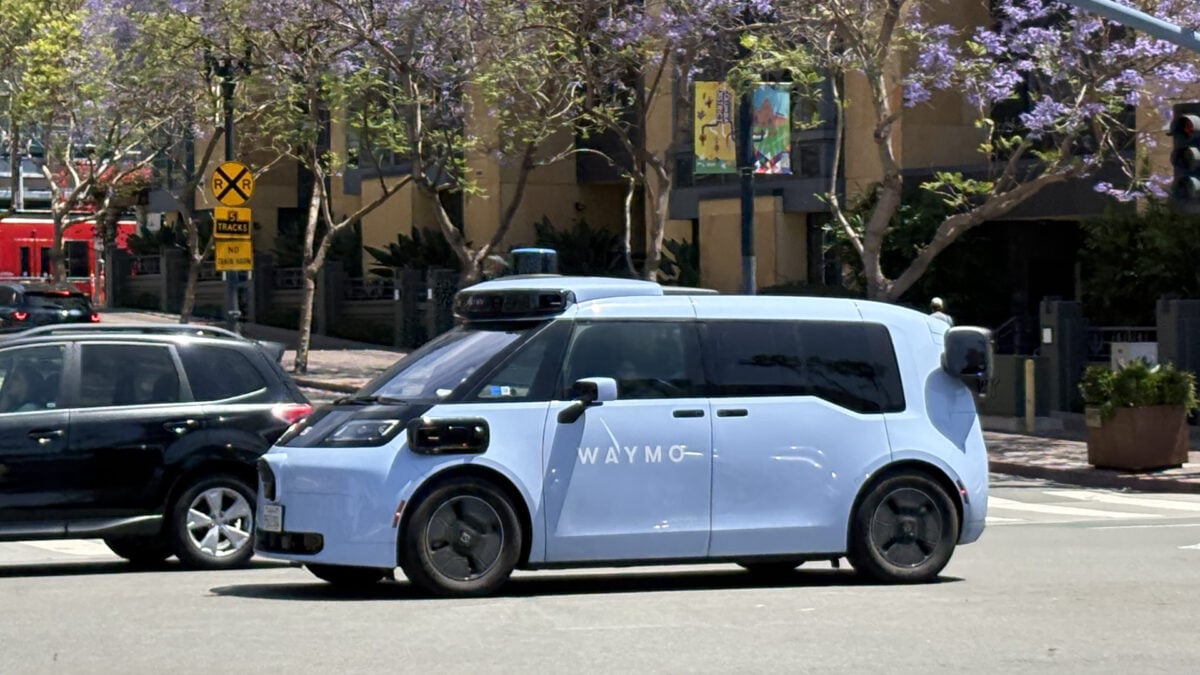



.png)