

Yesterday's signals, distilled, A look back at August 18, 2026.
Youth safety moved from “policy posture” to product and courtroom reality.
OpenAI shipped a teen-specific mode with explicit guardrails. In parallel, a 29-state coalition opened a trial arguing that engagement design itself can be a youth-harm mechanism. Different venues, same direction: if you touch minors, your defaults, metrics, and escalation paths are becoming discoverable artifacts.
Capital, meanwhile, kept flowing toward constraints, not novelty.
A $110M Series A into low-power AI chips at a $1B+ valuation is a bet that energy and thermals are the binding constraint for both data centers and physical AI. That’s not a chip story. It’s a unit-economics story that will show up in inference pricing, robotics BOMs, and where workloads land.
And the “always-on capture” perimeter keeps creeping.
A leak pointing to camera-equipped AirPods is early, but it fits the broader pattern: sensors are migrating into socially acceptable form factors. For operators, that’s less about consumer gadgetry and more about policy, security, and incident response in spaces you control.
The strategic question to carry into this week: where are you still treating youth exposure, power draw, and ambient capture as edge cases, when the market is turning them into first-class design constraints?
POLICY / YOUTH SAFETY
Minors are becoming a regulated product tier
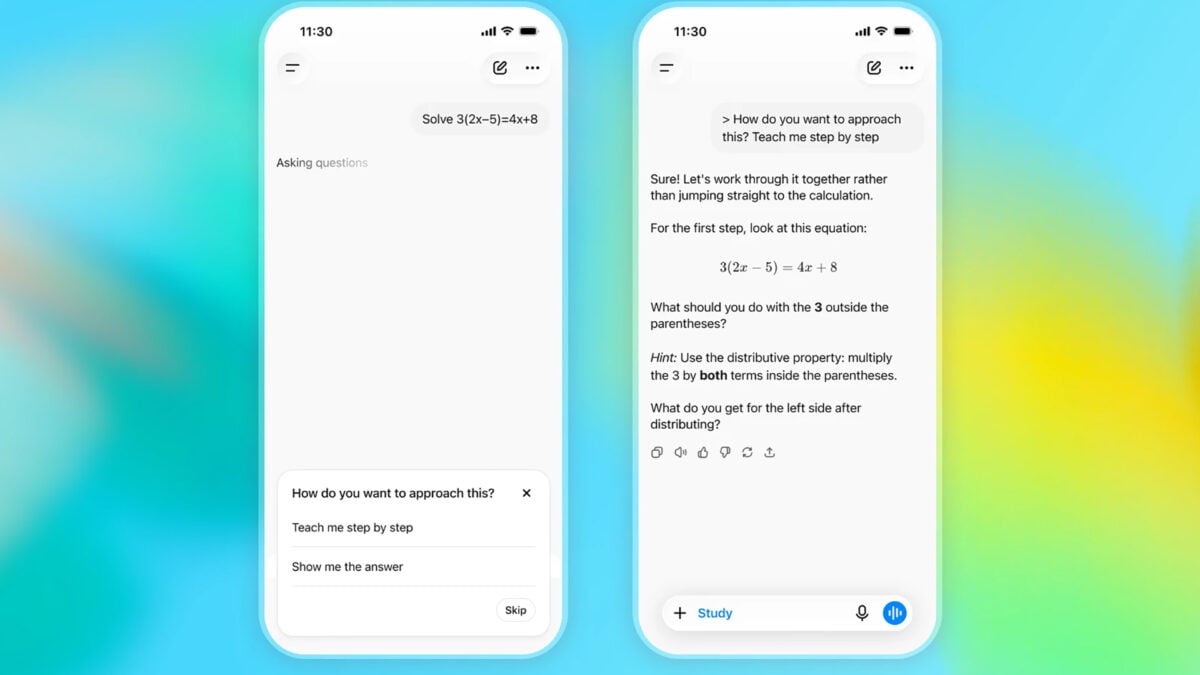
OpenAI, ChatGPT for Teens ships with hard limits and study tooling
OpenAI introduced “ChatGPT for Teens,” a mode “built for learning” with protections that limit high-risk conversations (including self-harm and eating disorders) and adds teen-oriented learning features, per OpenAI News.
The New York Times reported the mode as a distinct experience with explicit restrictions and studying tools, positioning teen usage as something to be shaped by defaults, not just monitored after the fact, per New York Times.
The Bet: The safest way to scale youth usage is to productize guardrails and make them legible to parents, regulators, and schools.
So What? Teen mode is a precedent. Not because every product will copy the exact controls, but because it sets an expectation that “minors” is a separate risk class with separate UX, content policy, and escalation logic. If you ship AI into education, consumer, or social surfaces where teens are present, you should assume you’ll be benchmarked against explicit, auditable safeguards, not vague “we take safety seriously” language.
This also changes procurement conversations. Schools and districts don’t want to be your QA layer. A teen-specific mode gives them something to point to in policy, and it gives you a way to scope liability and support load.
The Risk: A mode is not a guarantee. If teens can route around controls via prompt tactics, account sharing, or adjacent products, the “teen tier” becomes a false comfort that increases reputational exposure. The other risk is measurement, if you can’t show how the guardrails perform (false positives, false negatives, escalation outcomes), you’ll still lose the argument in a regulatory or parental setting.
Action:
- Inventory every surface where under-18s can plausibly interact with your product, directly or via shared accounts, and document the current defaults.
- Define your “high-risk topic” taxonomy and escalation path this week, what gets blocked, what gets redirected, what gets handed to a human, and what gets logged.
- Add an internal review checkpoint for youth-facing UX and metrics, assume “time spent” and “streaks” become liabilities, not wins.

GOVERNANCE / LITIGATION
Engagement design is being reframed as a harm mechanism
US states, 29-state youth harms trial against Meta opens with addiction claims
In opening arguments, US state attorneys general argued that Meta intentionally sought to addict children to Facebook and Instagram; Meta rejected the claims, per Reuters.
Reuters also detailed how a bipartisan coalition of states coordinated to present a unified case, with Judge Rogers establishing a hybrid structure for the multi-week trial, per Reuters.
The Bet: States believe they can turn “engagement optimization” into a litigable category, closer to product safety than speech.
So What? This is a discovery story. If the theory of harm is “the system was designed to maximize compulsion,” then your internal artifacts become the product: experiment logs, ranking objectives, notification strategies, growth dashboards, and the language teams used to justify tradeoffs. Even if you’re not a social platform, any consumer product with feeds, recommendations, streaks, or variable rewards should assume the same scrutiny can be ported over, especially if minors are in the user base.
The structural shift is that youth risk is moving from compliance to governance. Multi-state coordination means enforcement pressure can arrive as a bloc, with shared playbooks and shared expert witnesses. That compresses response time for operators who assumed they could handle issues state-by-state.
The Risk: Litigation outcomes are slow and uncertain. Operators can over-rotate into performative changes that degrade product value without reducing real harm. The other risk is mis-scoping, teams focus on UI tweaks while leaving the underlying objective functions and incentive structures intact.
Action:
- Treat your engagement metrics as regulated surfaces-in-waiting, write down what you optimize for, why, and what you explicitly do not optimize for.
- Run a “discovery drill” on your own org: identify what documents, dashboards, and experiment results you would not want misinterpreted in court, then add context and governance now.
- If minors are present, implement a youth-specific metrics view, separate retention and notification targets from adult cohorts and document the rationale.
INFRASTRUCTURE / SILICON
Power is becoming the first-order design variable
Velaura AI, $110M Series A at $1B+ valuation for low-power data center and physical AI chips
Velaura AI raised a $110M Series A at a valuation of more than $1B to develop low-power chips for data centers and physical AI applications like robotics, per Reuters.
The Bet: The next performance frontier is performance-per-watt, because power delivery and thermals are the constraint that capital can’t wish away.
So What? This is a reminder that “compute” is not a single commodity. For many operators, the binding constraint is no longer model access, it’s the cost and availability of energy to run inference at scale, plus the thermal envelope of the device doing the work. Low-power silicon plays matter because they can change where inference happens (on-device, at the edge, in smaller regional facilities) and what kinds of robotics deployments pencil out.
For enterprise buyers, this is also a procurement signal. As more chip startups raise large rounds on efficiency narratives, you’ll see aggressive attempts to lock in anchor customers with roadmap influence. That can be useful, if you know what to ask for and you can validate claims in your workload.
The Risk: Early-stage silicon timelines slip. Even when chips ship, software enablement and ecosystem support can lag, drivers, compilers, kernels, observability. Efficiency gains on paper don’t always translate to your real workloads, especially if you’re bottlenecked elsewhere (memory, networking, data movement).
Action:
- Model inference TCO with power as a first-class input, $/kWh, cooling overhead, and utilization, rather than treating it as embedded in a cloud rate card.
- Ask vendors for workload-specific perf-per-watt numbers and the test harness used to produce them, then replicate the benchmark internally.
- Identify one edge or on-prem workload where thermal envelope is currently limiting deployment, and run a small evaluation against an efficiency-first target.

DEVICES / AMBIENT CAPTURE
Sensors are migrating into “normal” wearables
Apple, leak points to camera-equipped AirPods in macOS Tahoe
A leaked video in macOS Tahoe appears to show camera-equipped AirPods, per The Next Web.
This follows the broader industry trajectory of pushing capture and context into wearables, reducing friction for recording and enabling more ambient, always-available perception.
The Bet: The next interface shift is not a new app. It’s a new capture primitive that changes what “being in a room” means.
So What? If camera-equipped earbuds become real, the operational impact lands before the consumer narrative settles. Workplaces, venues, healthcare settings, and frontline environments will need clearer policies for recording, signage, and incident handling, because “phones away” becomes meaningless when capture is in something people already wear for hours.
For security and compliance teams, this expands the exfiltration surface. The question isn’t whether people can record, they already can. The question is whether recording becomes continuous, hands-free, and socially invisible enough that your controls and norms stop working.
The Risk: This is a leak, not a shipped product. Timelines and capabilities are unknown. Operators can waste cycles writing policies for a device category that arrives later or differently than expected. The more durable risk is under-preparing for ambient capture generally, because other wearables already create similar issues.
Action:
- Update your “recording in controlled spaces” policy to be device-agnostic, assume capture can be hands-free and hard to detect.
- Audit your incident workflow: when recording is suspected, who is authorized to respond, what evidence is collected, and what employee/customer rights apply.
- Review signage and onboarding language in sensitive areas (R&D floors, clinics, customer support centers), make expectations explicit and enforceable.
CONTRARIAN SIGNAL
Teen safety is becoming a distribution strategy, not just a compliance cost
The default read is that teen-specific modes and youth-harm trials are “safety stories.”
They are. But they’re also distribution stories.
When youth exposure becomes a first-class tier, the winners aren’t the teams with the best press release. They’re the teams that can turn safeguards into procurement artifacts: a mode that administrators can configure, parents can understand, and auditors can evaluate. That’s how you get into schools, family plans, and regulated consumer channels without becoming the headline risk.
The same mechanism applies beyond minors. Once you can productize constraints, you can sell into constrained environments.
The Takeaway: Safety features that are legible, configurable, and measurable are becoming go-to-market infrastructure.
THE QUESTION FOR TODAY
Minors are no longer an edge case in product design. Engagement metrics are becoming litigable artifacts. Power draw is becoming a gating constraint for inference and robotics. Ambient capture is creeping into everyday wearables.
What part of your roadmap still assumes you can ship first and govern later?
Signal + Noise is strategic intelligence, not engagement-specific advice. For guidance calibrated to your org, start with Advisory.
See exactly how this impacts your specific industry and function. Upgrade to PRO to get bespoke tactical breakdowns generated instantly for your operating model.
Go deeper with the Weekly Signal
This is the daily take. The Weekly goes further — full strategic analysis across 8–10 sections, each with a signal read and operator action items. Source panel included.
Sign up free → then upgrade