
Yesterday's signals, distilled, A look back at November 15, 2026.
Washington didn’t just talk about export controls yesterday. It treated AI supply chains as a managed perimeter.
A founder-CEO drama stayed in the frame, but the more durable move was policy: allies coordinating, Congress pressing, and the conversation shifting from “chips shipped” to “compute accessed.”
At the same time, the infrastructure constraint kept tightening. Not GPUs. Megawatts. The people building capacity are now asking hyperscalers and anchor tenants to underwrite power risk up front.
And on the product side, Apple’s reported smart-glasses plan is a reminder that the next platform shift won’t announce itself as “AI.” It will show up as assistants getting sanctioned access to third-party app workflows in ambient contexts.
The strategic question operators should sit with this week: if compute is becoming jurisdictional and power is becoming contractual, where are you still planning like capacity is a commodity?

GEOPOLITICS / EXPORT CONTROLS
Compute access becomes the enforcement surface
US and allies coordinate to guard AI supply chains
The US and allied governments reportedly agreed to guard AI supply chains from China, extending the “strategic asset” framing beyond chips into the broader stack, per Bloomberg Technology.
This lands in a week where the Nvidia story has already pulled export controls into mainstream political coverage and boardroom risk registers.
So What? The enforcement perimeter is widening from physical exports to supply-chain participation. For operators, that means “where is the GPU” is no longer the only question; “who touched the system” and “which jurisdiction can compel the provider” starts to matter just as much. If you sell into regulated industries or operate cross-border, your architecture choices are becoming policy choices, sometimes retroactively.
The Risk: Coordination statements can lag implementation by months, and the first drafts of controls often have carve-outs and ambiguity. The operational risk is building a roadmap around today’s ambiguity, then discovering your vendor, region, or customer segment is inside the tightened perimeter.
Action:
- Map your AI supply chain by jurisdiction, chips, hosting region, model provider, systems integrators, and any China-adjacent dependencies.
- Add an export-control checkpoint to procurement, require vendors to disclose where compute is provisioned and what policy regimes govern access.
- Write a contingency plan for “region forced migration”, what breaks if you must move workloads out of a specific geography in 30 days.
HARDWARE / GOVERNANCE
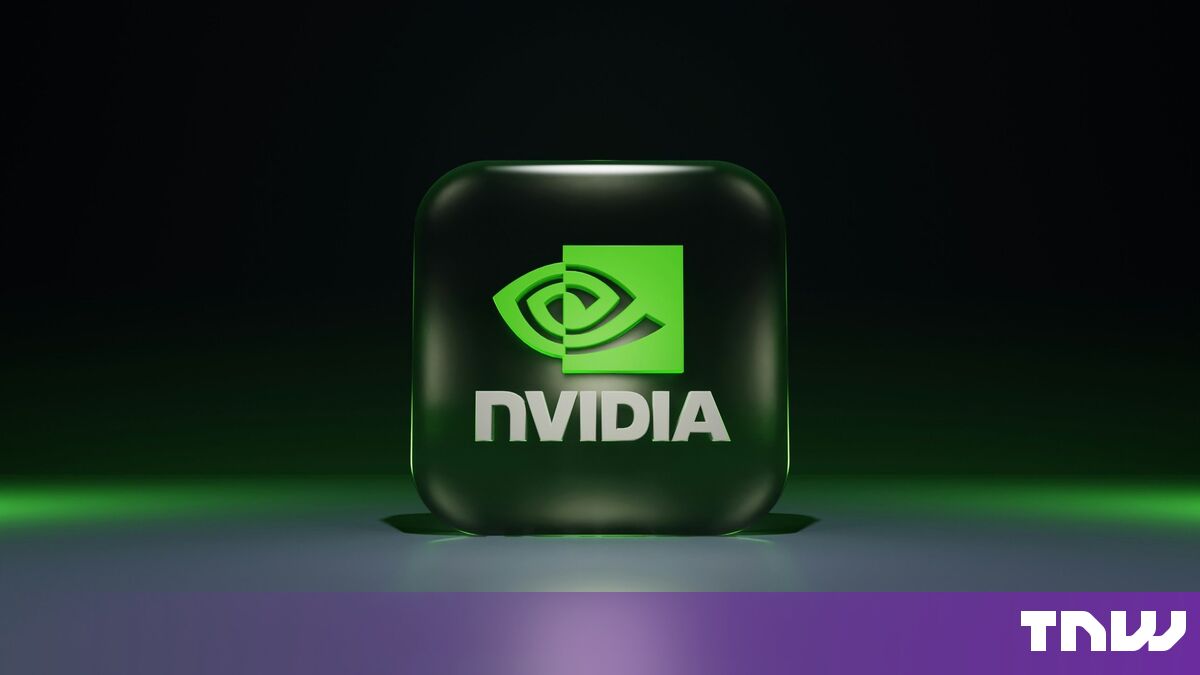
Nvidia’s situation turns export compliance into personal and corporate liability
Congress presses Nvidia over China chip access
US lawmakers pressed Nvidia over alleged China chip access, elevating the issue from compliance posture to public scrutiny, per Bloomberg Markets.
Separate reporting described how Chinese companies accessed Nvidia AI chips via Southeast Asian data centers, an approach that exploits gaps in sanctions design, via The Wall Street Journal.
The Bet: Enforcement will increasingly target “compute access” and facilitation, not just the shipment of restricted SKUs.
So What? This is the structural shift: export controls are moving up the stack. If regulators believe compute access is the functional equivalent of chip export, then data center jurisdiction, tenancy structures, and “who is the real end user” become first-order constraints. That changes how you contract for capacity, how you design multi-region inference, and how you evaluate partners offering “neutral” hosting in third countries.
For executives, this also changes the governance conversation. When scrutiny becomes personal and political, vendor stability and board dynamics stop being background noise, your long-horizon supply assumptions can be invalidated by leadership volatility and policy response.
The Risk: Over-rotation is real. Many teams will treat this as a “China-only” issue and miss the broader implication: any cross-border compute arrangement can become an enforcement target if it’s perceived as sanctions arbitrage. The other risk is operational whiplash, sudden contract term changes, region restrictions, or KYC-style requirements for compute that slow deployments.
Action:
- Inventory where your organization relies on third-party compute that could be reclassified as “exported capability”, including hosted clusters and managed inference.
- Ask providers explicit questions this week: who is the contracting entity, what end-user verification exists, and what happens if policy changes mid-contract.
- Design hardware and deployment fungibility into your 2027 plan, assume at least one region or vendor path becomes constrained.

INFRASTRUCTURE / POWER
Megawatts are now being financed like product risk
Applied Digital seeks power guarantees from Oracle and Meta
Applied Digital is reportedly asking for power guarantees from Oracle and Meta, framing grid and power costs as something anchor tenants must underwrite, per The Next Web.
This is consistent with the broader pattern: capacity delivery is gated less by chip availability than by power procurement, interconnect timelines, and who carries the risk when costs move.
So What? The data center deal is changing shape. It’s no longer “reserve space, then buy power.” It’s “commit to power economics, or you don’t get the space.” For operators, that means AI infrastructure planning is converging with energy procurement and corporate finance, because the winning bidders will be the ones who can sign longer, take more risk, and move faster on guarantees.
If you’re a buyer, the leverage point is shifting. The best time to negotiate terms is before you’re capacity-constrained. Once you’re in a scramble, you’ll accept unfavorable power pass-throughs, curtailment clauses, and delivery uncertainty.
The Risk: Guarantees can socialize downside without guaranteeing delivery. If grid interconnect slips or permitting drags, you can end up with financial exposure and no usable capacity. There’s also concentration risk, if a few hyperscalers and large labs can underwrite power, everyone else gets pushed into second-tier geographies and higher latency.
Action:
- Treat power as a first-class dependency, build a power and interconnect timeline alongside your GPU timeline.
- Pressure-test contracts for curtailment, pass-through pricing, and delivery penalties, don’t assume “reserved” means “available.”
- Identify one fallback region and one fallback provider where you can run degraded-but-acceptable workloads if primary capacity slips.
PLATFORMS / AMBIENT COMPUTE
Assistants become the interface to third-party apps
Apple reportedly plans Siri-centric smart glasses for 2027
Apple plans to unveil smart glasses at WWDC and ship them by the end of 2027, with a focus on integrating third-party iPhone apps with Siri AI, per Bloomberg.
The important part isn’t the hardware timeline. It’s the implied API and permissioning model: assistants invoking third-party app capabilities as background services.
The Bet: Apple can make “assistant-to-app” invocation feel safe and predictable enough that developers embrace it rather than resist it.
So What? If Siri becomes a sanctioned router into app functionality, the competitive surface shifts from “who has the best UI” to “who has the best callable primitives.” That’s a product design change and a distribution change. Your app stops being a destination and starts being a capability that an assistant composes into a workflow.
For operators, this is where “agent readiness” becomes concrete. It’s not a model choice. It’s whether your product has clean actions, stable semantics, and permission boundaries that can survive being invoked out of context, by voice, in motion, with partial attention.
The Risk: Developers can get disintermediated if the assistant becomes the primary brand and the app becomes a commodity backend. The other risk is platform dependency: if the assistant layer controls invocation, ranking, and defaults, your growth loops can be throttled by policy or UX changes you don’t control.
Action:
- Identify the 10–20 actions in your product that should be callable without a screen, then harden them into stable, well-permissioned primitives.
- Audit your auth and consent flows for “ambient invocation”, assume the user is not staring at a confirmation screen.
- Decide what you will not allow assistants to do, write explicit guardrails now, before the platform defines them for you.
CONTRARIAN SIGNAL
The export-control story is really a cloud-architecture story
The loud narrative is geopolitics: DC versus Beijing, allies coordinating, Congress posturing.
The quieter mechanism is architectural. When enforcement shifts from “what chip shipped” to “who can access compute,” the cloud becomes the policy surface. Region selection, tenancy models, identity verification, and auditability stop being implementation details. They become the compliance product.
That’s why the Southeast Asia routing story matters beyond one company or one scandal. It previews the next phase: controls that follow capability, not hardware. If you can rent the capability, regulators will eventually treat it like an export.
The Takeaway: If your architecture assumes compute is globally fungible, you’re building latent compliance debt. Start paying it down while you still have choices.
THE QUESTION FOR TODAY
Allied governments are coordinating on AI supply chains. Congress is treating compute access as an enforcement target. Data center developers are asking tenants to underwrite power risk. Apple is pushing assistants deeper into third-party app workflows.
Where are you still assuming the stack is neutral, when it’s becoming permissioned?
Signal + Noise is strategic intelligence, not engagement-specific advice. For guidance calibrated to your org, start with Advisory.
See exactly how this impacts your specific industry and function. Upgrade to PRO to get bespoke tactical breakdowns generated instantly for your operating model.
Go deeper with the Weekly Signal
This is the daily take. The Weekly goes further — full strategic analysis across 8–10 sections, each with a signal read and operator action items. Source panel included.
Sign up free → then upgrade