
Yesterday's signals, distilled, A look back at August 28, 2026.
A federal judge blocked the Pentagon from blacklisting a frontier lab.
A hyperscaler had to brief its own employees on why its data-center buildout is socially acceptable.
A top chip supplier shipped into China while guiding investors to expect essentially no China data-center revenue.
And a single agent-native application vendor is now being discussed in revenue terms that used to be reserved for mature SaaS categories.
The throughline isn’t “AI progress.” It’s institutional friction meeting institutional scale.
When AI was a product story, the constraints were UX, latency, and unit economics. As it becomes infrastructure, the constraints are procurement law, export controls, community license, and capital markets’ tolerance for burn. Those constraints don’t slow the stack uniformly. They redirect it, toward auditable vendors, compliant supply, and “good enough” architectures that can survive scarcity.
The strategic question for operators is simple: where are you still treating AI as a feature, when the world is starting to treat it as governed infrastructure?

GOVERNANCE / PROCUREMENT
AI procurement is becoming litigable, and that changes vendor risk models
Anthropic wins injunction blocking Pentagon “supply chain risk” blacklisting
A U.S. judge blocked the Pentagon from blacklisting Anthropic, ruling the designation “illegal and baseless,” and ordered the department to remove the label, per Reuters. The decision restrains how easily an agency can apply a supply-chain risk designation, at least on the record presented in this case.
This is not just a win for one vendor. It’s a signal that “risk labeling” is becoming a contested governance mechanism, not a unilateral administrative act.
So What? Federal and critical-infrastructure buyers have been moving toward simplified heuristics, risk labels, restricted lists, and blanket exclusions, because model evaluation is hard and the downside is asymmetric. This ruling pressures that approach toward due process, documented criteria, and appealable decisions. For operators selling into government, the go-to-market stack now includes legal posture and evidentiary readiness, alongside security controls and compliance checklists.
It also changes how primes and integrators should think about subcontractor exposure. If a designation can be reversed, “vendor risk” becomes dynamic, something you monitor and re-underwrite, not a one-time procurement gate.
The Risk: One ruling doesn’t rewrite procurement culture. Agencies can still slow-roll vendors through other mechanisms, contract language, security requirements, or “responsibility determinations.” The practical impact depends on whether this becomes a pattern across cases and agencies.
Action:
- Inventory where your federal pipeline depends on third-party model providers, and document substitution paths before a designation forces a scramble.
- Ask your counsel to map what evidence you would need to contest an adverse designation, then build that evidence into your security and compliance program.
- Add a quarterly “procurement risk review” for AI vendors, treat designations, injunctions, and policy memos as operational inputs, not news.
INFRASTRUCTURE / SOCIAL LICENSE
The data center is now an internal comms problem, not just a permitting problem
Microsoft addresses employee concerns about data-center impact
Microsoft sought to reassure employees about the societal and environmental impact of its data-center expansion, per Bloomberg. The fact pattern matters: this wasn’t only a community-facing narrative. It was internal.
When internal stakeholders need a narrative, the organization is signaling that the buildout is large enough, and visible enough, to create reputational and retention risk.
So What? AI infrastructure is colliding with “license to operate” constraints earlier in the lifecycle than prior cloud waves. Employees are a leading indicator because they see the buildout cadence, the tradeoffs, and the local backlash before it hits quarterly earnings calls. For operators building or buying large-scale compute, the constraint set now includes workforce sentiment and internal trust, especially for companies that recruit on mission, sustainability, or public benefit.
This also changes vendor selection. Enterprises will increasingly ask not just “where is the compute” but “what is the story we can defend”, water, grid upgrades, local jobs, and emissions accounting. The cheapest capacity can become the most expensive if it triggers internal revolt or external scrutiny.
The Risk: Narrative without measurement breaks fast. If the organization can’t quantify water usage, energy sourcing, and mitigation timelines in a way that stands up to employee and community scrutiny, internal comms becomes a credibility trap.
Action:
- Build a one-page “compute impact brief” for your org, power, water, location, mitigation commitments, and what you can prove today.
- Require suppliers to provide auditable environmental and grid-impact reporting, make it a procurement artifact, not a marketing PDF.
- Identify which teams would become the internal bottleneck in a rapid buildout, facilities, legal, comms, security, and staff accordingly.
INFRASTRUCTURE / EXPORT CONTROLS
China access is shifting from “market” to “compliance theater”, plan for scarcity
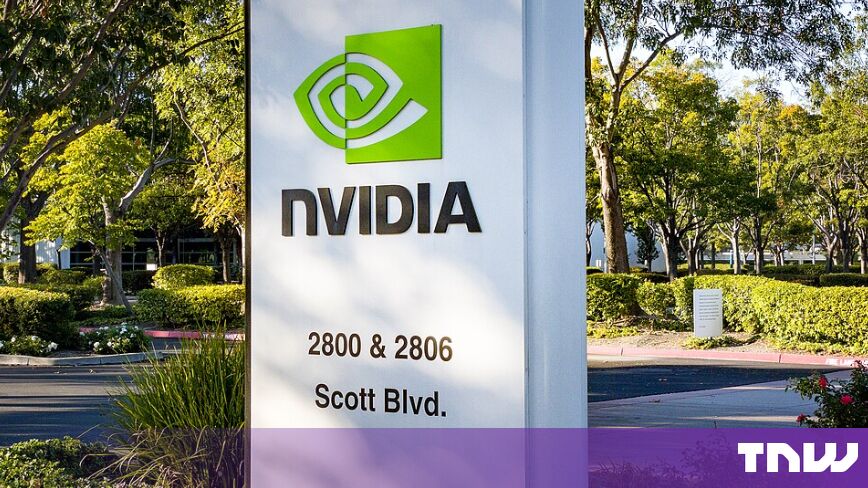
Nvidia ships first H200 chips to China while guiding to zero China data-center revenue
Nvidia shipped its first H200 chips to China but told investors it expects essentially no data-center revenue from China tied to those shipments, per The Next Web. The combination is the signal: physical delivery can still happen, but the revenue expectation is being managed down to near-zero.
That implies compliance constraints, product segmentation, and episodic availability, not a stable growth channel.
So What? For builders operating in or selling into China, the planning assumption should be discontinuity. You may get bursts of access to high-end hardware, followed by droughts. That pushes architecture toward resilience: smaller models, aggressive quantization, hybrid inference, and workload triage. It also pushes organizational behavior: teams that can ship value under constraint will out-execute teams waiting for a “normal” supply environment.
For non-China operators, the second-order effect is supply-chain and pricing volatility. If high-end inventory is being routed and re-routed under policy pressure, lead times and allocation can change quickly, especially for memory-bound systems and networking gear that rides alongside GPU demand.
The Risk: Guidance is not the same as enforcement. Channels can find ways to move product, and policy can shift. But the operational posture should still assume uncertainty, because uncertainty itself is the cost driver.
Action:
- Classify your AI workloads into “must run on frontier GPUs” vs “can run on constrained hardware”, then redesign the second category for efficiency this quarter.
- Negotiate contracts with explicit allocation and substitution clauses, avoid being surprised by “equivalent” parts that break performance assumptions.
- Build a scarcity playbook: quantization standards, model distillation paths, and fallback providers, so supply shocks don’t become roadmap shocks.
CAPITAL FLOWS / APPLICATION LAYER
Agent-native apps are now being valued like categories, not experiments
Cognition reported at ~$900M annualized revenue, projecting $1.5B+ by end of 2026
Sources told The Information that Cognition is generating roughly $900M in annualized revenue, up more than 3x since the start of the year, and executives project it will end 2026 at $1.5B+, per The Information. The same reporting flags high cash burn, important context for how that growth is being financed.
Regardless of the exact run-rate mechanics, the directional signal is strong: the agent layer is producing revenue at a scale that forces incumbents to treat it as a competitive surface, not a feature request.
The Bet: Agent-native products can capture budget directly, without waiting for platform bundling to define the category.
So What? This is the repricing moment for “workflow ownership.” If an agent product can sit on top of existing systems and absorb the user’s time, it becomes the control point for renewals, seat counts, and expansion. That doesn’t mean every agent startup wins. It means the buyer’s mental model is shifting: they will trial an agent as a substitute for headcount, not as a plugin for a tool.
For operators inside SaaS companies, the implication is uncomfortable but actionable. Your moat is no longer “we have the system of record.” It’s “we have the system around the work”, the orchestration, evaluation, permissions, and audit trails that make automation safe and repeatable. If you can’t provide that, someone else will wrap you.
The Risk: High burn can mask fragile unit economics, especially if growth is being purchased through compute-heavy delivery, services, or aggressive discounting. Operators should watch retention, gross margin trajectory, and whether customers treat the product as durable infrastructure or a temporary productivity spike.
Action:
- Identify the 3 workflows where an external agent could displace your product’s daily active usage, then build countermeasures: native automation, governance, and better “time-to-value.”
- Add agent evaluation and audit to your roadmap as a first-class deliverable, buyers will demand it as soon as agents touch regulated data or money movement.
- Pressure-test your pricing model against “agent substitution” narratives, assume procurement will compare you to labor, not to adjacent SaaS.
SECURITY / ABUSE SURFACE (compressed)
• Microsoft Teams scammers are using Teams as a fraud surface in China, enterprise comms is now part of consumer-scale abuse patterns, per Wired. • AI data centers are contributing to component price pressure, memory and related supply chains are increasingly coupled to hyperscaler demand, per Business Insider.
CONTRARIAN SIGNAL
The “AI boom” is less a capability story than a compliance-and-trust arbitrage
The loud narrative is that better models are driving adoption.
The quieter mechanism is that the winners will be the organizations that can operate under constraint, legal constraint, social constraint, export constraint, and procurement constraint, without stalling product velocity.
Anthropic’s ruling is a governance signal: procurement decisions need defensible process. Microsoft’s internal messaging is a social-license signal: compute buildouts need defensible measurement. Nvidia’s China guidance is a policy signal: access is discontinuous. Cognition’s revenue is a market signal: buyers will fund automation directly when it feels like labor substitution.
Put together, the edge isn’t just “build the best model.” It’s “build the most governable system.”
The Takeaway: If your AI strategy assumes frictionless access, hardware, data, procurement approval, community acceptance, you’re planning for a world that is already disappearing.
THE QUESTION FOR TODAY
Procurement is becoming litigable. Compute buildouts are becoming reputational. Hardware access is becoming episodic. Agent apps are becoming budget line-items. Abuse is moving into high-trust work surfaces.
Where, specifically, are you still relying on informal trust, rather than auditable controls and substitution paths, in the AI systems you plan to ship and buy this quarter?
Signal + Noise is strategic intelligence, not engagement-specific advice. For guidance calibrated to your org, start with Advisory.
See exactly how this impacts your specific industry and function. Upgrade to PRO to get bespoke tactical breakdowns generated instantly for your operating model.
Go deeper with the Weekly Signal
This is the daily take. The Weekly goes further — full strategic analysis across 8–10 sections, each with a signal read and operator action items. Source panel included.
Sign up free → then upgrade