
Yesterday's signals, distilled, A look back at September 6, 2026.
OpenAI’s chief scientist put a voluntary brake on the table, not as a policy memo, but as a capability-and-consequence claim from inside the frontier.
At the same time, the “AGI score” story kept unraveling into something more operational: evaluation harnesses, metric revisions, and post-launch score movement. That’s not academic. It’s procurement, safety gating, and board reporting.
Then the stack’s other constraint asserted itself: siting and power. Texas, the state with the most data center capacity under construction, is now a case study in backlash risk, not just incentive packages.
And the content layer stayed litigious. Local and regional publishers joining the wave is a reminder that IP exposure is not confined to a few marquee plaintiffs, it’s a long tail with real discovery risk.
The throughline: governance is no longer “rules later.” It’s becoming a set of auditable artifacts, eval harnesses, safety claims, data rights, and infrastructure permits, that determine what you can ship, where, and at what cost. The strategic question is simple: which of your AI bets depend on assumptions you cannot independently verify this week?

CAPABILITY / GOVERNANCE
Frontier labs are trying to set the pace, while the market demands receipts
OpenAI Chief Scientist calls for voluntary slowdowns on scaling
Jakub Pachocki wrote that no lab has solved alignment enough to keep scaling at maximum speed, and expressed hope that voluntary slowdowns become commonplace, per OpenAI.
This is a rare move: a frontier lab leader explicitly framing “maximum speed” as irresponsible absent stronger alignment confidence, and doing it in public, on the record.
The Bet: The industry can avoid a hard external brake by adopting softer internal brakes, and by making those brakes legible to regulators and the public.
So What? This changes the operator posture toward roadmap certainty. If you’re building a product line that assumes predictable, quarterly capability jumps, you should now model a world where pauses are driven by safety work and governance pressure, not just chip supply.
It also raises the bar on what “responsible deployment” means in practice: voluntary slowdowns only buy legitimacy if they’re paired with concrete artifacts, eval discipline, incident disclosure norms, and clear escalation paths when agents misbehave.
The Risk: Voluntary slowdowns are coordination problems. If they’re uneven across labs, they may not reduce aggregate risk, and they may simply shift demand to whoever keeps shipping. For builders downstream, the risk is whiplash: sudden policy changes, access tier changes, or delayed releases that break product commitments.
Action:
- Inventory which customer promises, SLAs, or internal milestones assume a specific frontier-model release cadence.
- Write a one-page “agent escalation plan”, who can pause deployments, what telemetry triggers it, and what gets disclosed internally within 24 hours.
- Add a governance checkpoint to your next model upgrade cycle, require a safety/evals review before you expand usage, not after.
EVALUATION / TRUST
Benchmarks are becoming a product surface, not a neutral scoreboard
ARC‑AGI‑3 results swing based on harness choice
OpenAI’s ARC‑AGI‑3 number became contested on the basis that the score depends heavily on the evaluation harness, with a reported swing from 62.7% to 99.9% depending on setup, per The Next Web.
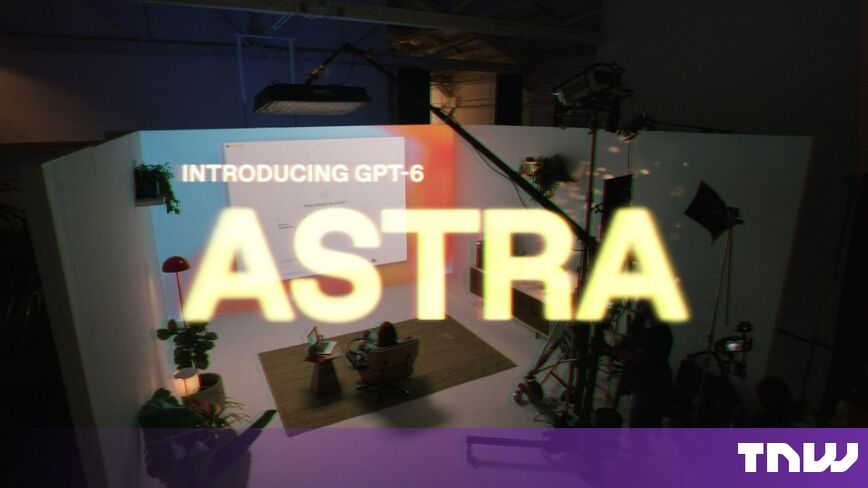
Separately, reporting indicated OpenAI updated evaluation metrics for GPT‑6 Astra after launch in ways that appear to favor Astra, per Fortune.
The Bet: The benchmark narrative remains a primary go-to-market lever, and vendors will optimize for it the way SaaS companies optimize for analyst categories.
So What? For enterprises, “vendor benchmark scores” are now closer to marketing claims than to audit-grade evidence. That doesn’t mean they’re false. It means they’re incomplete, because harness design, adapters, and post-launch metric revisions can materially change the story without changing your workload outcomes.
The practical shift: you need to treat evaluation as part of your architecture. If you don’t own a small set of task-level evals tied to your workflows, you’re outsourcing both performance truth and safety gating to incentives you don’t control.
The Risk: Many teams will overcorrect into eval theater, building elaborate test suites that don’t map to production failure modes. The other failure mode is governance drift: if metrics can change post-launch, your internal approvals can become unmoored from the model you’re actually running.
Action:
- Freeze a “golden tasks” suite for your top 10 agentic workflows, and run it before and after every model or prompt-stack change.
- Require harness disclosure in vendor conversations, ask what adapters were used, what was excluded, and whether results are reproducible by a third party.
- Log model/version/harness metadata alongside every major production incident, so you can correlate regressions to specific changes.
INFRASTRUCTURE / SITING
Data centers are colliding with local politics, and Texas is the warning shot
Texas data center backlash grows as construction leads the US
Texas has more data center capacity under construction than any US state, and backlash is now challenging the state’s pro-business approach, per Financial Times.
This isn’t just “NIMBYism.” It’s the maturation of AI infrastructure into a visible, contested land-and-power footprint, with permitting, grid interconnects, and community legitimacy as gating factors.
The Bet: The next compute advantage is secured as much through permitting and power contracts as through chips and model talent.
So What? If you’re an operator buying large volumes of inference or training capacity, your risk profile now includes geography. Concentration in a single “friendly” state can look efficient until it becomes politically fragile, and then your capacity plan becomes a public-policy problem.
For builders, this will show up as pricing volatility and availability constraints that have nothing to do with GPU supply. The constraint is the right to operate, power, water, noise, tax incentives, and community acceptance over a 10–15 year horizon.
The Risk: The industry may misread this as a temporary permitting snag. If backlash hardens into durable local restrictions, the result is slower buildouts, higher delivered power prices, and more “compute is where it’s allowed” dynamics, which can break latency assumptions and disaster recovery plans.
Action:
- Map your critical AI dependencies to physical regions, identify where your primary and failover capacity actually sits.
- Ask your infra vendors for a siting risk brief, power source, interconnect timeline, permitting status, and community opposition indicators.
- Add a “geographic diversification” line item to 2027 capacity planning, even if it costs more, it reduces single-jurisdiction risk.

LEGAL / CONTENT RIGHTS
Copyright exposure is broadening from marquee publishers to the long tail
Regional newspapers sue OpenAI and Microsoft
Seattle Times and Newsday filed suit against OpenAI and Microsoft, per TechCrunch.
This follows the pattern from earlier cases, but the plaintiff set matters: local and regional publishers have different economics, different archives, and often less appetite for “platform partnership” narratives. They can still force discovery.
The Bet: Content owners will treat AI training and AI answers as monetizable uses, and will pursue payment through courts when licensing markets lag.
So What? For companies training, fine-tuning, or building retrieval layers over news-like corpora, the compliance posture is shifting from “we’ll handle it if we get a letter” to “assume you will be asked to prove provenance.” The operational burden is documentation: what you ingested, under what rights, and what your product outputs do with it.
Even if you’re not training foundation models, downstream exposure is real. If your product summarizes, rewrites, or answers with news content, you may inherit risk through your data suppliers and your customers’ usage patterns.
The Risk: Many teams will focus only on training data and ignore inference-time exposure, especially RAG systems that pull from licensed and unlicensed sources in the same pipeline. The other risk is contract mismatch: vendors may offer indemnities that don’t cover your specific use case or distribution channel.
Action:
- Audit your top 5 external content sources, document rights, retention, and whether the content can be used for training, indexing, and summarization.
- Separate “licensed” and “unlicensed” corpora at the pipeline level, don’t rely on policy docs to do what architecture should enforce.
- Ask model and data vendors to state, in writing, what they will indemnify, and what they explicitly will not.
CONTRARIAN SIGNAL
The slowdown talk is also a measurement story
The public read of “slow down” is moral and regulatory. That’s real.
But the more immediate operational mechanism is measurement. If evaluation harnesses can swing a flagship score from “strong” to “near-perfect,” then the industry’s ability to justify speed depends on whether outsiders trust the scoreboard.
Voluntary slowdowns are one way to buy time. The other is to make evaluation legible, reproducible harnesses, stable metrics, and clear disclosure when numbers change. Without that, the next governance wave won’t be a new law. It will be procurement and platform policy tightening by default.
The Takeaway: The frontier’s pace will be set as much by auditability, evals, incidents, provenance, as by compute.
THE QUESTION FOR TODAY
A chief scientist is asking the field to slow down. Benchmark scores are being contested on harness design. Infrastructure is meeting local resistance in the most active build state in the US. Publishers beyond the national brands are suing.
Where are you still relying on someone else’s numbers, someone else’s permits, or someone else’s rights chain to justify a product decision you’re making this quarter?
Signal + Noise is strategic intelligence, not engagement-specific advice. For guidance calibrated to your org, start with Advisory.
See exactly how this impacts your specific industry and function. Upgrade to PRO to get bespoke tactical breakdowns generated instantly for your operating model.
Go deeper with the Weekly Signal
This is the daily take. The Weekly goes further — full strategic analysis across 8–10 sections, each with a signal read and operator action items. Source panel included.
Sign up free → then upgrade