


Yesterday's signals, distilled, A look back at October 20, 2026.
Power showed up as the binding constraint again.
AWS reportedly bought billions of dollars of Nvidia systems it can’t energize yet. Meta is talking openly about a 1 million–GPU “supercluster” in Ohio. And in parallel, the cloud giants are trying to loosen the software gravity that keeps developers pinned to Nvidia.
At the same time, governance and geopolitics kept bleeding into the compute roadmap. OpenAI reportedly softened its stance on China chip export controls. And inside OpenAI, Sam Altman reportedly framed “endgames” that look less like product strategy and more like institutional design: regulator, lab merger, or runaway advantage.
Then there’s the industrial consolidation thread. Musk says Tesla and SpaceX have formed committees to explore a merger. SpaceX’s own numbers point to a company already operating like a capital-intensive utility: $19.6B in Q3 capex and $5.2B in quarterly connectivity revenue.
The throughline is not “more AI.” It’s the stack hardening into infrastructure, and infrastructure pulling politics, power, and consolidation into the same decision loop.
If you’re an operator, the strategic question is simple: where are you still treating compute as a SKU when the market is treating it as a site, a grid interconnect, and a policy variable?
INFRASTRUCTURE / COMPUTE
Megawatts, not GPUs, are the gating factor
Amazon reportedly warehousing Nvidia systems it can’t power yet
Amazon is buying billions of dollars in Nvidia AI systems but can’t turn them on yet due to power constraints, per Business Insider. The operational detail matters: the constraint has moved downstream from procurement to energization, grid capacity, substation timelines, and permitting.
This is consistent with the broader pattern: the hyperscalers can still buy hardware at scale, but they can’t compress the physical world on demand.
So What? For most enterprises, “GPU access” is no longer the right abstraction. The real dependency is the provider’s ability to deliver powered capacity in the regions you need, on the timeline you need. That changes how you negotiate cloud commitments, how you plan launches, and how you de-risk latency and data residency requirements.
If AWS is sitting on idle racks, smaller buyers should assume that “available in region” can become “available on paper” during demand spikes, especially for high-density AI instances.
The Risk: This reporting doesn’t prove a sustained shortage, power bottlenecks can clear with new interconnects and buildouts. But the planning cycle mismatch (grid upgrades vs. model deployment) is structural, not cyclical.
Action:
- Ask your cloud provider for a written capacity plan by region, powered capacity, not “GPU inventory”, for the next 2 quarters.
- Add a “power and permitting” checkpoint to any AI data center or colo decision, treat it like a security review, not a facilities detail.
- Build a fallback path for critical workloads across at least 2 regions or providers, test failover with real throughput targets.
INFRASTRUCTURE / HYPERSCALER BUILDOUT
The supercluster becomes a regional development project
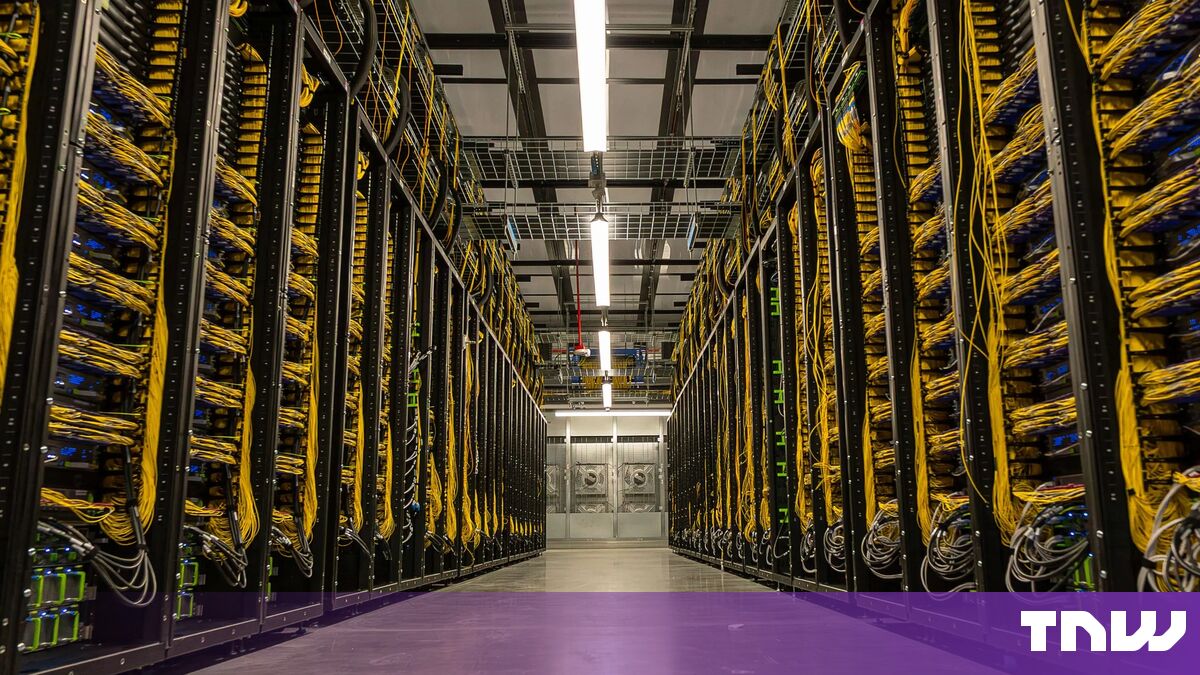
Meta details Prometheus, an Ohio supercluster heading for 1 million GPUs
Meta detailed “Prometheus,” a supercluster in Ohio heading toward 1 million GPUs, per The Next Web. Even without full technical specifics, the scale claim is the point: these are no longer data centers. They’re power-and-fiber campuses with multi-year regional footprints.
This is the other side of the AWS story. The largest players are building their way out of scarcity, by turning geography into infrastructure.
The Bet: The organizations that can secure power, land, and network at campus scale will set the marginal price and availability of frontier inference.
So What? For operators, this changes the “where do we run it” conversation. The mega-cluster era pushes more workloads toward a small set of regions where power and fiber are abundant and politically supported. If you have sovereignty, latency, or regulated-data constraints, you may be forced into a hybrid posture, some workloads ride the mega-clusters, others stay local with smaller models and tighter controls.
It also reframes vendor risk. Your dependency isn’t just on a model API. It’s on a region’s grid, weather, permitting, and local politics, because that’s what your provider is now underwriting.
The Risk: A “heading toward” number is not the same as delivered capacity. Timelines slip. Interconnects get delayed. Community pushback can change build plans. Treat the scale as directionally informative, not a guaranteed delivery schedule.
Action:
- Map which of your AI workloads are region-flexible versus region-bound, document why, not just where.
- Negotiate explicit capacity reservations for the workloads that cannot slip, tie them to service credits that reflect business impact.
- Start measuring “compute per watt” and “tokens per dollar” as first-class KPIs, efficiency becomes a procurement lever when power is scarce.

DEVELOPER PLATFORM / ACCELERATOR ECONOMICS
The fight shifts from chips to developer defaults
Google joins Amazon in pushing PyTorch portability off Nvidia
Google has joined Amazon in shipping tools aimed at moving PyTorch workloads off Nvidia GPUs, per TechCrunch. The immediate target is developer friction, reducing the rewrite tax that keeps teams anchored to CUDA.
This is not a sudden collapse of Nvidia’s position. It’s a long campaign to make “accelerator choice” a runtime decision rather than an architectural commitment.
So What? If you’re building serious AI products, portability is becoming a strategic option, not because you’ll switch tomorrow, but because you want leverage. When the constraint is powered capacity, the ability to run on multiple accelerator backends becomes a supply-chain advantage. It also changes your hiring and tooling decisions: the teams that can abstract hardware without losing performance will ship more reliably under volatility.
This matters most for organizations with spiky demand, regulated timelines, or large training/inference bills, where a single-vendor bottleneck becomes a board-level risk.
The Risk: Portability layers can hide performance cliffs. “Runs” is not “runs efficiently.” The migration story often breaks on kernels, observability, and debugging, not on the first demo.
Action:
- Inventory where you are CUDA-dependent, kernels, libraries, custom ops, and monitoring, not just “we use PyTorch.”
- Run a small portability pilot on a non-critical workload, measure throughput, cost, and engineering time, not just correctness.
- Update vendor scorecards to include “exit cost” and “multi-accelerator support” as explicit line items in renewals.

GOVERNANCE / GEOPOLITICS
Compute policy becomes product policy
OpenAI reportedly retreats from advocating strict US chip export controls to China
OpenAI has retreated from advocating for strict US chip export controls to China ahead of the lame-duck session, aligning closer to President Trump, per Politico. Whatever the motivation, the operational implication is that policy pressure can change quickly, even among the most visible actors in the ecosystem.
This is a reminder that export controls are not a static constraint you can plan around once a year. They’re a variable that can swing with coalition-building and electoral timing.
So What? If you’re forecasting GPU availability, pricing, or China exposure, you need a policy watch function tied to your infrastructure planning, not a quarterly “regulatory update.” Shifts in posture by major labs can change the tone in DC, which can change the probability distribution of restrictions, which can change your supplier behavior.
This matters even if you never sell into China. The global GPU market clears at the margin. Policy shocks propagate into lead times and pricing everywhere.
The Risk: A softened stance from one actor does not remove the underlying geopolitical drivers. It may reduce near-term momentum for specific controls, but it doesn’t eliminate the risk of sudden, targeted actions.
Action:
- Add a “policy volatility” assumption to your 24–36 month compute plan, explicitly model best/base/worst cases for supply and pricing.
- Ask your key vendors how they handle export-control changes operationally, allocation, contract clauses, and delivery prioritization.
- Document which products and customers would be impacted by sudden region-based restrictions, so you can respond without improvising.

CAPITAL / INDUSTRIAL CONSOLIDATION
Vertical integration is back on the table
Musk says Tesla and SpaceX formed committees to explore a merger
Elon Musk said Tesla and SpaceX have set up committees to explore a merger, per Business Insider. The key change is procedural: committees move the idea from informal speculation to a governance process, however exploratory.
The strategic logic is legible: vehicles, energy, launch, satellites, and compute can be assembled into a single industrial flywheel with shared procurement, shared power strategy, and shared data surfaces.
So What? For operators, this is concentration risk and counterparty leverage in one package. If you depend on either company, connectivity, launch, fleet, charging, energy storage, or adjacent supply chains, you should assume a combined entity could reprice priorities and bundle offerings in ways that change your negotiating position.
It also reinforces a broader pattern: the winners in capital-intensive AI-adjacent markets will increasingly be the ones who can finance multi-layer systems, hardware, network, power, and software, under one balance sheet.
The Risk: Committees are not a deal. Regulatory, governance, and stakeholder dynamics can stall or kill it. The practical move is scenario planning, not re-architecting your business around a hypothetical merger.
Action:
- Map your exposure to Tesla and SpaceX as suppliers, partners, and infrastructure dependencies, include second-order dependencies (integrators, resellers, carriers).
- Draft a renegotiation posture now, what you would accept in bundling, what you would refuse, and what your alternatives are.
- Identify the contracts where “change of control” clauses matter, review them before you need them.
SpaceX reports $19.6B in Q3 capex and $5.2B in quarterly connectivity revenue
SpaceX reported Q3 capex of $19.6B, up from $6.9B a year earlier, and Q3 connectivity revenue up 69% YoY to $5.2B, per The Wall Street Journal. That’s a company scaling like infrastructure, heavy capex paired with recurring network revenue.
This is the financial substrate behind the merger talk: the ability to fund a vertically integrated system at speed.
So What? Starlink-class connectivity is no longer “edge access.” It’s becoming a distribution layer that can carry workloads, data, and operational control into places terrestrial networks don’t reach reliably. For many operators, logistics, energy, maritime, defense-adjacent, remote industrial, connectivity decisions are now architecture decisions.
And as capex ramps, SpaceX’s incentives tilt toward utilization. Expect more packaged offerings that pull customers into a broader stack, connectivity plus compute-adjacent services, because that’s how infrastructure gets paid back.
The Risk: Capex scale can outpace demand or execution. Revenue growth is strong, but operators should still validate SLAs, latency profiles, and support models for their specific environments before making it a single point of failure.
Action:
- Reassess where “always-on” connectivity changes your product assumptions, especially for remote operations and field data capture.
- Pilot Starlink (or equivalent) in one mission-critical workflow, measure uptime, latency variance, and operational overhead.
- Add connectivity providers to your AI risk register, because data movement and model access increasingly depend on the network layer.
CONTRARIAN SIGNAL
The compute shortage story is really a governance story
The popular narrative is that we’re short on GPUs and power.
The more operationally useful framing is that we’re short on permissioning: who gets to build, where, with what energy mix, under what local political terms, and with what national-security constraints. The “power bottleneck” is not just physics. It’s a governance interface between hyperscalers, utilities, regulators, and communities.
That’s why the same day can contain “AWS can’t turn it on,” “Meta is heading to 1 million GPUs,” and “export-control posture shifts.” The constraint isn’t a single resource. It’s the coordination capacity of institutions.
The Takeaway: Treat compute planning like regulated infrastructure planning. Your advantage comes from anticipating the non-technical gates, power, permitting, policy, and counterparty concentration, before they hit your roadmap.
THE QUESTION FOR TODAY
AWS can buy systems before it can power them. Meta is planning at a scale that turns regions into campuses. Cloud providers are trying to make accelerator choice less sticky. Policy posture is shifting in public, and “endgames” are being discussed in private. Vertical integration is back in the conversation.
Where is your roadmap still assuming that compute availability is a procurement problem, not a power-and-policy problem?
Signal + Noise is strategic intelligence, not engagement-specific advice. For guidance calibrated to your org, start with Advisory.
See exactly how this impacts your specific industry and function. Upgrade to PRO to get bespoke tactical breakdowns generated instantly for your operating model.
Go deeper with the Weekly Signal
This is the daily take. The Weekly goes further — full strategic analysis across 8–10 sections, each with a signal read and operator action items. Source panel included.
Sign up free → then upgrade