
Yesterday's signals, distilled, A look back at September 13, 2026.
The day split cleanly into two tracks.
On one track: Washington signaling it won’t be the primary author of AI safety rules in the near term. The President dismissed slowdown calls. The House Speaker said Congress won’t “lead the charge” on AI safety. Democrats, meanwhile, began organizing internally around an AI action agenda.
On the other track: the labs moving anyway, toward self-governance and toward capital markets. The most important detail wasn’t a new model release. It was the behind-the-scenes push by major labs to form an industry-led standards body, and the parallel move to make frontier AI legible to public markets via an Anthropic IPO path.
This is what institutionalization looks like when formal regulation lags: private rulebooks, disclosure regimes, and compliance checklists harden first, then government catches up, often by borrowing the private scaffolding.
For operators, the practical implication is uncomfortable but actionable. You may be entering a period where “what’s allowed” is set by a mix of vendor policy, industry standards, and litigation risk, before it’s set by statute.
The strategic question to carry into this week: if your AI program had to pass a third-party audit built from lab-authored standards, would you pass, or would you discover you’ve been operating on undocumented assumptions?

GOVERNANCE / STANDARDS
Private rulemaking is forming upstream of regulators
Anthropic, OpenAI, and Google discuss an industry-led AI standards body Major labs have held working group meetings since July to discuss creating an industry-led standards body for AI, according to reporting on the behind-the-scenes effort to “police” the industry, per The Information.
The key detail is timing. “Since July” means this is not a reaction to a single headline, it’s a sustained attempt to converge on shared norms while policy remains unsettled.
The Bet: If the labs can align on standards, they can shape the compliance surface area that everyone else will inherit.
So What? This is a control-point move. A credible standards body becomes the template for procurement requirements, insurance underwriting, and enterprise risk sign-off, especially in regulated sectors that need something concrete before Congress produces text.
It also changes how “safety” shows up in your roadmap. Safety stops being a values statement and becomes an integration requirement: evals, incident reporting, model behavior disclosures, and potentially standardized “refusal” and escalation behaviors across vendors.
The Risk: Industry-led standards can fragment, multiple bodies, competing checklists, and jurisdiction-specific overlays. And if the standards are too permissive or too vague, they won’t reduce liability exposure; they’ll just create paperwork.
Action:
- Inventory which of your AI-dependent workflows would fail if vendors required standardized eval reporting, incident disclosure, or stricter usage attestations.
- Ask your model vendors what evals they run by default, what they will disclose to customers, and what they expect customers to run themselves.
- Draft a one-page “AI safety case” for your highest-risk deployment, what you tested, what you monitor, and who can shut it down.
CAPITAL FLOWS / PUBLIC MARKETS
Frontier AI is preparing to be priced like infrastructure
Anthropic said to choose Nasdaq for a much-anticipated IPO listing Anthropic has chosen Nasdaq for its IPO listing, per Bloomberg Technology.
This lands in the same week that OpenAI publicly ruled out a 2026 listing, so the market is about to get a live A/B test of how “frontier governance” interacts with quarterly disclosure and investor expectations.
The Bet: Public markets will accept frontier AI risk if it’s packaged as governed infrastructure with credible controls and predictable revenue.
So What? An Anthropic IPO isn’t just a liquidity event. It’s a benchmarking event. Once a frontier lab is public, the entire stack gets repriced against a visible multiple, cloud commitments, inference margins, enterprise AI vendors, and “AI-native” services that depend on one lab’s roadmap.
For operators, the immediate implication is vendor behavior. Public-company cadence tends to harden roadmaps, disclosure practices, and risk language. Expect more formal deprecation schedules, more explicit acceptable-use enforcement, and more customer pressure to adopt “supported” patterns that reduce the vendor’s incident and liability exposure.
The Risk: IPO intent does not equal IPO completion. Market conditions, policy shocks, or a major incident could change timing. And even if the listing proceeds, public-market transparency can create second-order volatility, customers may overreact to quarterly commentary on safety, capex, or release pacing.
Action:
- Map single-vendor dependency in your AI stack, models, eval tooling, fine-tuning pipelines, and safety filters, and document what breaks if terms tighten or access changes.
- Build a lightweight “model portability” plan for one critical workflow, prompt formats, tool schemas, eval harnesses, so switching costs are known, not guessed.
- Update procurement language to require notice periods for model changes, safety policy shifts, and deprecations.

U.S. POLICY / LIABILITY
Federal hesitation increases the burden on operators to self-govern
Speaker Johnson says Congress won’t lead on AI safety House Speaker Mike Johnson said Congress won’t lead the charge on regulating AI safety and that AI companies should take responsibility for product safety, per Axios.
This is not “no regulation.” It’s a signal that near-term governance may route through existing mechanisms, product liability, consumer protection, sector regulators, and state-level action, rather than a single federal AI safety regime.
So What? If Congress is not the primary author, the enforcement edge shifts to courts, agencies, and procurement. That’s a different operating environment: less clarity up front, more consequence after the fact.
For builders, this changes what “compliance” means this quarter. It’s less about waiting for a federal checklist and more about being able to demonstrate reasonable care: documented testing, monitoring, incident response, and human oversight where it matters.
The Risk: A permissive federal posture can create complacency, until a high-profile incident triggers a fast, reactive policy cycle. The whiplash risk is real: permissive rhetoric followed by sudden constraints.
Action:
- Treat your AI deployments like you’d treat security controls, write down what you do, why it’s sufficient, and who owns it.
- Add an “AI incident” lane to your existing incident response process, severity levels, escalation paths, and external comms triggers.
- Identify the two state jurisdictions where your exposure is highest and track their AI-related enforcement posture weekly.
President Trump dismisses calls for an AI slowdown President Trump dismissed calls for an AI slowdown, framing them as driven by “negative forces,” per Financial Times.
So What? This increases the probability of a patchwork: pro-speed federal posture alongside stricter state rules, sector regulators, and private standards. Operators in regulated industries should plan for uneven constraints, where your strictest customer or jurisdiction becomes your de facto baseline.
The Risk: Speed-first rhetoric can widen the gap between what’s technically prudent and what’s politically rewarded. That gap tends to be filled by reputational risk and litigation, not thoughtful policy.
Action:
- Set your internal deployment gates based on your risk profile, not on the assumption that federal rules will define “safe enough.”
- Prepare a board-ready memo on your AI risk posture, what you deploy, where, with what controls, before you’re asked for it under pressure.
PLATFORMS / DEVICES
Apple is expanding the iPhone’s interaction surface, foldables and gaming as distribution
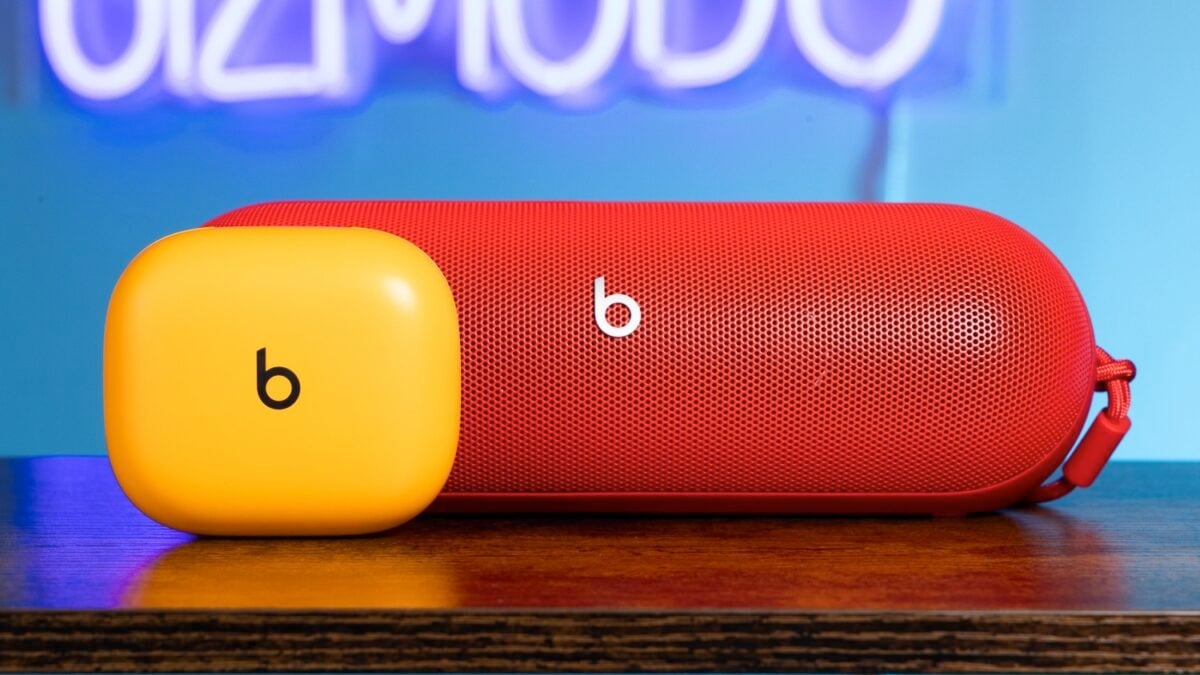
Apple’s iPhone Duo and a Beats-branded push into game controllers Apple’s iPhone Duo is positioned to bring foldables into the mainstream, and sources indicate iPhone game controllers will launch under the Beats brand, per Bloomberg.
Foldables are not just a hardware curiosity. If Apple normalizes them, they become a default design target, because Apple’s install base tends to pull developer priorities behind it.
The Bet: Apple wants the iPhone to be a multi-mode computing surface, communication, creation, and increasingly gaming, without requiring a new platform.
So What? Foldables change UI assumptions: multi-state layouts, continuity across screen configurations, and new “two-pane” interaction patterns that can make certain workflows feel closer to tablet productivity than phone consumption.
The Beats controller angle matters because it’s a distribution and segmentation play. Beats can carry culture-forward, faster-iteration accessories without forcing the core Apple brand to absorb every experiment. For operators shipping mobile experiences, this is a reminder that accessory ecosystems can shift engagement patterns, especially in gaming, media, and creator workflows.
The Risk: Foldable adoption could be slower than the narrative suggests, and developers can over-invest in edge-case UI. The controller push could also remain niche if Apple doesn’t back it with platform-level software hooks and merchandising.
Action:
- Audit your iOS app for foldable readiness, layout breakpoints, multi-window states, and continuity across orientations.
- Identify one workflow where a two-pane UI would materially improve conversion or retention and prototype it, don’t redesign the whole app.
- If you ship mobile content, revisit your roadmap assumptions about session length and control schemes, touch-only may not be the ceiling.
CONTRARIAN SIGNAL
“Congress won’t lead” is not deregulation. It’s a shift to enforcement after deployment.
The easy read is that Washington is stepping back, so operators can move faster.
The more accurate read is that the governance burden is being redistributed. If Congress doesn’t write the rulebook, you still get rules, via vendor standards, procurement requirements, state action, and courts deciding what “reasonable care” looked like after something breaks.
That environment rewards teams that can produce evidence, not teams that can produce narratives.
The Takeaway: If you can’t explain your AI controls in plain language, with artifacts, you’re not “moving fast.” You’re accumulating unpriced liability.
THE QUESTION FOR TODAY
Private standards are forming upstream. Public markets are preparing to price frontier risk. Federal leaders are signaling limited appetite to author a single safety regime. That pushes governance into vendors, contracts, and courts. And it makes your documentation and eval discipline part of your operating model.
If a major customer asked you this week to prove your AI system is safe enough for their risk committee, what would you hand them?
Signal + Noise is strategic intelligence, not engagement-specific advice. For guidance calibrated to your org, start with Advisory.
See exactly how this impacts your specific industry and function. Upgrade to PRO to get bespoke tactical breakdowns generated instantly for your operating model.
Go deeper with the Weekly Signal
This is the daily take. The Weekly goes further — full strategic analysis across 8–10 sections, each with a signal read and operator action items. Source panel included.
Sign up free → then upgrade