
Yesterday's signals, distilled, A look back at September 24, 2026.
Anthropic signed an $11.6B cloud-services commitment with Akamai, and took an option to own up to 5% of the provider.
Oracle sent a force majeure notice tied to a 2.45 GW New Mexico data center project, effectively putting schedule and payment terms on the table years ahead of delivery.
And Washington reportedly asked OpenAI and Anthropic to hold new models from UK testers until a US review, a small procedural move that still changes how “global evals” work in practice.
Underneath the headlines is a single throughline: the AI stack is getting financed and governed like critical infrastructure.
That shows up in contracts, long-dated capacity deals with equity-like features. It shows up in build risk, power, permitting, and construction uncertainty being pushed into legal language. And it shows up in jurisdiction, model access sequencing becoming a policy lever, not just a product decision.
The strategic question for operators is no longer “which model is best.” It’s: where are you exposed to someone else’s delivery timeline, someone else’s legal terms, and someone else’s regulator.

INFRASTRUCTURE / CLOUD CAPACITY
AI demand is underwriting “alternative cloud”, and buyers are negotiating like utilities
Anthropic–Akamai cloud services deal with equity option
Anthropic committed to spend $11.6B over seven years on Akamai cloud services and secured an option to take a stake of up to 5% of Akamai, per Reuters. Akamai shares jumped more than 17% after hours on the news.
This is not just “another big cloud contract.” The structure matters, long-term committed spend plus equity optionality is closer to how strategic buyers behave in energy, telecom, and shipping than how software buyers typically behave in cloud.
The Bet: If you can guarantee demand, you can buy not just price, but influence, priority, and optionality.
So What? Cloud for frontier labs is drifting from on-demand consumption toward capacity underwriting. That changes the negotiating posture available to any large AI buyer with credible volume, you can trade commitment length and predictability for economics, roadmap input, and operational priority when capacity is scarce.
It also widens the field of “real” AI infrastructure providers. If Akamai can lock in multi-year AI demand at this scale, the market is implicitly saying that hyperscale isn’t the only path to GPU-backed services, and that distribution networks, edge footprints, and enterprise relationships can be converted into AI capacity businesses when paired with committed offtake.
The Risk: Long-dated commitments can become technical debt if model architectures, hardware preferences, or deployment patterns shift faster than the contract. And equity optionality cuts both ways, it can align incentives, but it can also complicate vendor governance, procurement independence, and exit flexibility.
Action:
- Inventory your top 3 compute dependencies and rewrite them as contract risks, renewal dates, termination rights, delay remedies, and priority language.
- Ask your providers what “priority” actually means under scarcity, queue position, reserved capacity, or best-effort marketing.
- If you have credible volume, explore commitment-for-economics structures, but require explicit performance and delivery clauses, not just discounts.
INFRASTRUCTURE / DATA CENTERS
Force majeure is becoming a first-class variable in AI capacity planning
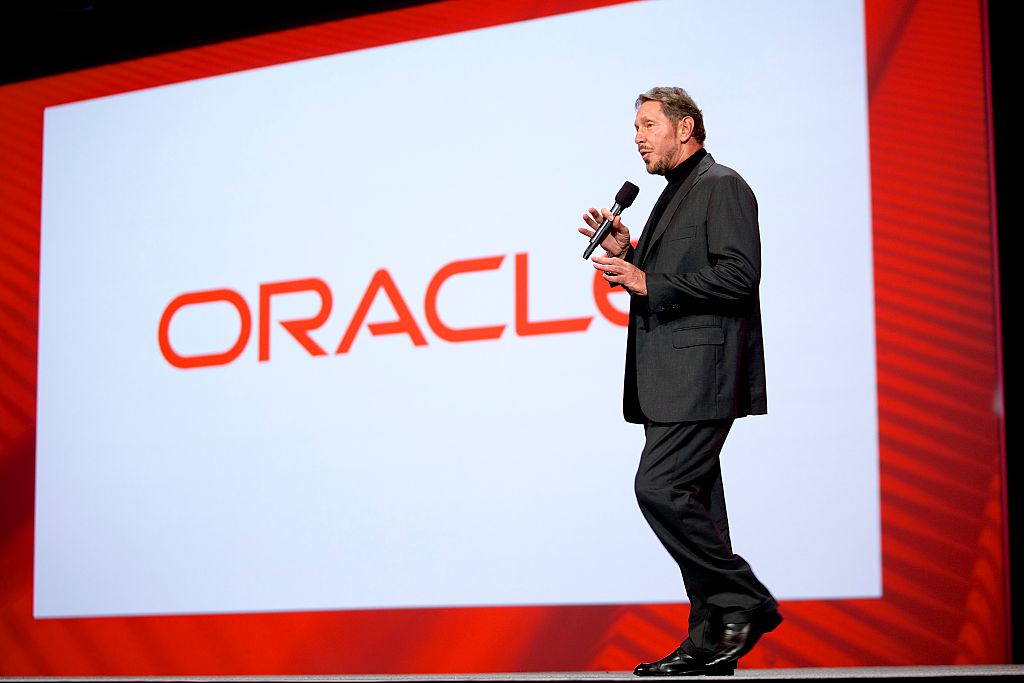
Oracle force majeure notice tied to 2.45 GW Project Jupiter
Oracle sent a force majeure notice to Blue Owl to delay payments on the 2.45 GW Project Jupiter data center in New Mexico if it fails to launch in 2028, per Bloomberg.
The detail to sit with is the scale, 2.45 GW is not a “data center,” it’s an energy project with servers attached. When projects reach this size, the failure modes look like infrastructure: transmission, water, permitting, labor, and multi-year construction sequencing.
The Bet: The market will tolerate more schedule uncertainty if the legal and financial terms can be made survivable.
So What? AI capacity is now a forward contract on physical delivery. That means your AI roadmap is exposed to the same kinds of slippage that hit LNG terminals and semiconductor fabs, and the exposure is often hidden behind cloud branding.
Force majeure language moving into the center of these deals is a tell: counterparties are explicitly pricing in the possibility that “promised capacity” does not arrive on time. For operators, this shifts the work from vendor selection to scenario design, what breaks if 2028 capacity becomes 2029, and which workloads get priority when it does.
The Risk: A force majeure notice is not, by itself, proof of non-delivery. But it is proof that delivery risk is being actively managed, and that the legal posture is being set early. If your procurement process treats “region launch dates” as commitments rather than probabilistic targets, you will get surprised.
Action:
- Build a delay scenario for every workload that assumes 6–12 months of capacity slip, decide now what gets paused, moved, or downgraded.
- Pull your cloud and colo contracts and highlight force majeure, delay remedies, and termination rights, then ask counsel what you actually can enforce.
- Map power and permitting exposure by region for your critical vendors, not for curiosity, for continuity planning.
GOVERNANCE / SOVEREIGNTY
Model access is becoming sequenced by jurisdiction, and eval pipelines will fragment
White House asks labs to hold new models from UK testers until US review
The White House asked OpenAI and Anthropic to hold new models from UK testers until a US review, sources said, per Business Insider.
This is a procedural move, not a sweeping law. But it’s the kind of procedural move that becomes a durable operating constraint once it’s normalized.
The Bet: Pre-release evaluation is now part of national security process, not just product QA.
So What? If frontier model access is sequenced by government review, “global red-teaming” stops being a single coordinated event and becomes a staggered rollout with jurisdictional gates. That matters for any operator who depends on early access, your evaluation timelines, safety sign-offs, and launch plans may no longer be globally synchronized.
It also changes how to interpret vendor promises. “You’ll get the model when it’s ready” becomes “you’ll get the model when it’s cleared for your jurisdiction and your testing pathway.” For multinational teams, that creates a new class of internal friction: different regions running different model versions, with different tool permissions, at different times.
The Risk: Staggered access can create shadow evaluation, teams will route around constraints to keep shipping. That increases governance risk and makes incident response harder because the organization loses a single source of truth about what model was used where.
Action:
- Document your model-evaluation pipeline as a gated process, who approves, what artifacts are required, and how jurisdiction affects timing.
- Design for version skew, ensure your product can tolerate different model versions across regions without breaking compliance or user experience.
- Ask vendors directly how government review affects your access tier, and get the answer in writing for procurement files.
ENTERPRISE CONTROL PLANE
Shadow agents are now the default, and the oversight gap is measurable
• Dataiku: 81% of CIOs lack full oversight of AI agents built outside IT, per The Next Web, agent governance is becoming asset governance, not policy theater. • BrightEdge: ChatGPT sent 95.1% of AI referral traffic to websites in August, per The Next Web, distribution is consolidating into a single answer surface faster than most content teams are instrumented to see.
Signal: The control plane is splitting in two, internal (agents) and external (answer surfaces), and both are consolidating around a few chokepoints.
Action:
- Stand up a basic agent registry this week, owner, tools, permissions, logs, kill switch.
- Instrument “answer-surface” performance separately from SEO, track citations, snippet inclusion, and referral quality, not just traffic.
CONTRARIAN SIGNAL
The big story isn’t “more compute.” It’s who gets to write the terms.
Most teams read yesterday as an infrastructure day, a giant cloud commitment here, a giant data center dispute there.
The more operational reading is that the stack is being re-written as a set of enforceable terms: offtake commitments with equity-like features, force majeure clauses that pre-negotiate failure, and jurisdictional review that pre-negotiates access.
That’s not abstract governance. It’s the mechanism by which power moves up the stack, from model quality to delivery rights, from product roadmaps to contract language, from “best model wins” to “best terms survive scrutiny.”
The Takeaway: If you don’t treat contracts, jurisdiction, and delivery timelines as part of your AI architecture, you’re building on an invisible dependency graph you don’t control.
THE QUESTION FOR TODAY
Compute is being bought with multi-year commitments. Data centers are being financed with explicit non-delivery clauses. Model evaluation is being pulled into jurisdictional sequencing. Agents are proliferating outside IT oversight. Distribution is consolidating into a small number of answer surfaces.
Where, specifically, are you assuming someone else’s timeline is your guarantee?
Signal + Noise is strategic intelligence, not engagement-specific advice. For guidance calibrated to your org, start with Advisory.
See exactly how this impacts your specific industry and function. Upgrade to PRO to get bespoke tactical breakdowns generated instantly for your operating model.
Go deeper with the Weekly Signal
This is the daily take. The Weekly goes further — full strategic analysis across 8–10 sections, each with a signal read and operator action items. Source panel included.
Sign up free → then upgrade