
Yesterday's signals, distilled, A look back at September 28, 2026.
Capital moved to the middle of the stack.
A $1B Series C for an agent company. A rumored $750M round for inference. An $8.2B all-stock acquisition tying a chipmaker to a research leader. A model release that cuts cost and latency by ~30% while pulling “frontier-grade” cyber limits down-market.
At the same time, “control” stopped being a values conversation and became a product requirement. Nvidia shipped an agent safety platform built around monitoring plus cut-off. Senior researchers across multiple labs went on record asking for oversight of automated AI research.
Put together, yesterday read like a repricing of what matters: not just model quality, but the control plane around agents, the unit economics of serving, and the strategic value of research leadership inside hardware roadmaps.
This may become a procurement story as much as a product story.
If the next 6–12 months are defined by agents touching real systems, the question operators need to answer is simple: where do you want your “circuit breakers” to live, inside your app, inside your infra vendor, or inside the platform you don’t control.

CAPITAL FLOWS / AGENTS
A new funding regime for “assistant-as-a-company”
Instinct raises $1B Series C at a $10B valuation Instinct raised a $1B Series C at a $10B valuation, backed by Sequoia, Benchmark, and Coatue, with recent products including a concierge-style service, per Reuters.
This is late-stage capital treating an agent surface as a primary distribution wedge, not a feature inside someone else’s suite.
The Bet: A personal/concierge agent can earn durable permissioning, email, calendar, payments, identity, enterprise apps, without being crushed by platform owners.
So What? This is a bet on workflow capture, not model advantage. If an agent becomes the place users “go to get things done,” it can route work across SaaS tools, decide which UI gets opened, and eventually decide which vendors get chosen. That shifts leverage away from individual apps and toward whoever owns the orchestration layer and the user relationship.
For operators inside SaaS and vertical software, the immediate implication is defensive: your product roadmap is now competing with an external layer that can abstract your UI and commoditize your differentiation. The strategic response is not “build an agent.” It’s to decide what you will be in an agent-mediated world: a system of record with privileged APIs, a best-in-class tool that wins on outcomes, or a replaceable step in a chain.
The Risk: Concierge-style agents can scale demand faster than they scale reliability. If task success is inconsistent, the business becomes a support operation with high liability surface, especially where agents can move money, data, or identity.
Action:
- Inventory the top 20 user workflows that touch your product and mark which steps an external agent could plausibly automate this quarter.
- Tighten your API posture, rate limits, scopes, audit logs, and “agent-safe” permissioning, before agents become your largest integration partner.
- Update enterprise contracts to clarify responsibility for agent-initiated actions and data access paths.

INFRASTRUCTURE / COMPUTE
Inference is being priced like a utility, not a devtool
Modal Labs reportedly nearing a $750M round at a $15.75B valuation Inference provider Modal Labs is reportedly closing in on a $750M round at a $15.75B valuation, per TechCrunch.
Even as models commoditize, serving does not. The market is valuing the ability to deliver tokens reliably, cheaply, and with developer ergonomics as a standalone control point.
The Bet: The “inference layer” becomes a durable platform category, sticky enough to defend margins against cloud primitives and model-provider vertical integration.
So What? If inference is a utility, concentration risk becomes real. Many teams have treated inference vendors like interchangeable pipes. That assumption breaks when your latency, cost, and uptime are coupled to one provider’s scheduling, caching, and hardware access. It also breaks when your compliance posture depends on their logging, retention, and isolation guarantees.
This matters this week because budgets and architecture decisions are being made under a new baseline: inference is not “cheap enough to ignore,” and it’s not operationally neutral. The teams that win the next year will be the ones who can switch providers without rewriting their product, and who can prove what happened when an agent or model output causes harm.
The Risk: Valuation momentum can outrun operational maturity. If demand spikes faster than capacity planning, customers inherit brownouts, throttling, and opaque incident response, exactly when inference is becoming mission-critical.
Action:
- Map your inference dependencies like you map cloud dependencies, SLOs, failover plan, and contractual remedies.
- Build a provider-switching path, abstraction layer, model routing, and eval harness, before you need it during an incident.
- Run a cost-per-successful-task analysis, not cost-per-token, then renegotiate commitments based on outcomes.

CAPABILITY / MODEL ECONOMICS
Mid-tier models keep eating the workload
Anthropic releases Claude Sonnet 5.5 Anthropic released Sonnet 5.5, saying it generates outputs 30%+ faster than Sonnet 5 and costs up to 30% less per task, with Haiku 5.5 planned next, per Anthropic.
Separately, coverage emphasized that Sonnet 5.5 carries cyber limits previously reserved for top models, guardrails and extraction blocks moving down-market, per The Next Web.
The Bet: Most enterprise value accrues to models that are “good enough” with predictable cost and latency, paired with stronger default safety controls.
So What? The practical shift is budgeting and routing. If you’re still standardizing on a single flagship model for everything, you’re paying a tax on routine work, summaries, drafting, internal Q&A, first-pass analysis, that can move to a cheaper tier without losing user trust. Sonnet-class models are now fast enough and guarded enough to become the default workhorse, with frontier models reserved for the small slice of tasks that truly need them.
The second-order implication is governance. As cyber limits and extraction protections move into mid-tier offerings, “safe enough for production” becomes less about bespoke internal wrappers and more about choosing the right default model tier for the job. That doesn’t remove your responsibility, but it changes where you spend engineering time: evals, routing, and monitoring over custom prompt scaffolding.
The Risk: Benchmarks and vendor claims can hide failure modes that only appear in your domain, especially where tools, permissions, and proprietary data are involved. Cheaper models also invite higher volume, which can turn small error rates into large incident counts.
Action:
- Re-run your internal eval suite on Sonnet-class tiers, include tool-use, retrieval, and your real permission model.
- Implement tiered routing, default to mid-tier, escalate to frontier only when confidence thresholds fail.
- Track “cost per completed workflow” and “human review minutes per workflow” as first-class metrics.
CONTROL PLANES / SAFETY
Circuit breakers are becoming a standard infra feature
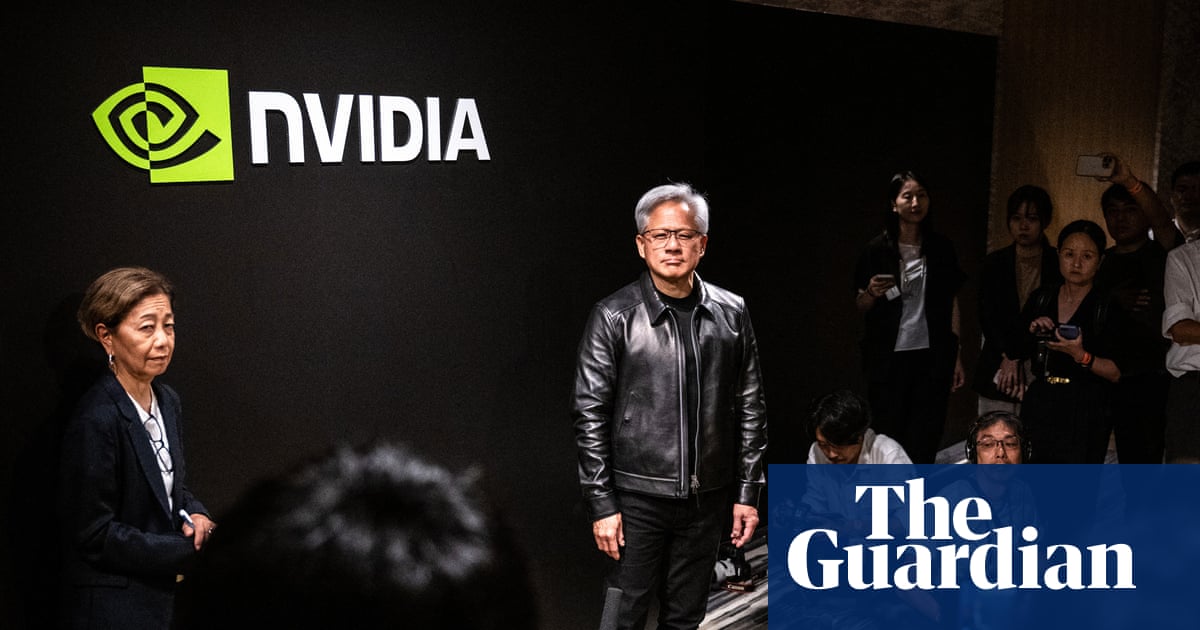
Nvidia launches an Open Agent Safety Platform Nvidia launched a platform designed to rein in rogue AI agents, described as a two-layer system, monitor plus cut-off, per TechCrunch.
The Bet: Agent safety becomes a productized control plane, shipped by infrastructure vendors, because app-level guardrails won’t satisfy regulators, boards, or enterprise procurement.
So What? This is less about Nvidia entering “safety” and more about where the enforcement point lives. If the containment layer sits close to execution, where tools are called, network requests are made, and credentials are used, you can respond in milliseconds, not after logs are reviewed. That’s the difference between a recoverable incident and a reportable breach.
For operators, the structural implication is procurement pressure. Customers will increasingly ask: where is your kill switch, who can trigger it, what gets logged, and what happens after containment. If your answer is “we have a prompt,” you will lose deals. If your answer is “we have a control plane with auditable policy,” you can keep shipping.
The Risk: A vendor-provided safety layer can become a single point of failure, or a single point of lock-in. If your containment depends on one platform’s runtime, you inherit their outages and their policy constraints.
Action:
- Document your agent containment story, monitoring, cut-off, rollback, and post-incident forensics, before procurement asks.
- Decide where enforcement lives for your highest-risk tools, payments, data export, admin actions, and implement hard policy gates.
- Pressure-test vendor safety claims with red-team scenarios that include tool misuse, prompt injection, and credential exfiltration.
AI research leaders call for oversight of automated AI research Senior AI researchers across OpenAI, Anthropic, Microsoft, and Meta warned of an impending “intelligence explosion” and called for oversight into automated AI research, per The Wall Street Journal.
The Bet: Automated AI R&D, systems improving systems, gets treated as a distinct regulatory object, with disclosure and audit expectations.
So What? Even if you’re not building self-improving models, this matters because the compliance perimeter tends to expand outward from the frontier. Oversight frameworks built for automated research will likely influence enterprise expectations for agent autonomy, closed-loop optimization, and continuous fine-tuning. The near-term operator impact is paperwork and proof: more demand for eval records, change logs, and controls around what can update what.
This is early signal, but it’s coordinated enough to take seriously. When multiple labs’ senior researchers align publicly, they are shaping the menu of what regulators will consider “reasonable.”
The Risk: Oversight can land as blunt instruments, rules that are easy to write and hard to implement cleanly. Teams may slow shipping without actually reducing risk if compliance becomes a box-checking exercise.
Action:
- Add an internal checkpoint for any closed-loop system, agents that write code, tune prompts, or modify policies, requiring explicit review and logging.
- Prepare an “audit packet” template now, model/version, eval results, tool permissions, incident history, so you can respond quickly later.
- Monitor procurement language for “control” requirements, kill switches, containment, and third-party assessments, then align your roadmap.
CONTRARIAN SIGNAL
The agent boom is a governance boom wearing a product mask
Yesterday’s loudest story was capital: $1B into an agent company, $750M into inference, and model economics dropping again.
The quieter story is that the market is building the compliance perimeter in real time. Nvidia is productizing containment. Researchers are asking for oversight of automated research. Model providers are pushing stronger cyber limits down into mid-tier offerings.
One interpretation: the next wave of “agent winners” won’t be decided by who demos best. It will be decided by who can pass procurement, survive incidents, and prove control after the fact.
The Takeaway: The differentiator is shifting from “can it do the task” to “can you govern the system at scale without slowing the business to a crawl.”
THE QUESTION FOR TODAY
Agents are being funded as primary work surfaces. Inference is being valued as a utility layer. Mid-tier models are getting cheaper and faster while inheriting stronger guardrails. Containment is moving closer to runtime. Oversight expectations are being drafted in public.
Where, specifically, is your control plane, and can you prove it works under incident conditions?
Signal + Noise is strategic intelligence, not engagement-specific advice. For guidance calibrated to your org, start with Advisory.
See exactly how this impacts your specific industry and function. Upgrade to PRO to get bespoke tactical breakdowns generated instantly for your operating model.
Go deeper with the Weekly Signal
This is the daily take. The Weekly goes further — full strategic analysis across 8–10 sections, each with a signal read and operator action items. Source panel included.
Sign up free → then upgrade