

Yesterday's signals, distilled, A look back at October 18, 2026.
Public-market gravity showed up in infrastructure.
Nscale’s IPO valuation debate wasn’t really about a number. It was about what happens when a neocloud’s story depends on a small set of hyperscaler relationships, and one of those relationships changes weeks before pricing.
At the same time, the “build more data centers” narrative kept colliding with the physical world. Permitting, power, and local politics are now first-order constraints. The Financial Times’ tally of delayed and blocked projects is the kind of data point that forces operators to stop treating capacity as an abstract SKU.
And on the capability side, Anthropic’s moves rhymed: agents that negotiate deals, and a governance structure that hardwires a public-benefit vehicle into the cap table. Different audiences, law firms and capital markets, but the same underlying shift: frontier labs are building operating layers around models, not just models.
Underneath all of it is a single question that’s becoming hard to dodge: when your roadmap depends on compute you don’t control, what do you do when capital markets, permitting, and counterparties all start adding friction at the same time.
INFRASTRUCTURE / CAPITAL MARKETS
Neoclouds are getting priced like counterparties, not like narratives
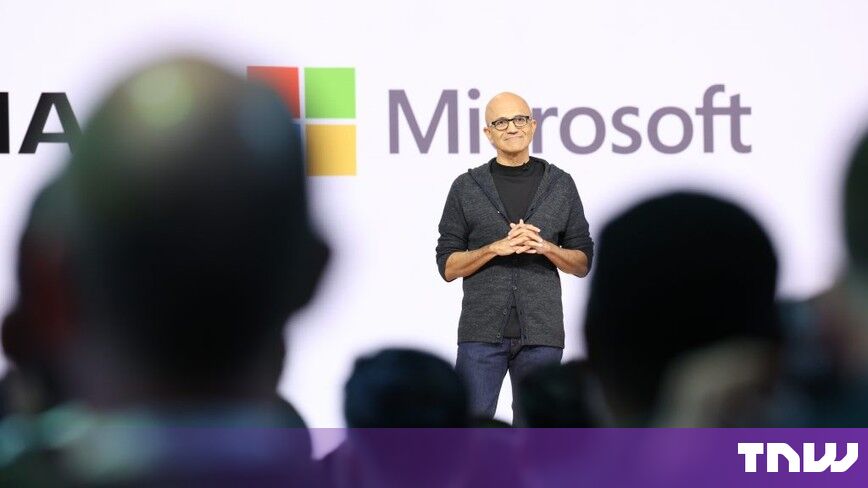
Nscale IPO valuation pushback as Microsoft exits a UK data center deal
Investors are pushing back on Nscale’s targeted ~$30B IPO valuation, with some arguing for $16B to $19B, after Microsoft exited a UK data center deal tied to the company, per Bloomberg.
The immediate fact pattern is simple: a hyperscaler relationship changed, and the underwriting conversation moved from option value to dependency risk.
The Bet: Public investors will treat neoclouds less like “AI exposure” and more like infrastructure businesses with concentrated customer risk and contract fragility.
So What? If you buy compute from a neocloud, you’re not just buying GPUs. You’re buying their ability to keep power, sites, financing, and anchor tenants aligned long enough to deliver your capacity when you need it. The market is starting to price that as counterparty risk, meaning your procurement posture has to look more like supply-chain management than SaaS vendor selection.
This also changes how enterprise buyers should interpret “capacity commitments.” A commitment is only as good as the provider’s contracted power, permitting status, and tenant stability. When a single hyperscaler can swing sentiment weeks before an IPO, it’s a reminder that your own workloads can become collateral damage in someone else’s capital markets timeline.
The Risk: It’s easy to over-read one deal change as a sector-wide collapse. Many providers will still deliver. The operational risk is assuming that “backed by” or “partnered with” implies durable capacity access without reading the contract and the site plan.
Action:
- Inventory your neocloud exposure, map which workloads assume a specific provider’s delivery dates and which can move.
- Renegotiate for exit ramps, portability clauses, step-in rights, and clear remedies for delayed energization or GPU delivery.
- Add counterparty checks to procurement, power contracts, permitting milestones, and customer concentration should be reviewed like a critical supplier.
INFRASTRUCTURE / POWER & PERMITTING
Compute roadmaps are now constrained by local politics and grid reality
US data center pipeline credibility questioned as projects stall
RegLayer data cited by the Financial Times shows 47+ large US data center projects delayed, withdrawn, or blocked in 2026, and Bernstein estimates ~35% of the planned US data center pipeline is credible, per Financial Times.
This is the unglamorous limiter on “inference everywhere” plans: you can’t deploy what you can’t power.
The Bet: The next 12–24 months of AI capacity planning will be shaped as much by permitting and interconnect queues as by chip supply.
So What? For operators, this is a planning discipline shift. If your AI roadmap assumes elastic capacity at a predictable price curve, you now need a second plan that assumes constrained supply and regional scarcity. The constraint won’t always show up as “no GPUs available.” It will show up as delayed commissioning, higher delivered power costs, and capacity that exists on paper but not on the grid.
This also changes vendor conversations. Cloud and neocloud providers will increasingly differentiate on site execution, power procurement, local approvals, water strategy, and community relations, because those are the gating factors. If you’re negotiating multi-year commitments, you should be asking “where is the power, what’s the interconnect status, and what’s the permitting path” with the same seriousness you ask about GPU SKUs.
The Risk: Credibility estimates can lag fast-moving buildouts, and some projects will unstick quickly. The bigger risk is organizational, teams treating data center capacity as a procurement problem when it’s now a land-use and energy problem.
Action:
- Map your capacity dependencies by region, identify which roadmaps assume specific geographies coming online.
- Ask providers for site-level milestones, energization dates, interconnect queue position, and permitting status in writing.
- Build a scarcity playbook, define which workloads get priority if capacity tightens and what gets deferred or moved to smaller models.
CAPABILITY / GOVERNANCE & WORKFLOWS
Agents are moving into commitment-making domains, contracts, negotiation, and institutional control
Anthropic consults law firms on AI agents that negotiate deals
Anthropic is consulting law firms on negotiation tactics as it develops AI agents that can negotiate on humans’ behalf and interact with AI counterparts, per Financial Times.
This is not “agents write emails.” It’s agents making commitments, terms, concessions, and timing, inside workflows where ambiguity is the product.
The Bet: Negotiation becomes partially machine-mediated, and the advantage shifts to whoever defines the protocol, guardrails, and audit trail first.
So What? If you run sales, procurement, or legal, the near-term impact isn’t that you’ll replace negotiators. It’s that counterparties will start showing up with machine support that can generate offers, counteroffers, and redlines at volume, and can do it consistently across thousands of deals. That creates pressure toward standardization, because bespoke negotiation becomes a bottleneck.
The second-order implication is governance. “Who is allowed to let an agent commit the company” becomes a policy question, not a tooling question. The moment an agent can propose terms, you need to define what constitutes an offer, what constitutes acceptance, and what logs must exist for dispute resolution.
The Risk: Early deployments will fail in messy edge cases, non-standard clauses, jurisdictional nuance, and incentives that don’t map cleanly to a prompt. The operational risk is letting “drafting assistance” quietly become “commitment authority” without explicit controls.
Action:
- Define a negotiation boundary, document which clause categories an agent can propose and which require human approval.
- Require auditability, log prompts, tool calls, and redline diffs as part of the contract record.
- Run a constrained pilot, start with low-risk renewals or standardized MSAs before touching strategic deals.
CAPITAL FLOWS / LAB STRUCTURE
Frontier labs are experimenting with governance as a product surface
Anthropic commits billions to a public benefit fund
Anthropic committed billions to a “public benefit fund,” per Business Insider.
The detail that matters is structural: a parallel vehicle with its own mandate changes how control, incentives, and long-term commitments get interpreted.
The Bet: Governance structures become part of the trust stack, shaping partnerships, procurement comfort, and regulatory posture.
So What? For enterprise operators, this isn’t about whether a given structure is “good.” It’s about predictability. When a lab hardwires a public-benefit mechanism into ownership, it can affect how aggressively it monetizes, how it responds to regulatory pressure, and how it prioritizes safety and access decisions. That flows downstream into your vendor risk model, especially if you are building customer-facing products on top of a single model provider.
This also matters for dealmaking. Procurement teams are used to evaluating financial stability and security posture. They are less used to evaluating governance incentives. That gap is now a risk: governance can influence roadmap stability, pricing behavior, and what happens under stress, incidents, policy shifts, or capital market tightening.
The Risk: The existence of a fund doesn’t automatically translate into operational decisions, and the details of control and mandate matter. The risk is treating governance headlines as either pure marketing or pure guarantee, when it’s neither.
Action:
- Add governance to vendor diligence, ask who controls key decisions under stress scenarios (incidents, regulatory orders, capital constraints).
- Diversify critical model dependencies, ensure you have a fallback model path for core workflows.
- Update your contract language, clarify SLAs, incident disclosure expectations, and termination rights tied to policy or access changes.
CONTRARIAN SIGNAL
The neocloud shakeout may be less about GPUs and more about trustable delivery
The popular frame is “too many neoclouds, not enough demand.”
The more operational frame is “too many promises, not enough deliverable power.” When the pipeline is only ~35% credible and dozens of projects are delayed or blocked, the winners won’t just be the ones with the cheapest chips. They’ll be the ones who can repeatedly commission sites on time, with contracted power, and with contracts that survive a change in anchor tenants.
That’s not a technology contest. It’s an execution and governance contest, permitting, interconnect, financing, and counterparty management.
The Takeaway: If you’re buying capacity, start underwriting delivery like infrastructure, not like software.
THE QUESTION FOR TODAY
Public markets are starting to price hyperscaler dependency risk. Permitting and power are constraining the data center pipeline. Agents are moving into commitment-making workflows like negotiation. Lab governance is becoming part of the vendor trust stack.
Where, specifically, are you still treating compute and model access as “elastic utilities” when they’re increasingly counterparties with failure modes you don’t control?
Signal + Noise is strategic intelligence, not engagement-specific advice. For guidance calibrated to your org, start with Advisory.
See exactly how this impacts your specific industry and function. Upgrade to PRO to get bespoke tactical breakdowns generated instantly for your operating model.
Go deeper with the Weekly Signal
This is the daily take. The Weekly goes further — full strategic analysis across 8–10 sections, each with a signal read and operator action items. Source panel included.
Sign up free → then upgrade