
Yesterday's signals, distilled, A look back at November 12, 2026.
Nvidia lost its founder-CEO and installed its CFO as interim chief.
Washington moved export controls from “policy debate” toward “must-pass vehicle.”
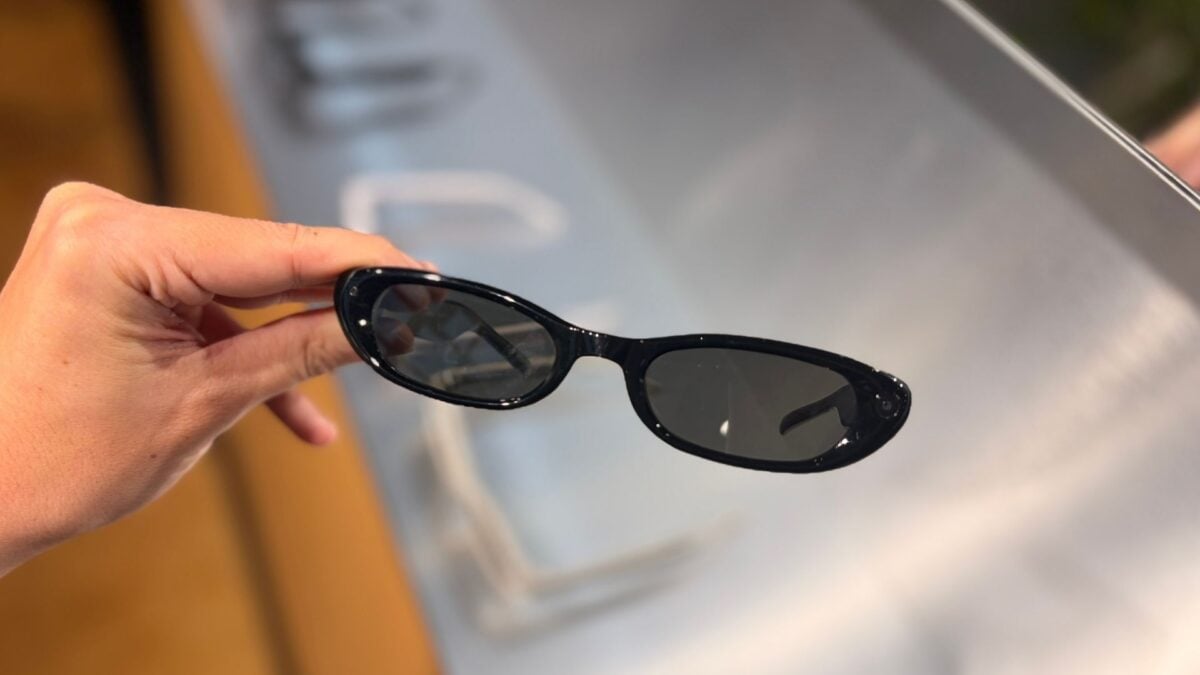
Google and Samsung put Android XR glasses on sale at fashion-brand price points.
And SpaceX surfaced a $74B compute-campus plan while merger talks with Tesla reportedly progressed.
The throughline isn’t novelty. It’s consolidation of control.
Leadership and governance are now first-order variables in the AI hardware stack. Export controls are no longer an externality for “China-exposed” businesses, they’re becoming a default constraint that shapes SKU availability, deal structure, and customer eligibility. And the interface layer is shifting again, toward always-on sensors and hands-free workflows, at the same time the infrastructure layer is getting more industrial, more power-bound, and more vertically integrated.
This is what “AI as infrastructure” looks like in practice: fewer neutral pipes, more chokepoints, and more decisions that are political, financial, and operational, not purely technical.
The strategic question for operators this week: where are you still treating dependency risk as a vendor-management problem when it has become a governance, policy, and interface-design problem?

INFRASTRUCTURE / SEMICONDUCTORS
Nvidia’s transition turns “key-man risk” into procurement and roadmap risk
Nvidia names CFO Colette Kress interim CEO after Jensen Huang’s resignation
Nvidia’s board put longtime CFO Colette Kress into the interim CEO role following Jensen Huang’s departure after revelations of undisclosed relationships with employees, per Reuters.
Separate reporting suggests Kress has, at times, pushed for a more conservative posture on higher-risk ecosystem commitments, per The Information. That matters less as “personality” and more as a signal about how Nvidia may price risk and allocate scarce capacity during a transition.
The Bet: Continuity in execution and capital discipline will calm customers and markets faster than a fast permanent-CEO search.
So What? Nvidia is not just a supplier; it’s a schedule dependency embedded in product roadmaps, enterprise budgets, and national compute plans. An interim CEO with a finance-and-operations profile usually means fewer bespoke deals, tighter governance, and more scrutiny on commitments that don’t map cleanly to volume, margin, or strategic necessity. For operators, the near-term opportunity is clarity, if Nvidia prioritizes stability, you can lock in supply and delivery terms while the company is incentivized to demonstrate operational steadiness.
The Risk: “Continuity” can still come with tighter allocation and tougher commercial terms, especially if the board becomes more sensitive to reputational and compliance exposure. The other risk is internal distraction: leadership transitions tend to slow exception-handling, and exception-handling is how many large buyers actually get what they need.
Action:
- Reconfirm delivery schedules and substitution clauses in any 2027 GPU agreements, assume exception paths may narrow during the transition.
- Map which products and internal programs are CUDA-hard-dependent versus “accelerator-flexible,” then prioritize portability work where it’s cheapest.
- Ask your Nvidia counterpart, in writing, what changes (if any) are coming to allocation policy, custom SKUs, and co-invest structures over the next 90 days.
NATIONAL COMPUTE / POLICY
Export controls are moving from “rules” to “operational tempo”
OpenAI backs bipartisan effort to curb China’s access to AI chips and tools
OpenAI told lawmakers it would support a bipartisan effort in Congress to curb China’s access to AI chips and chipmaking tools, per Bloomberg.
In parallel, the House Foreign Affairs chair said it’s “very likely” chip restrictions make it into a defense bill, per Business Insider. That’s the key procedural detail, defense bills compress timelines and reduce the odds of a slow, negotiated rollout.
The Bet: Controls will tighten via must-pass legislation, not just Commerce rulemaking, and enforcement will follow.
So What? When a major model provider publicly supports tighter controls, it reduces the political friction to move faster, and it normalizes the idea that frontier capability is inseparable from hardware denial. For operators, the practical implication is that “China exposure” is no longer limited to where you sell. It’s where you manufacture, where your suppliers source tools, where your customers’ affiliates sit, and which cloud regions your workloads touch. The compliance perimeter expands, and the cost of getting it wrong rises, because licensing and enforcement can become a delivery constraint, not just a legal review.
The Risk: Over-correction is possible, controls that are too broad can create collateral damage in global supply chains and push more activity into gray markets. Also, legislative language can be blunt; it may not map cleanly to how accelerators are actually packaged, resold, or embedded.
Action:
- Inventory exposure: list every product and workflow that depends on restricted-class accelerators, chipmaking tools, or China-adjacent manufacturing.
- Add an export-control checkpoint to procurement: require vendors to disclose SKU-level restriction risk and any planned “compliance-driven” product changes.
- Scenario-plan a 6–12 month disruption: identify which launches slip if specific accelerator classes become unavailable or require licensing.

INTERFACES / WORK SURFACES
Smart glasses are being priced and packaged as everyday wear, not a dev kit
Google and Samsung open sales for Android XR “Intelligent Eyewear” starting at $395
Google and Samsung opened preorders for Android XR smart glasses, priced from $395 with Warby Parker frames and $449 with Gentle Monster, per Wired.
A separate detail matters for product teams: Pixel Watch and Galaxy Watch can act as control surfaces for the glasses, per Gizmodo. That’s a quiet admission that voice-only and mid-air gestures are not enough, wrist input is the bridge.
The Bet: Distribution comes from fashion and pricing discipline, not from “killer AR apps.”
So What? Sub-$500 pricing with mainstream eyewear brands is a bet that the assistant becomes ambient, camera, mic, and context riding on the face, while the wrist becomes the primary explicit input. For operators, this changes two things immediately. First, “mobile” UX assumptions break: you’re no longer designing for a phone screen as the center of gravity. Second, privacy and consent become product constraints, not policy footnotes, because the sensor is always pointed outward, and the user’s environment becomes the data source.
This matters most for field workflows, maintenance, logistics, healthcare, retail, where hands-free capture and step-by-step guidance can remove real friction. But it also matters for consumer apps that rely on attention and foreground time. If the interface shifts to background services and glanceable prompts, distribution and monetization mechanics will shift with it.
The Risk: Early smart-glasses cycles have repeatedly hit social friction, battery/thermal limits, and unclear “daily value.” Also, platform policies around recording, bystander consent, and enterprise device management could tighten quickly after the first wave of misuse.
Action:
- Identify one workflow where “wrist + glasses” could remove the phone entirely, prototype it with strict offline/edge fallbacks.
- Audit your app’s permission model and data retention assumptions for always-on audio/video context.
- Prepare a “no-camera mode” product path, assume some enterprises and venues will require it by default.

INFRASTRUCTURE / CAPITAL FLOWS
Compute is getting industrial, and vertical integration is back on the table
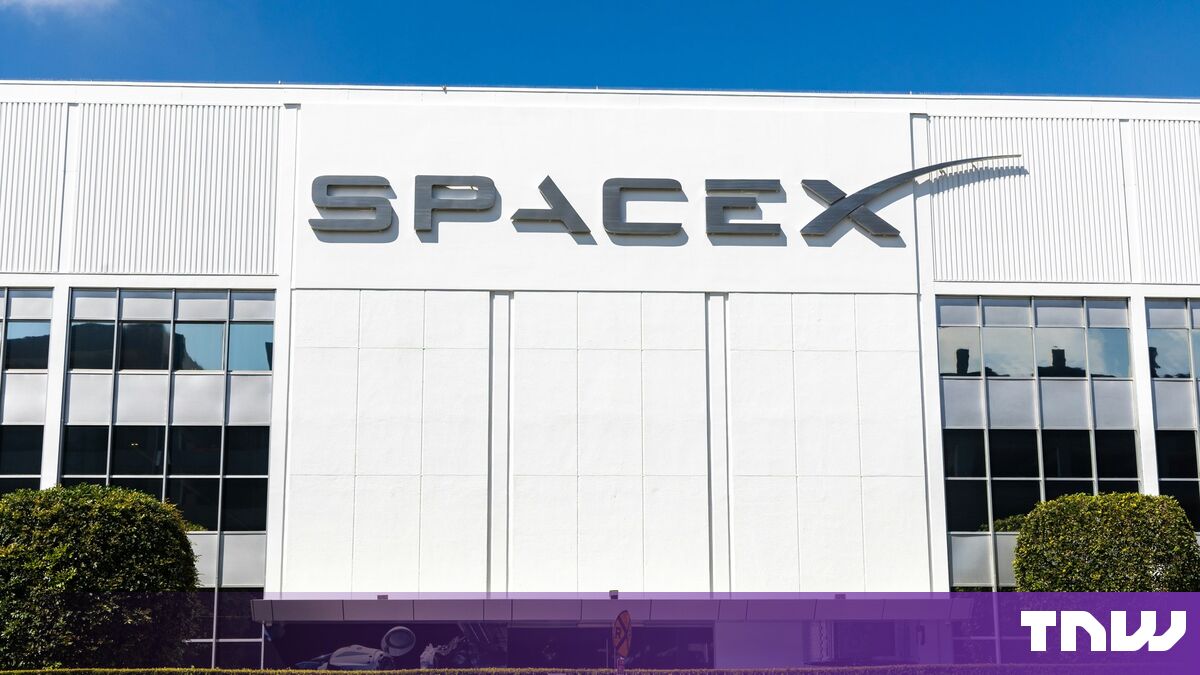
SpaceX reportedly plans $74B in AI computing centers in Arizona and Texas
SpaceX is planning $74B of AI computing centers in Arizona and Texas, per The Next Web.
In parallel, SpaceX and Tesla are said to be progressing in merger negotiations and could announce a deal as soon as December or early 2027, per Bloomberg.
The Bet: Owning power-adjacent compute capacity and consolidating balance sheets is a competitive advantage in a constrained era.
So What? A $74B compute-campus plan is not a “data center story.” It’s a power, permitting, and industrial execution story, capex that looks more like energy infrastructure than cloud procurement. If the Tesla–SpaceX combination progresses, the structural implication is a counterparty with more internal options: energy generation/storage, manufacturing scale, and launch/connectivity under one capital allocation regime. That can change pricing leverage, supplier terms, and the speed at which new capacity comes online.
For operators, the immediate relevance is not whether you buy compute from SpaceX. It’s that the market is normalizing compute as a first-class industrial asset, something large players will finance, site, and power directly. That raises the bar for everyone else: if you’re still treating compute as an on-demand utility with stable pricing and infinite availability, your planning model is behind reality.
The Risk: These are plans and negotiations, not delivered capacity. Permitting, interconnect queues, and community constraints can stretch timelines. And merger talks can fail or drag, leaving suppliers and partners in limbo.
Action:
- Add power and permitting risk to your compute roadmap, track where your critical workloads sit relative to constrained grids and interconnect queues.
- Revisit your “capacity acquisition” strategy: compare long-term reservations, colocation, and hybrid options against pure on-demand assumptions.
- If you sell into these ecosystems, prepare for tougher procurement: document your dependency, switching costs, and what you can offer that isn’t commoditized.
CONTRARIAN SIGNAL
The real platform shift isn’t the glasses. It’s the wrist.
The visible story is Android XR glasses at $395–$449 and the return of face-worn compute.
The quieter story is that the watch is being positioned as the control plane. That’s an admission that the “natural interface” narrative still doesn’t close the loop. People need a discreet, reliable, socially acceptable way to confirm, correct, and command. The wrist is that interface, always available, low-theater, and already normalized.
If that pairing holds, it changes where product teams should invest. Not in cinematic AR overlays. In low-latency, low-error interaction patterns that treat the glasses as sensing and display, and the wrist as intent capture and confirmation.
The Takeaway: The next work surface may be a two-device stack, face for context, wrist for control, and the winners will design for the handoff, not the novelty.
THE QUESTION FOR TODAY
Nvidia is in a governance transition. Export controls are moving toward must-pass legislation. Smart glasses are being sold as everyday wear, with the watch as the control surface. Compute is being planned and financed like industrial infrastructure. Vertical integration is back in the conversation.
Where are you still assuming “stable vendors and stable rules” in a world that is increasingly governed by leadership transitions, policy tempo, and new interface defaults?
Signal + Noise is strategic intelligence, not engagement-specific advice. For guidance calibrated to your org, start with Advisory.
See exactly how this impacts your specific industry and function. Upgrade to PRO to get bespoke tactical breakdowns generated instantly for your operating model.
Go deeper with the Weekly Signal
This is the daily take. The Weekly goes further — full strategic analysis across 8–10 sections, each with a signal read and operator action items. Source panel included.
Sign up free → then upgrade