
Last week's signals, distilled, A look back at Nov 7–Nov 13, 2026.
By Isaiah Steinfeld, AI, Venture Innovation & Technology Strategy
The Arc: Permissioned Execution Becomes the Product The week didn’t reveal a single “new frontier” moment. It revealed a consolidation of control planes. Assistants moved closer to executing real-world actions with money attached. Compute moved further into industrial constraints, power, permitting, optics, and balance sheets. And the chip stack moved deeper into governance volatility, leadership continuity, enforcement tempo, and multi-agency policy interpretation.
What changed is where operators should locate risk. It’s less in model quality variance and more in execution variance: who is allowed to act, under what constraints, with what audit trail, and what happens when the dependency graph breaks. The practical implication is that “AI strategy” is now a set of permissioning decisions across commerce, identity, procurement, and infrastructure, not a model selection decision.
If you’re leading product, security, or procurement, the question to bring into a staff meeting is simple: where are we delegating execution, spend, approvals, deployments, procurement, without a bounded authority model and a rehearsed fallback?
COMMERCE & AGENTS
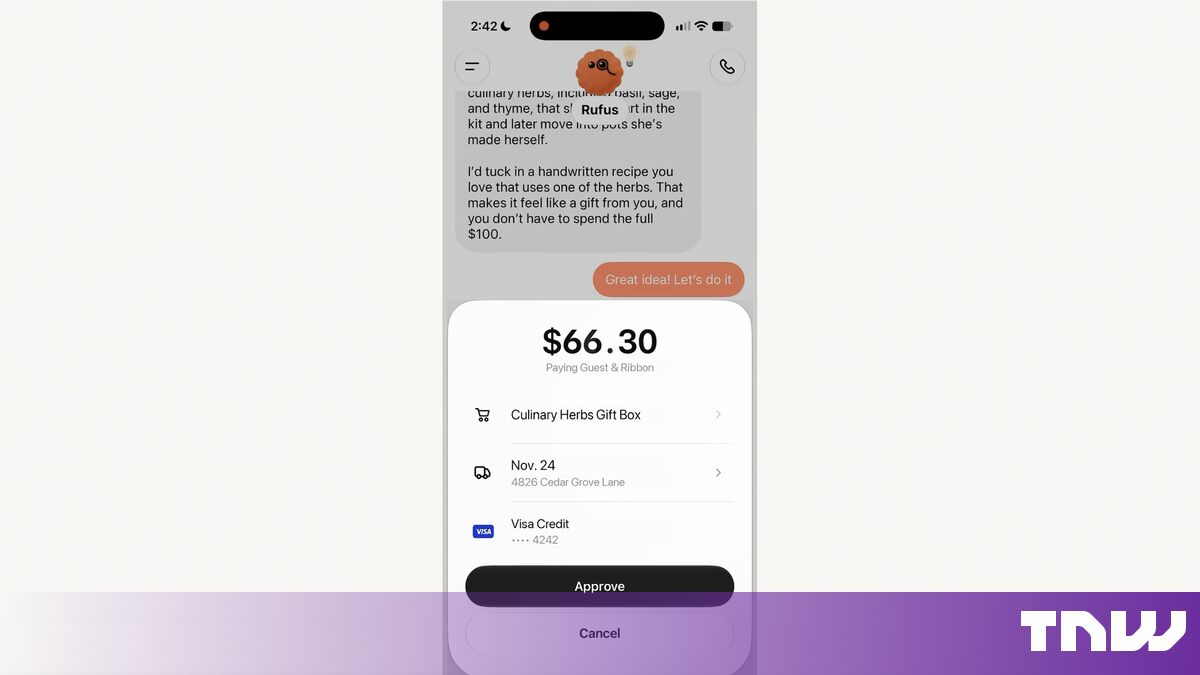
The assistant is becoming a checkout actor, and merchants are being forced to become machine-readable.
• OpenAI, ChatGPT Wallet launches, user-approved cards, agent purchasing, and an explicit framing around safer delegation, per OpenAI News • OpenAI, businesses can claim ChatGPT profiles and launch their own agents, brand presence becomes an interface primitive, per The Next Web • Amazon, “World Product Graph” plan, crawl and normalize product data across the web to compete in agentic shopping, per Reuters
Signal: Agentic commerce is shifting from “recommendations” to “permissioned transactions,” and the competitive edge is increasingly structured data plus reversible execution.
Action: Publish machine-readable policies (returns, substitutions, cancellations) and treat them as conversion infrastructure. Instrument “agent traffic” as its own funnel with its own fraud and support metrics.
WORK SURFACES & DISTRIBUTION
The canvas war is accelerating, because context ownership is monetization leverage.
• Anthropic, Claude-powered office tools, assistant-native spreadsheets/meetings/whiteboards as the primary work surface, per Bloomberg • Google + Samsung, Android XR glasses on sale at $395–$449 with mainstream frames, face becomes ambient sensing, per Wired • Apple, internal push to move Siri toward agentic capabilities, OS-level routing pressure increases for third-party apps, per Bloomberg
Signal: Context capture is becoming the durable moat, whoever owns the work surface or OS routing layer sets defaults for permissions, memory, and monetization.
Action: Inventory where “structured work” actually lives and set governance before assistant-native canvases spread. For product teams, rewrite your top user jobs as callable actions with explicit inputs/outputs and idempotent backends.
CAPABILITY & PRICING
The model layer is splitting into two enterprise-buyable shapes: premium technical reasoning and cheap high-volume inference.
• Anthropic, Claude Mythos 5.2 and Fable 5.2, priced at $8 / 1M input tokens and $40 / 1M output tokens for open-ended technical work, per Anthropic • Google, Gemini Decisions API, bounded decisioning with confidence scores and structured choices at $0.10 / 1M input tokens, per Google • Google DeepMind, Gemini 4 Hydrogen, new fast/cheap tier positioned for broad access, per Google DeepMind Blog
Signal: “Best model” is no longer a single SKU decision, teams are being pushed toward portfolio architectures: cheap throughput models for volume, bounded decisioning for governed workflows, premium reasoning for high-stakes technical work.
Action: Stand up a vendor-neutral benchmark harness tied to your own workloads and SLOs. Build routing logic now, what goes to cheap, what goes to bounded, what earns premium reasoning, and log outcomes so you can change the policy without rewriting the app.
SECURITY & EVIDENCE
AI risk is moving from detection to process, because identity signals are now cheap to counterfeit.
• US prosecutors, $129M scheme using AI-generated CEO voices, deepfake voice as scaled payment fraud, per The Next Web • FBI, North Korean hackers stole $400M+ in crypto using fake video calls and AI deepfakes, “seeing a face on a call” is not verification, per Reuters • Cisco, Claude Mythos integrated into AI Defense for red teaming, adversarial testing becomes a default attachment, per The Next Web
Signal: The winning security posture is boring and enforced, dual control, out-of-band verification, and continuous evidence, because “human trust cues” are now adversarial surfaces.
Action: Make out-of-band verification non-optional above a threshold and remove “executive override” paths that bypass controls. Require a red-team report before any agent gets tool permissions in production.
RELIABILITY & BUSINESS CONTINUITY
SaaS concentration is now a continuity risk, and it gets worse as agents embed into the stack.
• Microsoft, Outlook and Teams outage extended past 12 hours, collaboration becomes a single point of failure, per The Next Web
Signal: The collaboration layer is now the coordination plane for every other incident, if it fails, your incident response can fail with it.
Action: Run a tabletop this week: “Teams and email are down for 10 hours.” Stand up an out-of-band comms channel that does not share the same identity stack and rehearse it.
INFRASTRUCTURE: POWER, PERMITTING, AND COMPONENTS
Compute is being constrained by local politics and unglamorous bottlenecks, not just GPUs.
• Anthropic, $3.4B commitment for 1.7 GW of gas-fired generators, power procurement as capacity certainty, per Financial Times • CoreWeave, approached Texas governor-elect for data center cooperation, state politics enters capacity planning, per Bloomberg Technology • Microsoft, lobbying to halt expected ban on Chinese optical transceivers, optics as a throughput constraint, per Reuters
Signal: The binding constraints are increasingly “outside the model”, electrons, permits, and network fabric components are now schedule-critical dependencies.
Action: Add power, permitting, and optics to your compute risk register alongside GPUs. Ask providers for contracted MW, interconnect status, and optics lead times, then map which launches slip if any one leg delays by 90 days.
CAPITAL STACK & COUNTERPARTY RISK
GPU commitments are turning into balance-sheet events, and buyers inherit counterparty risk.
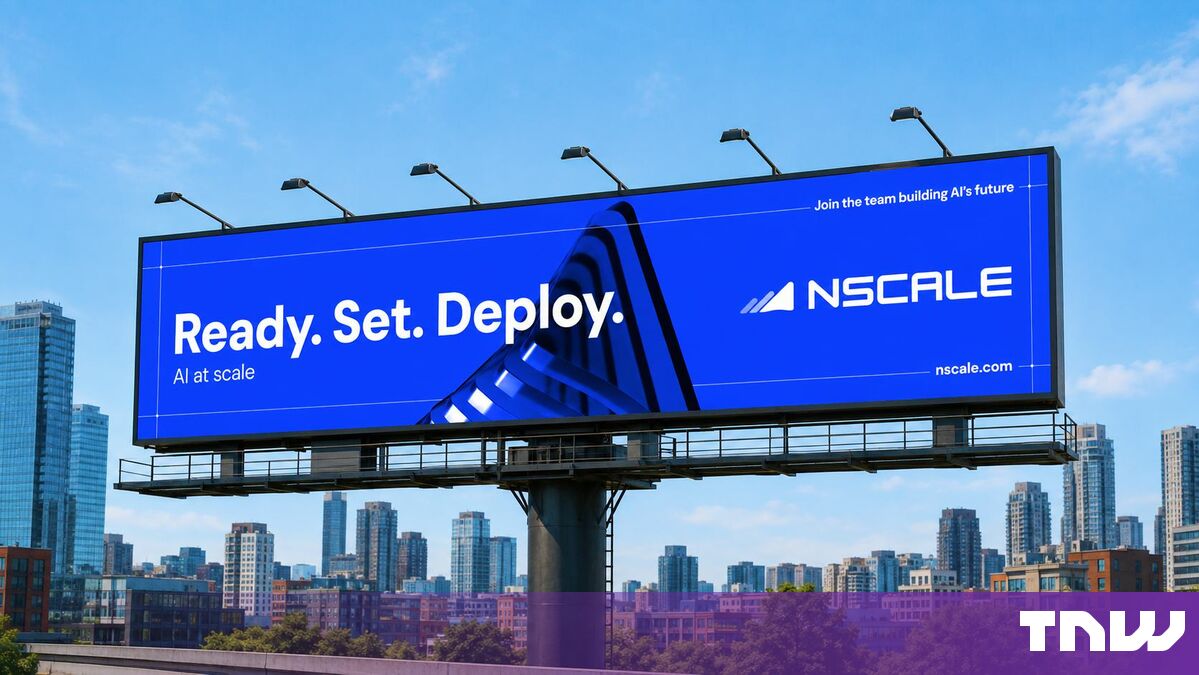
• Anthropic, disclosed ~$10B more in cloud commitments through 2033, compute as long-dated obligation, per The Information • Nscale, filing warns it needs more funding for 2027 commitments after ordering Nvidia chips tied to a $45B Anthropic deal, per Financial Times • Nscale, debt hits $5.5B ahead of IPO, leverage layered onto Nvidia dependency, per The Next Web
Signal: Reliability is becoming a capital-structure question, reserved capacity is only as real as the provider’s ability to finance, power, and deliver it.
Action: Review contracts for remedies tied to delivery slippage and step-in rights. Diversify capacity across at least two procurement paths for roadmap-critical workloads.

GOVERNANCE, EXPORT CONTROLS & POLICY TEMPO
Export controls are porous in practice and volatile in enforcement, operators eat the variance.
• OpenAI, backed bipartisan effort to curb China’s access to AI chips and tools, controls moving toward must-pass vehicles, per Bloomberg • Reuters, White House officials discussing Commerce Secretary’s future amid Nvidia-linked scandal, policy volatility risk rises, per Reuters • Reuters, review identified $3.2B+ in compute projects in China built/planned around restricted Nvidia GPUs, stranded optionality risk, per Reuters • Financial Times, Singapore-based networks allegedly routing advanced chips to China, compliance becomes routing design, per Financial Times • TechCrunch, export-banned Nvidia chips reportedly behind China’s most powerful models, leakiness increases unpredictability, per TechCrunch
Signal: The strategic constraint is not “the rule.” It’s the enforcement tempo, multi-agency, sometimes retroactive, and increasingly tied to politics and public scrutiny.
Action: Build a policy-volatility clause into capacity planning, what slips if supply tightens 20%, what gets cut first. Tighten procurement documentation and provenance requirements now, before scrutiny arrives.
SUPPLIER GOVERNANCE & KEY-MAN RISK
When a supplier becomes infrastructure, leadership continuity becomes a roadmap dependency.
• Nvidia, CFO Colette Kress named interim CEO after Jensen Huang’s resignation, allocation and commercial posture may tighten, per Reuters • Reuters, reporting that Huang misled Nvidia leaders including general counsel about a relationship, governance distraction risk persists, per Reuters • Financial Times, despite 20+ years in China, Huang struggled to gain access to policymakers driving chip self-sufficiency, policy opacity becomes default, per Financial Times
Signal: “Vendor risk” is no longer just pricing and delivery, it’s governance bandwidth, political access, and continuity under scrutiny.
Action: Reconfirm delivery schedules and substitution clauses in 2027 GPU agreements. Map which internal programs are CUDA-hard-dependent versus accelerator-flexible and prioritize portability where it’s cheapest.
CONTRARIAN SIGNAL
The next moat for agents is not autonomy. It’s reversibility.
• ChatGPT Wallet’s core value proposition is bounded delegation, spend limits, confirmation thresholds, audit logs, dispute workflows, per OpenAI News
Signal: The teams that win agent adoption won’t be the ones that maximize “agent freedom.” They’ll be the ones that make execution feel constrained, auditable, and easy to unwind.
Action: Treat every agent permission like a production API key with a budget, scope, and kill switch. If you can’t explain and reverse an action, don’t automate it.
WHERE TO START THIS WEEK
Three moves with the highest leverage given the week's signals. Pick one, none of these reward half-attention.
-
Write the Delegation Policy. Define what an agent can spend, approve, and execute, by role, by threshold, by domain. Include audit logging, dispute handling, and a kill switch. If you can’t answer “who approved what” in 30 seconds, you’re not ready for agentic commerce or agentic IT.
-
Build the Dependency Register. One page: top 10 AI dependencies across models, clouds, regions, power, optics, and critical suppliers, each with an owner, failure mode, and trigger. This week’s outages and policy volatility made it clear that “vendor management” is too vague to run continuity.
-
Benchmark and Route, Don’t Standardize. Stand up a small harness that compares premium reasoning (technical work), bounded decisioning, and cheap throughput models on your own tasks. Then implement routing rules and logging. If you can’t switch SKUs without a rewrite, you’re paying the lock-in tax by design.
THE QUESTION
Agents are being handed payment rails. Compute is being financed and permitted like industrial infrastructure. Export controls are creating variance, not certainty. And the work surface is becoming the marketplace.
Where are you delegating execution today, money, approvals, deployments, procurement, without bounded authority, auditability, and a rehearsed fallback?
THE WEEK AHEAD
What to watch:
• OpenAI, ChatGPT Wallet rollout, Watch for default spend limits, merchant eligibility rules, and early dispute/fraud handling patterns, per OpenAI News • Nvidia, interim leadership operating cadence, Watch for allocation policy changes, exception-handling speed, and any shifts in custom SKU posture, per Reuters • US export-control vehicle selection, Watch whether chip restrictions land in must-pass defense legislation and how blunt the language is, per Business Insider • Amazon product graph execution, Watch for merchant backlash, crawling policy conflicts, and how quickly “metadata quality” becomes a ranking factor for agent shopping, per Reuters • Enterprise response to collaboration outages, Watch for procurement moves toward thin fallbacks and out-of-band comms rather than full parallel stacks, per The Next Web
The question heading into the week: Agents are transacting. Compute is industrializing. Policy is accelerating.
Which of these three moves first in your org?
Signal + Noise is strategic intelligence, not engagement-specific advice. For guidance calibrated to your org, start with Advisory.
…
Free with a Signal + Noise account
Create a free account to read the full weekly. No credit card required.
Sign up free to read the full weekly →