
Yesterday's signals, distilled, A look back at November 18, 2026.
OpenAI published a concrete claim about model-assisted silicon design, up to 14% power, performance, and area (PPA) improvement on AMD GPU IP, with some changes already in a design AMD sent for manufacturing.
Microsoft, meanwhile, kept doing what hyperscalers do when models become the workload, sell access at scale. The reported ~$500M incremental Azure commitment from ByteDance, primarily to access OpenAI models, is less about “cloud spend” and more about who controls the gate to frontier inference.
And security moved to buy the open-weight future. Palo Alto Networks’ $4.5B stock deal for Applied Compute is a statement that “customize models where the data lives” is now a core security adjacency, not a sidecar.
Underneath the day’s headlines is a single throughline: the AI stack is collapsing into fewer, tighter couplings, model-to-cloud, model-to-silicon, model-to-security control planes.
That coupling is efficient when incentives align.
It is brittle when they don’t.
The strategic question for operators this week: where are you implicitly coupled, by contract, by architecture, or by workflow, to a control plane you don’t govern?
INFRASTRUCTURE / SILICON
Model-assisted chip design moves from research to taped-out reality
OpenAI, Claims up to 14% PPA gains on AMD flagship GPU IP using its models
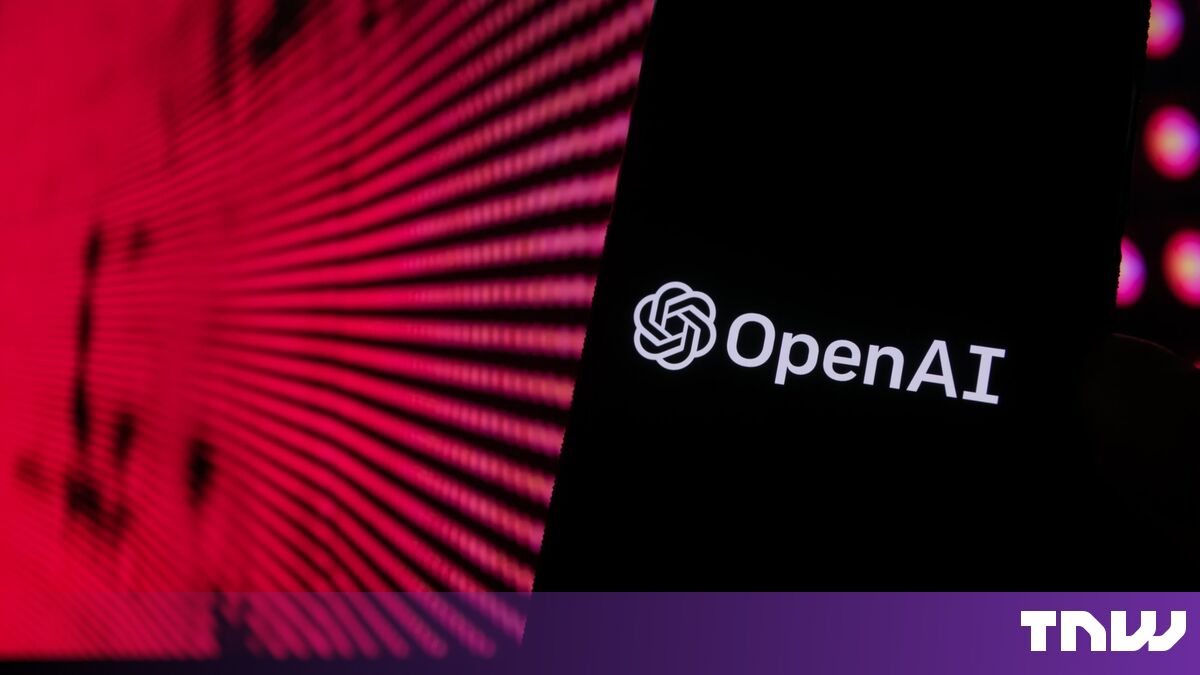
OpenAI says its models improved power, performance, and area by up to 14% on AMD’s flagship GPU IP, and that some changes are already in a design AMD sent for manufacturing, per OpenAI. The post frames the work as model-driven optimization across the chip design flow, targeting the kinds of constraints that typically trade off against each other.
This is not a generic “AI helps EDA” story. The key detail is taped-out inclusion, work that survived the handoff from optimization to manufacturable design.
The Bet: Model-guided optimization can produce repeatable, signable improvements inside real design constraints, not just academic wins.
So What? If this holds up, the iteration loop on accelerator design compresses, less because “AI is faster” and more because the search space becomes cheaper to explore with credible candidates. That shifts advantage toward teams that can co-design across layers: model architecture, compiler/runtime, and silicon. For operators, the practical implication is procurement and roadmap volatility, your “next-gen” performance-per-watt assumptions may change faster than your depreciation schedule.
It also changes the vendor conversation. If model vendors can materially influence silicon outcomes, they become upstream stakeholders in your compute roadmap, whether you want them there or not.
The Risk: A headline PPA number can hide where the gains came from, specific blocks, specific constraints, or specific benchmarks. And “some changes” in a taped-out design is not the same as “14% realized in shipped silicon.”
Action:
- Ask your GPU/accelerator vendors what parts of their design flow are now model-assisted, and whether those changes affect your power and cooling assumptions for 2027 deployments.
- Update your capacity planning model to include a sensitivity band for performance-per-watt improvements arriving mid-cycle, then pressure-test your data center power contracts against that volatility.
- If you build custom inference stacks, align your compiler/runtime roadmap with the possibility of faster silicon iteration, treat “hardware assumptions” as a quarterly review item, not an annual one.

DISTRIBUTION / MODEL ACCESS
Cloud becomes the commercial wrapper around frontier inference
Microsoft × ByteDance, Reported ~$500M incremental Azure deal tied to OpenAI model access
ByteDance is in advanced talks with Microsoft to spend an additional ~$500M on Azure, primarily to access OpenAI models, and the arrangement is reportedly drawing complaints from OpenAI, per The Information. The reported structure matters: the hyperscaler is the distribution surface for the model, and the buyer is paying for access at scale.
This is the operational reality of “model platforms.” The commercial relationship you think you have, with a model provider, may be mediated by a cloud provider whose incentives are not identical.
The Bet: Hyperscalers can keep packaging model access as cloud consumption, regardless of how model vendors want to segment customers.
So What? For enterprise operators, this is a dependency mapping problem. If your production workloads rely on a lab’s models via a hyperscaler, you are exposed to three moving layers: model policy, cloud policy, and the contract boundary between them. When those incentives diverge, the failure mode is rarely a clean outage, it’s a pricing change, a quota change, a region restriction, a compliance interpretation, or a “new preferred path” that forces rework.
This also tightens the coupling between geopolitics and architecture. If model access is sold through cloud tenancy, then identity, region placement, and auditability become enforcement surfaces, sometimes faster than anyone can update their internal governance.
The Risk: A single large deal doesn’t prove a durable pattern of channel conflict, but it does show the pressure points. And if the primary value is “access,” customers may find themselves overpaying for bundled cloud they don’t otherwise need.
Action:
- Map your model access path end-to-end, who bills you, who can throttle you, who can revoke you, and what triggers those actions.
- Negotiate explicit change-notice terms for pricing, quotas, and model availability, especially if your contract is with the cloud, not the lab.
- Stand up a fallback plan for your top two model-dependent workflows, alternate model, alternate provider, or an open-weight contingency, then timebox a small migration drill.
SECURITY / OPEN-WEIGHT CONTROL PLANES
Security vendors are buying the “enterprise model factory”
Palo Alto Networks, Agrees to buy Applied Compute for $4.5B in stock
Palo Alto Networks agreed to buy Applied Compute, which helps companies customize open-weight AI models, for $4.5B in stock; Applied Compute was valued at $3.25B earlier this month, per Wall Street Journal. The speed of valuation movement is notable, but the more durable point is category definition: “open-weight customization” is being pulled into the security perimeter.
This is a bet that enterprises will want models they can shape and run close to sensitive data, and that the vendor best positioned to sell that is the one already trusted with enforcement.
The Bet: The winning security platform becomes the place models are customized, governed, and deployed, not just monitored.
So What? Security is trying to become the control plane for enterprise AI, not by competing with frontier labs on base models, but by owning the customization and governance layer where enterprise value actually accrues. If your security vendor becomes your model customization vendor, you get tighter policy integration, identity, DLP, audit, and incident response can be native.
But you also inherit coupling. Your model roadmap becomes entangled with your security platform roadmap. That can be a feature, fewer vendors, fewer seams, or a constraint if you need to swap models, change hosting, or adopt new fine-tuning methods faster than your security platform ships.
This deal also pressures internal ownership. In many orgs, “AI platform” sits with engineering, while “AI risk” sits with security and legal. Buying the model factory pulls those into one budget line. Expect internal turf friction, and plan for it.
The Risk: Integration risk is real, product, culture, and go-to-market. And open-weight customization is not a single capability; it spans data pipelines, evals, training infrastructure, deployment, and ongoing monitoring. Enterprises may discover that “buying the platform” doesn’t remove the need for internal expertise.
Action:
- Decide who owns “model customization” internally, platform engineering, security, or a joint operating model, then document decision rights this week.
- Ask your security vendor how they separate governance from model choice, what happens if you want to run multiple open-weight families or swap providers mid-year.
- Inventory which workloads truly require open-weight control (data sensitivity, latency, cost, sovereignty), and which are fine on closed APIs, so you don’t over-rotate into complexity.

CAPITAL FLOWS / AI-NATIVE APPS
Sierra, Reportedly in talks to raise ~$1.5B at a ~$30B valuation after citing $400M+ annualized revenue
Bret Taylor’s Sierra is in talks to raise about ~$1.5B at a ~$30B valuation, up from $15.8B in May; the company said in October it hit $400M+ in annualized revenue, per The Information. The numbers matter because they anchor the market’s current preference: AI-native applications with measurable revenue and repeatable deployment patterns.
This is not a “funding is back” story. It’s a “the bar is explicit” story.
The Bet: Durable AI application value accrues where there is clear workflow ownership, measurable deflection, and expansion economics, not novelty.
So What? Operators should read this as a pricing signal for the next 12 months of enterprise software. If AI-native support and service layers can scale to hundreds of millions in annualized revenue, incumbents will respond with bundling, aggressive pricing, and tighter platform integration. That will compress the window for point solutions that don’t own a workflow end-to-end.
For builders, the implication is equally direct: the market is rewarding proof of operational absorption, how much real work moved from humans to systems, with quality controls intact. “AI inside” is not the story. Unit economics and retention are.
The Risk: Late-stage valuation conversations can change quickly with public market conditions and competitive pricing pressure. And annualized revenue is not the same as durable net retention under cost compression.
Action:
- Instrument your AI product in “work moved” terms, deflection, handle-time reduction, resolution quality, and escalation rates, then tie it to retention.
- Pressure-test your gross margin under three scenarios: model costs down 30%, flat, or up 30%, and decide what you’d change in packaging.
- If you’re an enterprise buyer, require vendors to show production metrics, not demos, then run a 30-day pilot with your own QA thresholds.
CONTRARIAN SIGNAL
The open-weight story is not about openness. It’s about who gets to be the enterprise’s execution layer.
The loud narrative is that open-weight wins because it’s cheaper, more private, or more controllable.
Those are real benefits.
But the structural move is different: open-weight customization is becoming the mechanism by which existing enterprise control planes, security, identity, compliance, extend their reach into AI execution. If you can run and shape models inside the perimeter, you can make policy enforceable at the point of inference, not just at the point of data access.
That’s why security is buying in.
Not to become a model lab, but to become the place where models become operationally safe enough to deploy at scale.
The Takeaway: Open-weight adoption will track governance integration as much as model quality. The buyer is not just choosing a model. They’re choosing a control plane.
THE QUESTION FOR TODAY
Model vendors are reaching into silicon. Hyperscalers are packaging model access as cloud consumption. Security platforms are buying model customization. AI-native apps with real revenue are still getting premium capital.
Where are you coupled to a control plane you don’t govern, and what is your exit path if incentives shift?
Signal + Noise is strategic intelligence, not engagement-specific advice. For guidance calibrated to your org, start with Advisory.
See exactly how this impacts your specific industry and function. Upgrade to PRO to get bespoke tactical breakdowns generated instantly for your operating model.
Go deeper with the Weekly Signal
This is the daily take. The Weekly goes further — full strategic analysis across 8–10 sections, each with a signal read and operator action items. Source panel included.
Sign up free → then upgrade