


Yesterday's signals, distilled, A look back at November 22, 2026.
Compute didn’t get cheaper yesterday. It got more political.
The US export-control perimeter tightened again, not just around China, but around the Southeast Asian routes that became the pressure valve for regional GPU demand. At the same time, reporting on alleged smuggling networks made the subtext explicit: “restricted” supply still finds a way to move, and enforcement is drifting from policy to prosecutions.
Separately, the data center build-out is colliding with two constraints that don’t show up in model benchmarks: permitting backlash and delivery timelines. When capacity arrives late, the constraint shifts from “can we train” to “can we finance the gap.”
And on the capital-markets side, Anthropic’s reported IPO process looked less like a typical tech listing and more like a security program, access control, logging, and explicit limits on who can see what, when.
The throughline is governance as an operating condition. Not governance as PR, not governance as a quarterly risk section, governance as the thing that determines whether you can buy chips, build capacity, and keep your plans private long enough to execute.
Strategic question: if your 2027 plan assumes abundant regional compute and stable procurement channels, what is your contingency path when the constraint becomes jurisdictional rather than technical?
INFRASTRUCTURE / COMPUTE
Data center capacity becomes a balance-sheet timing problem
Elon Musk warns data center delays could leave AI companies short on cash Elon Musk warned that data center delays could create a cash crunch for AI companies as they wait for capacity to come online, describing the situation as “going to be nuts,” per Business Insider.
The specific claim matters less than the mechanism: when delivery timelines slip, the burn doesn’t. Teams that staffed, contracted, and sold against an assumed capacity curve can end up financing idle time.
So What? Compute is increasingly a working-capital problem disguised as an infrastructure problem. If your roadmap depends on step-function capacity increases, delays don’t just slow training runs, they can force product and hiring decisions earlier than planned, under worse terms. The operators who win this phase are the ones who treat capacity as a portfolio, mixing reserved, on-demand, and “good enough” alternatives, and who can degrade gracefully when the frontier isn’t available.
The Risk: Warnings like this can over-index on the most constrained frontier workloads. Many businesses can still ship meaningful product value on smaller models and tighter inference budgets, but only if they’ve designed for it.
Action:
- Re-baseline your 12-month compute plan against delivery reality, update timelines, not aspirations.
- Add a “degrade mode” to your product plan, define what ships if frontier capacity is delayed by 90 days.
- Renegotiate commitments that assume step-function scaling, convert hard minimums into options where possible.
NATIONAL COMPUTE / EXPORT CONTROLS
The chip perimeter expands from China to the routes around China
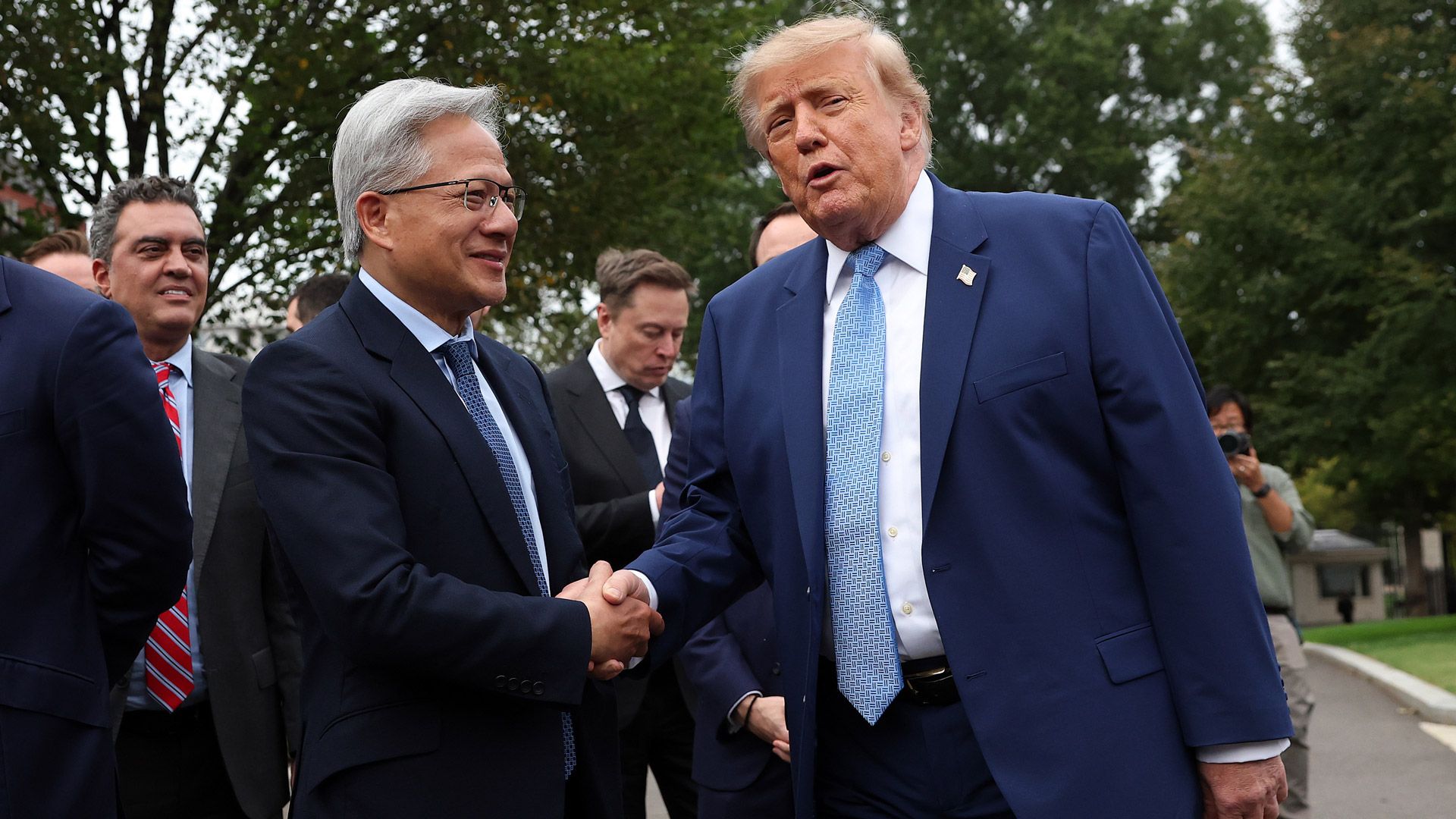
Trump’s AI chip crackdown squeezes Southeast Asia’s data center boom The US is escalating AI chip restrictions tied to China, with spillover effects that are squeezing Southeast Asia’s cloud and data center expansion, per Bloomberg Technology.
This is the structural shift: the enforcement lens is widening from end destination to transshipment, intermediaries, and “friendly” jurisdictions that became de facto compute hubs.
So What? If you’re buying GPU capacity in-region because it’s faster, cheaper, or politically simpler than US/EU supply, that assumption is now fragile. Export controls are turning capacity planning into a jurisdictional design problem, where you place workloads, which entities contract for capacity, and how you document end use. For operators, this changes vendor selection: “can you deliver” now includes “can you keep delivering under scrutiny.”
The Risk: Policy can move faster than compliance operations. Even well-intentioned buyers can get caught in the blast radius if a provider’s supply chain or customer base triggers enforcement attention.
Action:
- Map your compute dependencies by jurisdiction, include cloud regions, resellers, and any “managed GPU” intermediaries.
- Ask providers for their export-control posture in writing, procurement should treat this like a service reliability question.
- Build a failover plan for regulated regions, identify which workloads can move and what breaks when they do.
NATIONAL COMPUTE / ENFORCEMENT
“We didn’t know” stops working when smuggling becomes a headline
WSJ reports a Southeast Asia-to-China restricted chip smuggling network The Wall Street Journal reported that Li Ming, an associate of Alice Huang and previously charged with fraud in Singapore in 2025, was central to smuggling restricted AI chips from Southeast Asia to China, per The Wall Street Journal.
This is the operational reality of controls: where there is price spread and scarcity, logistics networks form.
So What? Enforcement is moving from “policy risk” to “chain-of-custody risk.” If you’re an enterprise buyer, you may not think you’re in the export-control business, but your vendors, brokers, and hosting partners might be. That creates second-order exposure: audits, delayed deliveries, reputational drag, and contract disputes when hardware provenance becomes questionable.
The Risk: Over-correcting can freeze procurement and slow legitimate deployments. The goal isn’t paranoia. It’s traceability.
Action:
- Tighten provenance requirements in hardware and capacity contracts, require documentation on source and authorized channels.
- Audit any Southeast Asia-based procurement paths, identify where you rely on brokers versus direct relationships.
- Add an internal review checkpoint for “restricted-class” components, treat accelerators like regulated assets, not generic IT.

CAPITAL FLOWS / INFORMATION SECURITY
IPO mechanics start to resemble model security
Anthropic’s IPO process reportedly used tight access controls and view-logging Anthropic limited some IPO banks to four-person teams, used a file platform with view-logging, and sought six-month bans on advising rivals, per Reuters.
This is a notable inversion: the IPO process is usually where information spreads. Here, the process was designed to prevent spread.
The Bet: The most valuable asset in frontier AI isn’t just the model. It’s the forward roadmap, and who sees it early.
So What? Capital formation is now a competitive surface. If you’re raising, partnering, or exploring strategic options, your diligence room is effectively an attack surface, not only for leaks, but for subtle competitive signaling. The operators who keep advantage will instrument information flow the way they instrument production systems: least privilege, logging, and time-bounded access.
This also pressures the advisory ecosystem. Banks, consultants, and vendors will increasingly be asked to operate inside tighter compartments, and teams should expect friction unless they set expectations early.
The Risk: Over-restricting access can reduce price discovery and slow execution. The trade is speed and breadth versus confidentiality and control.
Action:
- Implement least-privilege access in your data room, role-based permissions, expiring links, and view logs by default.
- Time-box sensitive disclosures, share roadmap and unit economics in phases, not upfront.
- Add explicit conflict and cooling-off language to advisor engagements, define what “rival” means before you need to enforce it.
CONTRARIAN SIGNAL
The compute shortage story is also a disclosure story
The default narrative says the constraint is physical: power, land, transformers, GPUs.
That’s real. But yesterday’s pattern points to a second constraint that’s becoming just as determinative: who can operate without over-disclosing.
Export controls widen the compliance perimeter. Smuggling reporting increases scrutiny on intermediaries. Data center backlash makes siting and permitting more political. And IPO processes tighten because the cost of information leakage is now measured in quarters of lost execution, not a bad news cycle.
In that environment, the advantage isn’t only “more compute.” It’s the ability to plan, procure, and finance without broadcasting your dependency graph to the market.
The Takeaway: Treat confidentiality, provenance, and jurisdictional design as first-order infrastructure work, because they increasingly decide whether the infrastructure shows up at all.
THE QUESTION FOR TODAY
Export controls are expanding from destinations to routes. Smuggling networks are becoming part of the enforcement narrative. Data center timelines are slipping against burn rates. Capital processes are being redesigned around leak risk. Compute planning is now inseparable from governance planning.
Where, specifically, is your plan assuming a “neutral” jurisdiction, and what breaks if that assumption stops being true?
Signal + Noise is strategic intelligence, not engagement-specific advice. For guidance calibrated to your org, start with Advisory.
See exactly how this impacts your specific industry and function. Upgrade to PRO to get bespoke tactical breakdowns generated instantly for your operating model.
Go deeper with the Weekly Signal
This is the daily take. The Weekly goes further — full strategic analysis across 8–10 sections, each with a signal read and operator action items. Source panel included.
Sign up free → then upgrade