

Yesterday's signals, distilled, A look back at November 20, 2026.
Nvidia’s governance shock kept rippling through the stack.
A reported $1 trillion market-value drawdown tied to Jensen Huang’s ouster wasn’t just a public-markets tantrum. It was a reminder that “AI infrastructure” is now underwritten like critical industry, with key-person risk, control, and succession treated as first-order variables, not biography.
At the same time, the agent layer pushed closer to the user’s operating system and private surfaces. OpenAI tested persistent “dots” agents for ChatGPT Plus. Signal moved to restrict screenshots by default, explicitly to blunt AI agents reading private chats. The fight is no longer “can agents do the work.” It’s “where are agents allowed to look.”
Capital followed the work surface. A coding startup reportedly exploring new funding at a $75 billion valuation is a bet that developer workflow capture is still one of the highest-leverage distribution plays in software, even as unit economics and governance get harder.
The throughline: execution is expanding, and permissioning is tightening.
If you’re an operator, the strategic question is uncomfortable but practical: where are you implicitly relying on founder continuity, platform access, or user-consented data flows, and what breaks if any one of those assumptions flips?
INFRASTRUCTURE / SEMIS & GOVERNANCE
Key-person risk becomes a balance-sheet variable
Nvidia market value repriced after Jensen Huang’s ouster
Business Insider reported Nvidia lost $1 trillion in market value after Jensen Huang’s ouster, an unusually explicit repricing of “founder premium” at the center of the AI hardware stack, per Business Insider.
This isn’t just about one company’s leadership transition. It’s about how the market is now valuing continuity and control in the most systemically important AI supplier category.
So What? Public markets are treating AI infrastructure providers less like “tech growth” and more like governed industrial assets, where leadership stability, succession planning, and board control are part of the product. That posture will bleed into enterprise procurement and long-term capacity deals: counterparties will ask what happens if the person who can make the hard calls is gone.
For builders downstream, this is a reminder that your “GPU plan” is not only a supply plan. It’s a governance dependency, and governance dependencies can reprice overnight.
The Risk: Markets can overshoot, a drawdown can reflect forced selling, index effects, and narrative momentum as much as fundamentals. But even if the number mean-reverts, the underwriting framework likely won’t.
Action:
- Inventory where your compute roadmap assumes a single vendor’s continuity, then write a second-best plan with explicit performance and cost tradeoffs.
- Add key-person and control questions to vendor diligence for long-horizon commitments, not just SLAs and pricing.
- Revisit your own succession and decision-rights documentation if your product story is founder-led, investors and customers are now pricing that exposure.
CAPABILITY / AGENTS & WORK SURFACES
Persistent agents move downmarket, and into everything
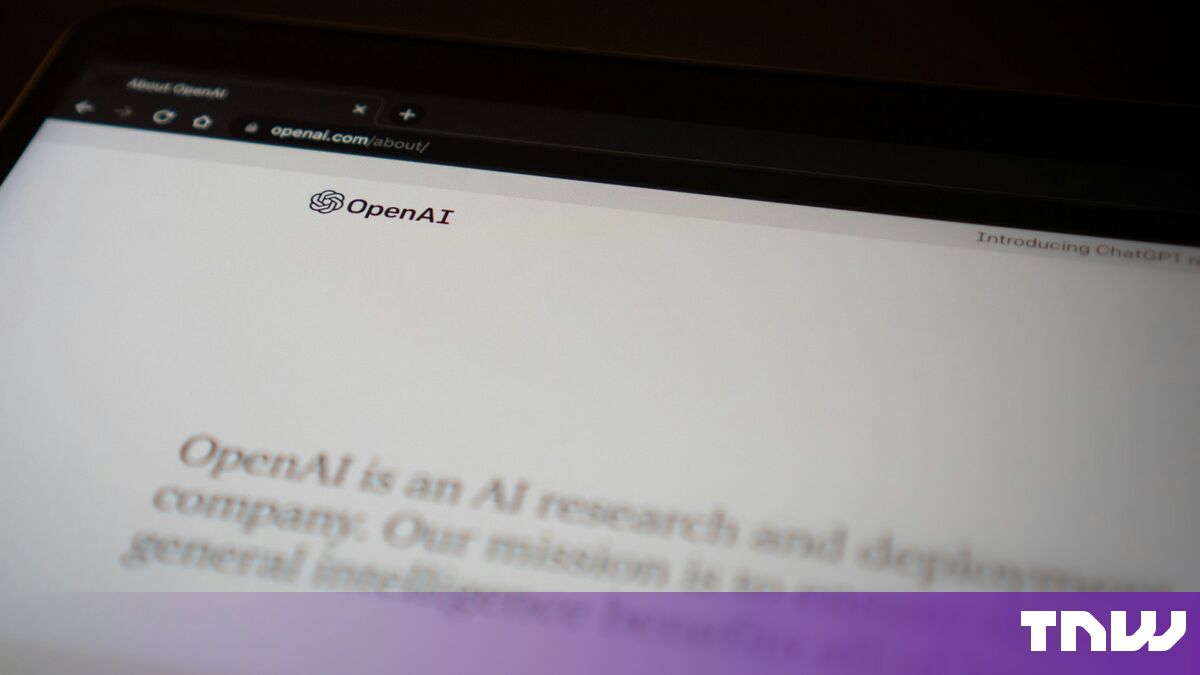
OpenAI tests “dots” agents with ChatGPT Plus users
OpenAI began testing its persistent “dots” agents with some ChatGPT Plus users, pushing always-on agent behavior toward a $20/month tier, per The Next Web.
That’s a distribution move. It’s also a normalization move: background automation becomes something consumers expect, not an enterprise pilot.
The Bet: Persistent agents become a default personal automation layer, and the winning surfaces are the ones that can safely execute across apps, files, and accounts.
So What? When persistent agents hit consumer scale, “bring your own agent” becomes a real enterprise condition, employees will route work through personal automation whether IT blesses it or not. That creates pressure toward auditable execution: logs, permission scopes, and reversible actions become table stakes, not “enterprise features.”
It also changes competitive dynamics for SaaS. Your product is no longer only competing with adjacent tools. It’s competing with an agent that can stitch together partial capabilities across tools, if your app exposes the right hooks.
The Risk: Early tests don’t guarantee durable adoption. Persistent agents can fail quietly, and users will abandon them if the error rate is high or the permission prompts feel invasive. The adoption curve depends on reliability and trust, not novelty.
Action:
- Audit your product for “agent-safe” APIs this week, narrow scopes, idempotent operations, clear error states, and rate limits that won’t break workflows.
- Implement an execution ledger, a human-readable log of what was attempted, what changed, and how to roll it back.
- Decide your stance on third-party agents now, block by default, allow with explicit scopes, or build a first-party agent layer, and document the rationale.

SECURITY / PRIVACY & PLATFORM CONFLICT
Screen privacy becomes a frontline control
Signal restricts screenshots by default to blunt AI agents reading chats
Signal said it will restrict screenshots by default to stop AI agents from reading private chats on phones, while warning the protections are “incomplete,” per Reuters.
This is not a feature tweak. It’s a declaration that OS-level capture and assistant tooling are now part of the threat model for end-to-end encrypted communications.
So What? The security boundary is shifting upward, from “is the message encrypted in transit and at rest” to “can the device be induced to leak the message through the screen.” That matters for any product handling sensitive data: health, finance, legal, HR, M&A, customer support, and internal ops.
It also sets up a structural conflict: platforms want assistants that can see and do more; high-trust apps will increasingly resist ambient access. Expect more friction around accessibility APIs, overlays, screenshot permissions, and “computer use” features, and expect regulators to pay attention when privacy claims collide with assistant defaults.
The Risk: Screenshot restriction is a partial defense. If the OS or an authorized accessibility layer can still capture content, the real control point is platform policy and hardware-backed enforcement, not app-level toggles.
Action:
- Review your mobile threat model for screen capture, overlays, and accessibility permissions, treat them as data-exfil paths, not UX edge cases.
- Add “agent capture” scenarios to your security testing, what happens if a user runs an assistant that can read the screen and click buttons.
- Update customer-facing security docs to explicitly state what you can and cannot protect against on-device, ambiguity will become a liability.
CAPITAL FLOWS / DEVELOPER ECONOMY
Extreme valuations persist where distribution is defensible
Cognition in talks for new funding at a $75 billion valuation
Cognition was reported to be in talks for new funding at a $75 billion valuation, per Bloomberg Technology.
The number is the headline. The mechanism is the story: capital still believes developer workflow is a compounding distribution channel, even as model access and inference costs remain volatile.
So What? This is a bet that “coding” is not a feature category. It’s a control plane for how software gets built, and whoever owns that plane can tax the rest of the stack through defaults, integrations, and enterprise policy. For operators selling into developers, this raises the competitive floor: well-capitalized players can subsidize usage, bundle models, and buy distribution through partnerships.
For enterprise buyers, it’s a reminder to separate product value from vendor durability. A tool can be excellent and still create lock-in through workflow gravity, especially once agents start writing, reviewing, and deploying code end-to-end.
The Risk: Valuation conversations are not closed rounds. Terms, structure, and actual demand can diverge from the headline number, and developer tools are unusually sensitive to trust and reliability shocks.
Action:
- Map your developer-toolchain dependencies, identify where a single vendor becoming the default would create switching costs you can’t unwind in 6–12 months.
- Require exportability in procurement, repos, prompts, evals, and agent policies should be portable, not trapped in a proprietary harness.
- Run a “tool failure” tabletop, if your primary coding agent/editor goes down or changes terms, what is your fallback workflow within 24 hours.
CONTRARIAN SIGNAL
Privacy isn’t the brake on agents. It’s the distribution wedge.
The common read is that privacy protections slow agent adoption.
A more operational read: privacy posture is becoming a go-to-market strategy for the apps that can’t win the platform assistant war. If you can’t be the ambient agent, you can be the place the ambient agent is not allowed to go.
Signal’s screenshot restriction is a concrete example, not because it “solves” the problem, but because it draws a bright line: some surfaces will be defended, even if the platform would prefer they weren’t.
For builders, this creates a design fork. Either you build for agent interoperability, with explicit scopes, logs, and reversible actions, or you build for agent resistance, with hardened surfaces and minimal data exhaust. The middle posture, where you claim privacy while quietly depending on ambient access, will get harder to sustain.
The Takeaway: Agent distribution will be shaped as much by permission boundaries as by model capability, and “no access” will be a product feature customers pay for.
THE QUESTION FOR TODAY
Founder continuity is being priced into infrastructure. Persistent agents are moving into consumer tiers. High-trust apps are starting to treat OS assistants as adversarial. Capital is still underwriting workflow capture at extreme valuations. Permissioning is tightening even as execution expands.
Where are you still assuming you’ll get ambient access, to users, to data, to platforms, to leadership continuity, that you have not actually earned or contractually secured?
Signal + Noise is strategic intelligence, not engagement-specific advice. For guidance calibrated to your org, start with Advisory.
See exactly how this impacts your specific industry and function. Upgrade to PRO to get bespoke tactical breakdowns generated instantly for your operating model.
Go deeper with the Weekly Signal
This is the daily take. The Weekly goes further — full strategic analysis across 8–10 sections, each with a signal read and operator action items. Source panel included.
Sign up free → then upgrade