
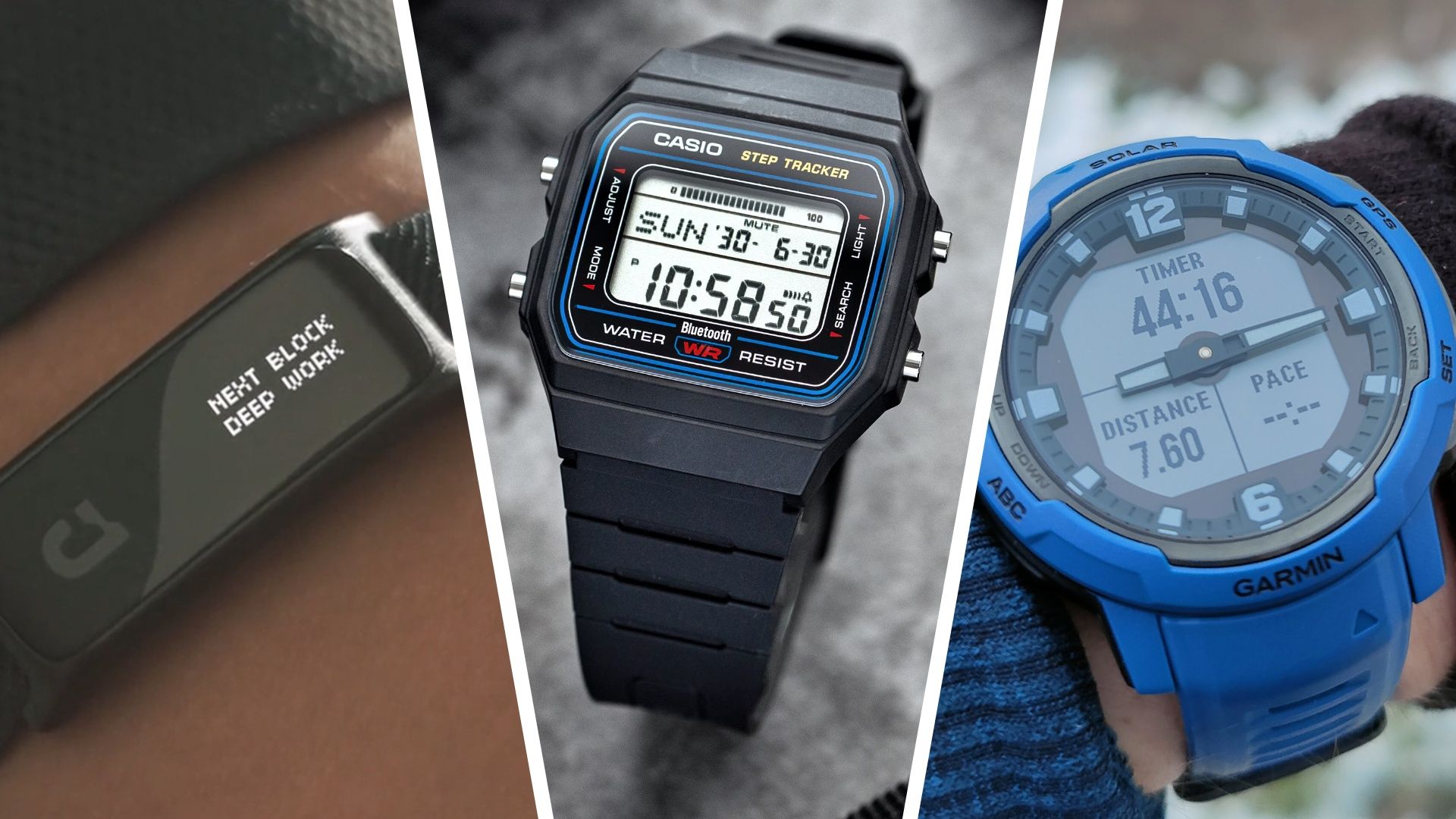
6 fitness trackers that do something different — including the viral retro Casio with hidden depths, and a tracker with a 400-day battery
THE SO WHAT
Wearables are fragmenting into niche form factors—400‑day batteries and retro shells are a reminder that “good enough” sensors plus differentiated UX can win. If you build health or productivity software, design for a messy, multi-device reality rather than assuming a single dominant watch OS.
READ THE SOURCE
MORE FROM THE WIRE
 Tech & Innovation
Insta360 spent $298m on memory chips in six months. GoPro’s shareholders are getting $285m in cash for the entire company.
When a camera company’s six‑month memory bill matches the cash value of a legacy rival, you’re looking at a structurally different scale of hardware demand. If you rely on high-bandwidth sensors or edge devices, assume tighter competition for memory and plan for both price volatility and longer lead times in your hardware roadmap.
 Tech & Innovation
Microsoft, Meta lost billions on VR headsets — but Snap thinks its $2,195 AR glasses will change the game as it teams up with Nvidia, Salesforce and AWS to crack the enterprise market
Snap is explicitly repositioning AR glasses as an enterprise endpoint, leaning on Nvidia, Salesforce, and AWS plus a “Specs Intelligence” layer to justify a $2,195 price point. If you run field, training, or frontline workflows, this is a cue to re-open the AR pilot question—but anchor on software integration and support, not the hardware novelty.
 Tech & Innovation
AI companies, including OpenAI and Anthropic, are putting pressure on office rents in Singapore as they embark on expansion in response to government overtures
AI expansion is now a real-estate and policy story—government overtures in Singapore are translating directly into pressure on already tight prime office space. If you're siting APAC hubs, factor in AI-driven rent inflation and consider earlier commitments in secondary locations before they reprice.
 Tech & Innovation
ScrollEd wants to turn textbooks into TikTok
Turning textbooks into an Instagram-style feed is a bet that attention, not content, is the binding constraint in education. If you're building learning products, assume the baseline UX is now short-form, multimodal, and adaptive—or you’re competing with the rest of the feed, not other curricula.