
Anthropic’s new Claude Tag update lets its Slack agent read the full conversation — and jump in unprompted
THE SO WHAT
Moving from request-response to agents that read full Slack threads and jump in unprompted is a governance shift, not just a UX tweak—your AI is now a participant in team dynamics. Before you enable this, decide who owns configuration, what channels are in-bounds, and how you’ll audit interventions so the agent reduces coordination cost instead of creating noise or privacy risk.
READ THE SOURCE
MORE FROM THE WIRE
 Applied AI
Businesses Are Shunning Anthropic’s Fable 5 for Cheaper Models
Enterprises passing on a frontier model in favor of cheaper options is a reminder that “good enough per token” is the real benchmark in most workflows. If you’re a buyer, treat top-tier models as specialized tools for narrow, high-value use cases—and design the rest of your stack around cost-optimized, fine-tuned, or open alternatives.
 Applied AI
LinkedIn’s ‘Seems like AI slop’ button has already been used 1 million times
A million “AI slop” reports in weeks is a hard datapoint that users can and will push back on low-quality generative content when given a simple control. If your product surfaces AI-generated material, build explicit quality levers and feedback loops now—or risk platforms and users routing around you as spam.
 Applied AI
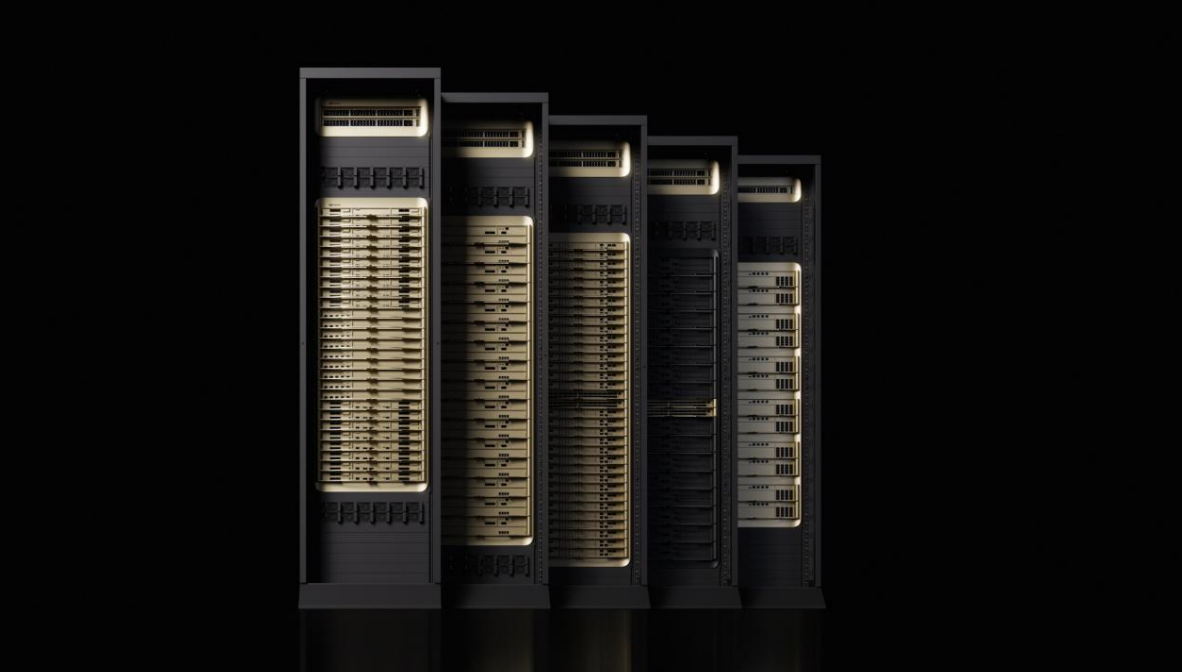
Nvidia says its inference accelerator Groq 3 LPX has entered full production and Nebius has signed on as the first customer; SpaceXAI will adopt Vera CPUs
Dedicated inference silicon like Groq 3 LPX entering full production—paired with early adopters like Nebius and SpaceXAI—means the performance-per-watt race for agent workloads is moving beyond general GPUs. If you’re planning high-volume inference, start modeling TCO across heterogeneous accelerators now rather than assuming “more H100s” is the only path.
 Applied AI
OpenAI is building AI agents for everything. Will everyone use them?
A push to ship agents “for everything” from a frontier lab turns the assistant from a single endpoint into a mesh of task-specific operators—email, browsing, code, back-office. If you own a workflow with repetitive digital steps, assume there will be a default agent for it and decide now whether you integrate, compete, or specialize around domain context and data access.