

China’s answer to ASML runs on Zeiss lenses, Financial Times reports
THE SO WHAT
Huawei coordinating China’s DUV lithography push while still relying on Zeiss lenses shows how hard it is to unwind deep-tech supply chains. For chip buyers, “indigenous” tooling doesn’t yet mean fully sanction-proof — geopolitical risk remains embedded in every advanced node roadmap.
READ THE SOURCE
MORE FROM THE WIRE
 Deep & Emerging Tech
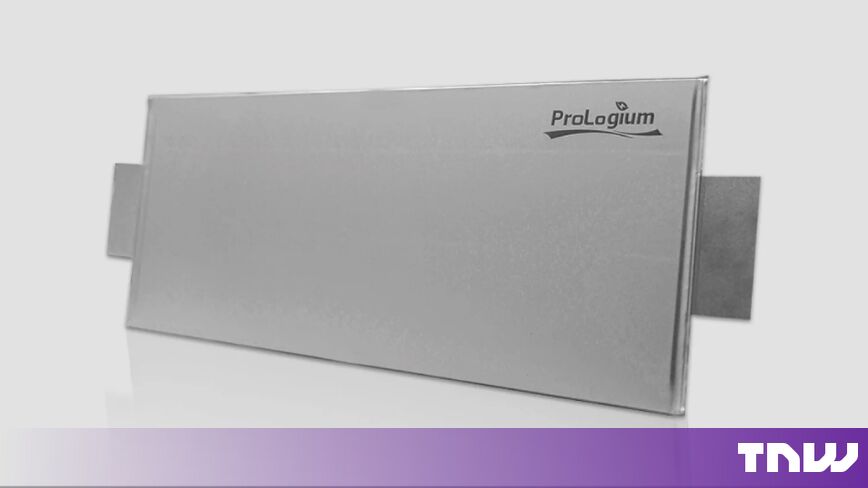
Solid-state batteries just went into mass production. The line makes 6,000 packs a year
ProLogium moving 381 Wh/kg solid-state cells into 6,000-pack annual production — with a 0.8 GWh European plant staged for 2028 — shifts solid-state from lab slide to supply-chain planning. OEMs and fleet operators should start modeling scenarios where higher-density packs are constrained by line capacity, not chemistry readiness.
 Deep & Emerging Tech
Guess What the Tech Industry’s Solution to Construction Labor Shortages Delaying AI Data Centers Is
If AI is being pointed at construction labor shortages for data centers, expect capex schedules to assume automation that doesn’t yet exist at scale. Operators depending on new capacity should separate marketing from reality — treat build timelines and labor availability as first-order risks, not afterthoughts.
 Deep & Emerging Tech
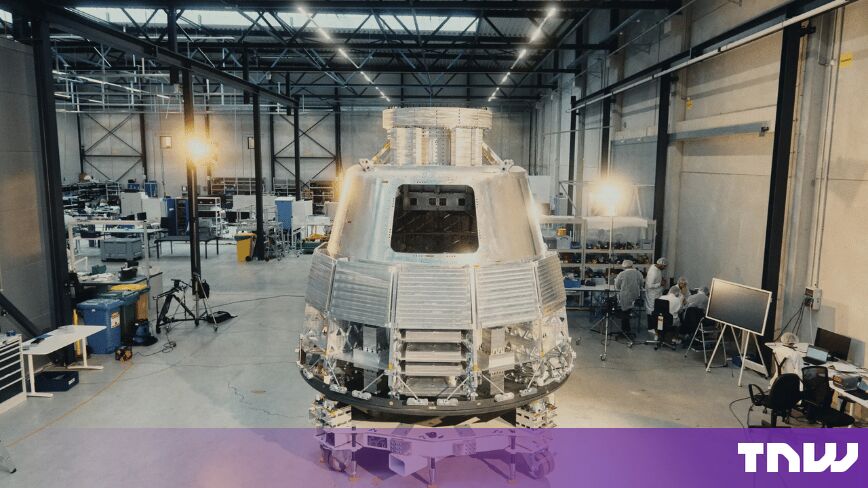
The Exploration Company raises $450m to build a rocket engine
A $450m round focused on propulsion — not the flashy Nyx capsule — is a bet that control of the engine stack is the real leverage in commercial space. If you’re building in-space services or launch-adjacent infrastructure, assume more vertically integrated competitors with proprietary engines in your vendor set by the early 2030s.
 Deep & Emerging Tech
Plug-in hybrids emit six times their official rating, and carmakers want the fix cancelled
Real-world data showing EU PHEVs at 145 g/km vs 24 g/km official — and OEMs lobbying to cancel a 2027 correction — exposes a widening gap between paper and physical emissions. Fleet operators and policymakers should base decarbonization plans on telematics data, not lab ratings, and be ready for regulatory recalibration.