
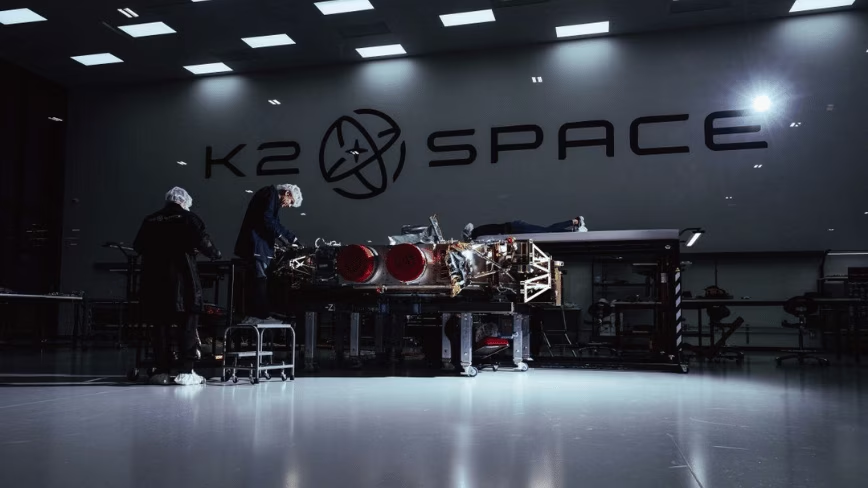
Everyone else is shrinking satellites. K2 raised $500m to build giant ones, and put AI in orbit.
THE SO WHAT
K2’s $500 million Series D at a $6.8 billion valuation to build large, AI-heavy satellites is a contrarian bet that compute and sensing will move into orbit, not just to the edge. If your product depends on geospatial data or global connectivity, assume new orbital platforms will become both a data source and a compute tier to integrate with.
READ THE SOURCE
MORE FROM THE WIRE
Phoebe Gates' shopping app Phia is in damage control mode and offering refunds after a payment scandal
A shopping app paying refunds after earning commissions on sales it didn’t drive is a warning shot on opaque attribution and affiliate logic. If you’re building commerce or adtech, assume regulators and users will demand line-of-sight from click to commission—document your attribution rules and be ready to surface them.
 Startups & Venture
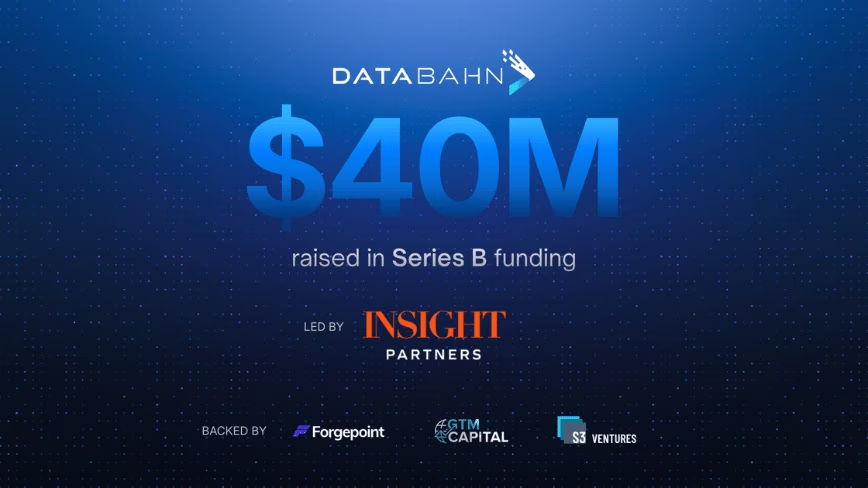
The unsexy layer AI agents actually need: DataBahn raises $40m to sell it
DataBahn’s $40 million Series B for an agentic data control plane is a bet that the bottleneck isn’t models, it’s clean, governed, real-time data access. If you’re piloting agents, budget more for data plumbing and policy orchestration than for yet another model integration.
 Startups & Venture
Smallest.ai raises $13M to build ultra-fast voice AI that sounds genuinely human
$13M into ultra-fast, human-sounding voice models aimed at passing the Turing test on calls means phone-based interactions are about to become indistinguishable from people. If you run call centers, fraud controls, or sales ops, assume synthetic callers and agents as first-class actors in your systems within 12–24 months.
 Startups & Venture
What’s his angle? Teen frustrated by plastic protractor reimagines the classic classroom tool
A teen spinning classroom frustration into a precision-machined protractor is a small but clear example of how low-cost manufacturing and crowdfunding keep lowering the bar for hardware experiments. For operators, it’s a reminder that niche pain points can now attract credible micro-brands faster than incumbents can react.