
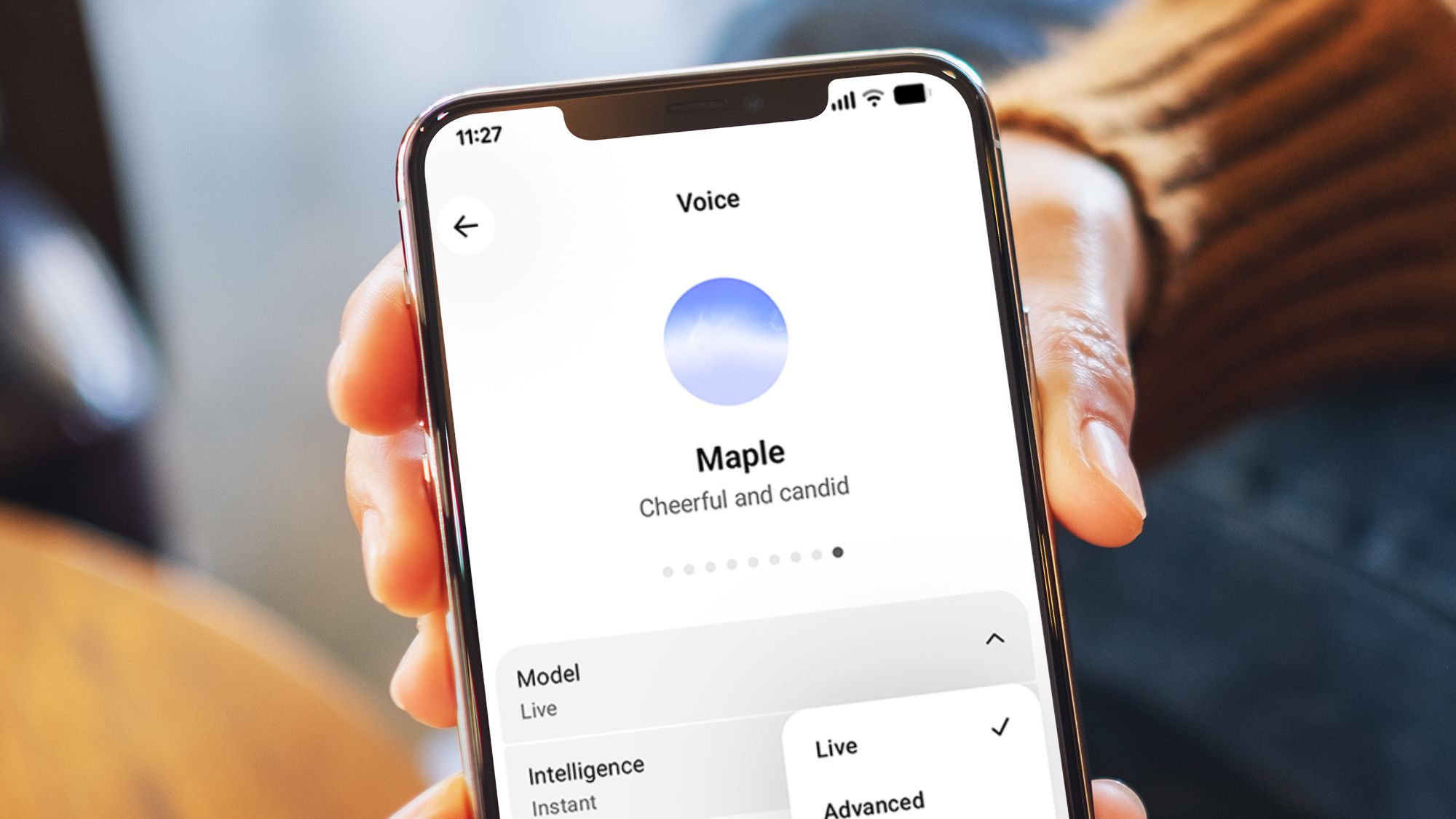
Got ChatGPT’s new voice mode? Here's how to check — and 5 things you should try first
THE SO WHAT
Wide rollout of ChatGPT’s new voice mode normalizes conversational interfaces as a default UX. Product teams should be testing voice entry points this quarter — not as a novelty, but as a primary path for search, support, and simple workflows.
READ THE SOURCE
MORE FROM THE WIRE
 Applied AI
The enterprise AI challenge nobody solves with code generation alone
The constraint in enterprise AI isn’t how fast you can generate code — it’s how quickly you can wire that code into brittle legacy systems under real governance. If your AI roadmap doesn’t include architecture, integration, and compliance as first-class workstreams, you’re budgeting for prototypes, not production.
 Applied AI
Anthropic’s new Claude feature is quietly selling you on AI
Usage analytics framed as a “Reflect” dashboard is also a land-and-expand tool — once teams see how much work flows through Claude, ripping it out gets harder. If you’re standardizing on a vendor assistant, assume their telemetry UX is part of the lock-in strategy and negotiate data access and portability now.
Applied AIHow One of the World’s Largest Publicly-Traded Hedge Funds Is Using AI
When a top public hedge fund calls AI in investing a “mixed bag,” it’s a signal that edge is shifting from raw models to proprietary data, governance, and human-AI collaboration. If you’re in any data-rich domain, the play is not “add AI” — it’s build the data and process moat others can’t copy.
Applied AIMuse Spark 1.1 costs $1.25 per 1M input tokens and $4.25 per 1M output tokens; Alexandr Wang says coding and agentic tasks were key focuses
At $1.25 per 1M input and $4.25 per 1M output tokens, Muse Spark 1.1 is pricing itself as a workhorse for coding and agentic workloads — not just chat. If you’re building agents or dev tools, your unit economics now hinge on output-heavy tasks, so architect prompts and workflows to minimize waste tokens.