

It will soon be too late to regulate use of autonomous weapons, warns Red Cross
THE SO WHAT
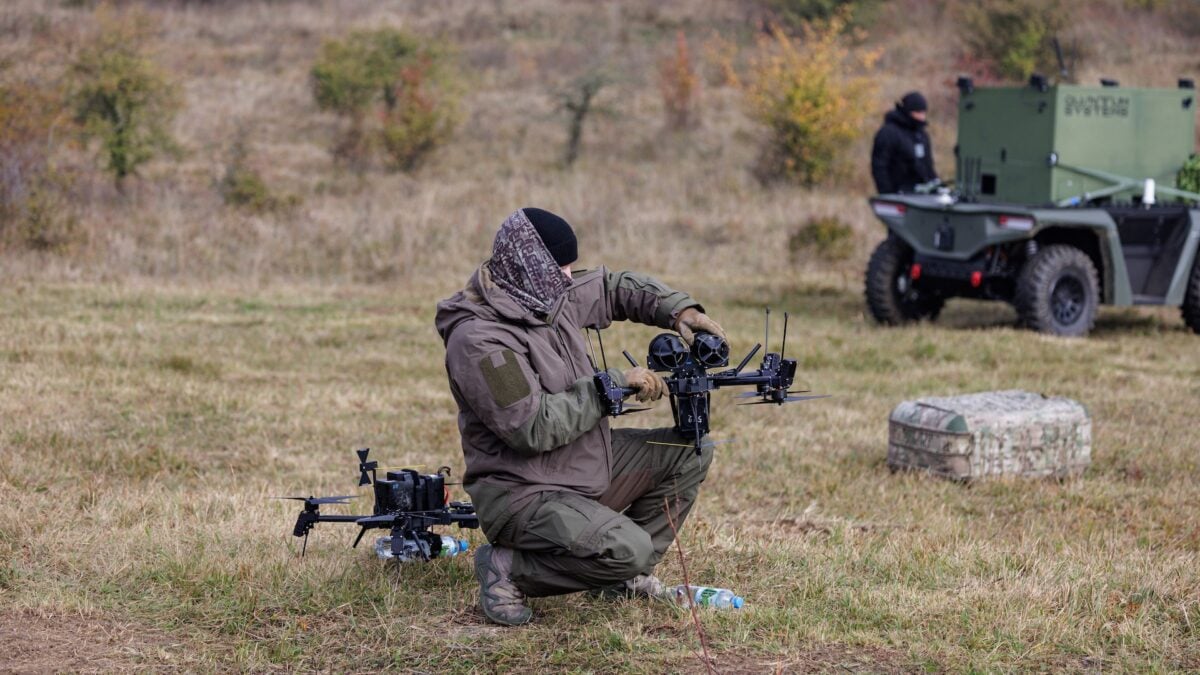
Once autonomous weapons are widely deployed, norms and treaties become much harder to retrofit. Defense-adjacent operators should assume a tightening regulatory perimeter and start mapping where their tech could be classified as dual-use.
READ THE SOURCE
MORE FROM THE WIRE
 Robotics & Autonomy
The manufacturing data gap holding back physical AI
Physical AI is now gated more by OT data plumbing than by robot intelligence. If you run factories, the near-term leverage is in cleaning up sensor streams, standardizing interfaces, and closing the loop from line events back into your autonomy stack.
 Robotics & Autonomy
International Talks on Autonomous Killer Robots Achieve Historic Deal to…Think It Over for 2 More Years
Regulation on autonomous weapons is moving on diplomatic time while the tech moves on venture time. Defense and dual-use AI teams should assume a permissive, ambiguous ruleset for at least the next 24 months and build internal guardrails accordingly, not wait for Geneva to draw the line.
 Robotics & Autonomy
The UN fails to agree on rules regulating ‘killer robots’
Autonomous weapons are advancing faster than multilateral norms, which means companies building dual-use autonomy will operate in a regulatory vacuum for longer than many expected. Early signal: you’ll need your own internal red lines and export controls rather than waiting for Geneva to hand you a rulebook.
 Robotics & Autonomy
This Squishy Little Robot Can Run 10 MPH Without Electronics
A soft robot hitting ~10 mph with no electronics points to mechanical intelligence as a parallel track to software-heavy autonomy. In environments where EMI, radiation, or maintenance kill traditional bots, you may soon have a new class of low-control, high-resilience actuated systems to work with.