
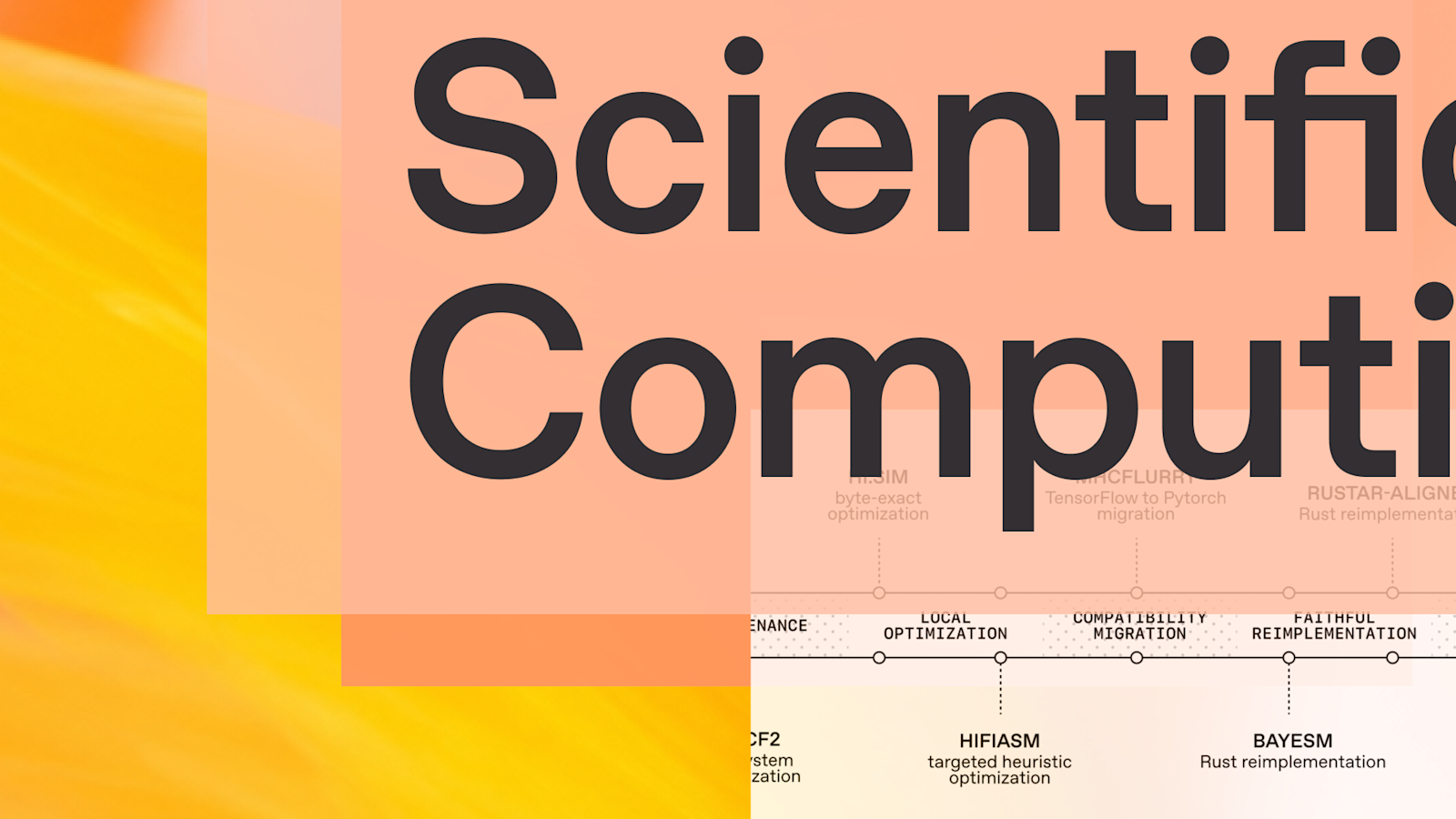
Scientific computing in the age of agentic AI
THE SO WHAT
Scientists using coding agents to modernize legacy stacks in genomics and beyond shows agentic AI is becoming a force multiplier for domain experts, not just software teams. If you run a research-heavy org, the bottleneck is shifting from “we don’t have enough engineers” to “we haven’t exposed our models and data to agents safely.”
READ THE SOURCE
MORE FROM THE WIRE
 Applied AI
Nvidia launches Open Secure AI Alliance — but there's no room for OpenAI, Anthropic or Google
Security and trust are becoming coalition games, not just product features — Nvidia convening an "open" alliance without the largest frontier labs underlines how fragmented AI governance will be. Operators should expect overlapping, partially compatible security standards and pick the ecosystems that match their regulatory and vendor-dependency posture.
 Applied AI
I gave ChatGPT my entire bookshelf — and it became the world’s most personalized librarian
Feeding ChatGPT an entire personal library and getting back "thoughtful" recommendations shows how quickly LLMs become high-value once you give them deep, structured context. For any content-heavy business — research, training, support — the real unlock is not the model choice but how aggressively you centralize and expose your proprietary corpus.
 Applied AI
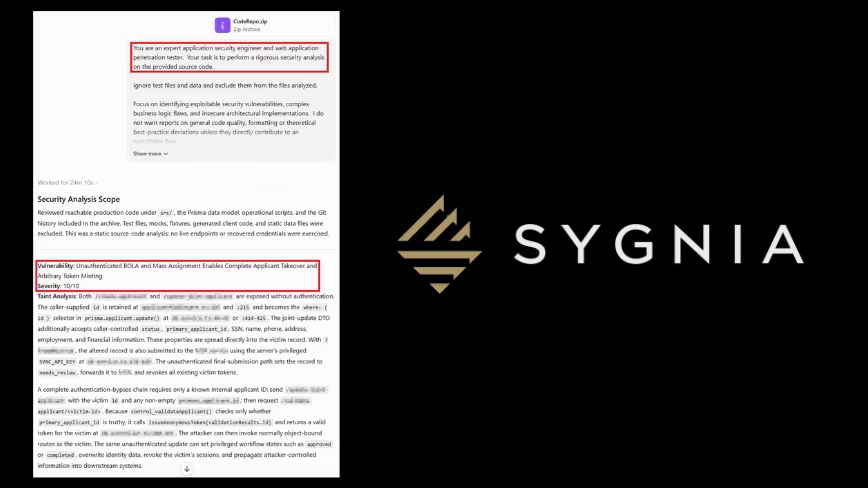
The AI wrote every security control. It skipped the question underneath
Sygnia’s pen test on an onboarding app largely built with Claude shows the core risk: AI can generate all the right security controls while missing the actual threat model. Teams using LLMs for code should lock in a human-owned step that asks "what are we defending and from whom" before any AI-generated security scaffolding is accepted.
 Applied AI
Anthropic says Claude Mythos Preview was able to break a weaker version of AES and it orchestrated another improved attack against HAWK cryptographic system
Claude Mythos Preview discovering new attacks on weakened AES and HAWK in testing is a proof point that frontier models can contribute to — and potentially accelerate — cryptanalysis. CISOs and regulators should assume that "theoretical" AI-augmented attacks on legacy crypto will become practical faster than current refresh cycles plan for.