
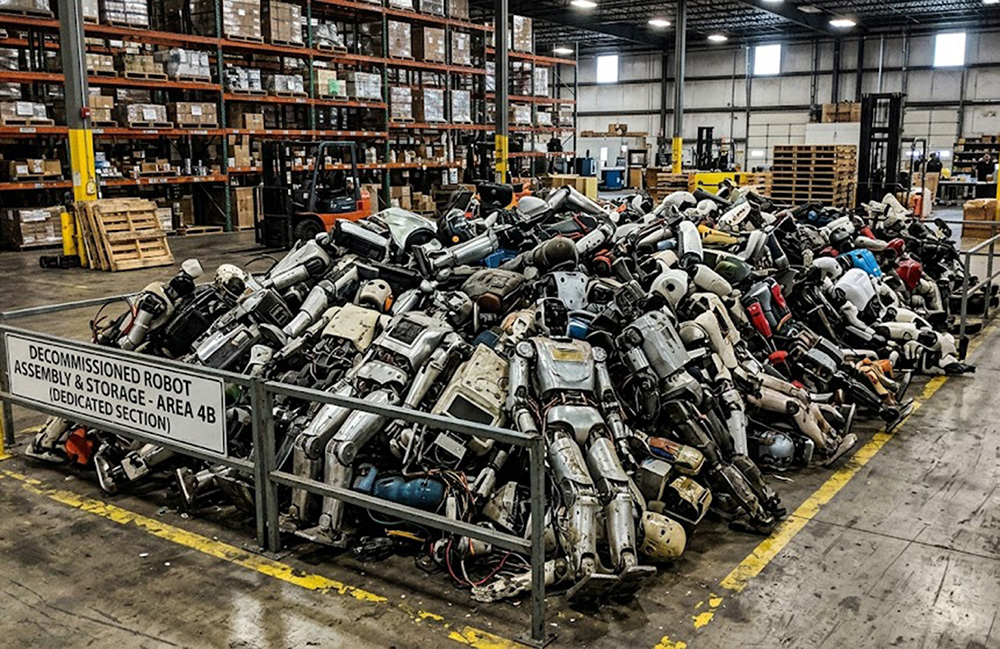
What do you do with a humanoid robot when it breaks down?
THE SO WHAT
If decommissioning a humanoid looks more like surgery than scrapping, lifecycle cost and service logistics become as important as unit price. Operators piloting humanoids need clear plans for parts harvesting, data sanitization, and liability before they scale deployments.
READ THE SOURCE
MORE FROM THE WIRE
 Robotics & Autonomy
China's autonomous 'bionic robot' fish looks just like the real one, perfect for covert military operations — Robocean BG5 could also be used to track poachers
Biomimetic robots like Robocean’s BG5 blur the line between sensors and wildlife—surveillance, environmental monitoring, and defense now have a stealth hardware option that looks like bycatch. If you operate in regulated waters or critical infrastructure near coasts, assume the sensor surface is getting harder to see and plan security and compliance accordingly.
 Robotics & Autonomy
China is readying the world's first giant submarine UAV carrier — built with a 1115ft dock, the unnamed mothership could be longer (and bigger) than WW2 light aircraft carriers and carry 148ft underwater drones
An underwater UAV mothership that extends the reach of 148 ft robot submarines is another step toward persistent, automated undersea presence. Undersea cables, offshore energy, and naval logistics all need to assume more autonomous, harder-to-attribute actors in their threat models.
 Robotics & Autonomy
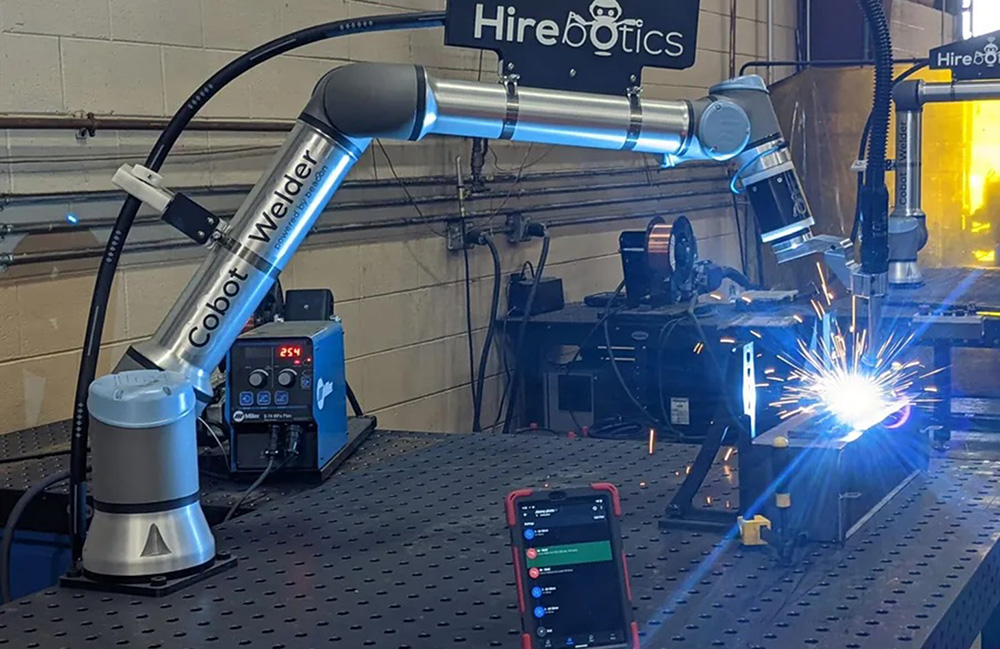
Hirebotics adds line tracking and linear rail capabilities to its cobots
Extending cobots with line tracking and linear rails turns them from point tools into cell-level automation that can cover more stations without re-fixturing. For manufacturers, this reduces the number of arms needed per line and makes retrofits to existing conveyors more attractive than full system overhauls.
Ukraine's defense companies say soldiers want drones that do more on their own so one operator can control more at once
Battlefield demand is pushing drone autonomy from “assistive” to “multiplicative” — one operator managing a swarm, not a single asset. Civil operators building inspection, logistics, or ag fleets should assume the same expectation curve: human-per-robot ratios will look wildly inefficient within a few product cycles.