
Defense tech raised $600M for space security. A venture fund started buying land next to power for data centers. Five Eyes governments published guidance on agentic AI access. Meta bought a humanoid robotics startup. And Cerebras prepared to go public at a $40B valuation.
On the surface, these look like separate stories, capital, policy, robotics, chips.
Underneath, they’re the same move: the AI stack is hardening into infrastructure. Compute, power, land, physical systems, and security policy are converging into one operating problem, who controls the rails, not who ships the next demo.
If your AI plan is still framed as “tools for teams” or “assistants for workflows,” you’re mis-scoping the game. The real contest is for control of surfaces, physical, political, and electrical, where AI will run by default.
Your current roadmap is probably underweight on three things: power, security, and embodiment. Yesterday made all three non-optional.

CAPITAL FLOWS / INFRASTRUCTURE
Defense, space, and compute-adjacent land are where late-stage money is hiding
True Anomaly raised $600M for space security, topping the week’s largest funding rounds and leading a cluster of defense-tech deals, per Crunchbase News. The week’s top 10 rounds were dominated by defense, aerospace, and AI infrastructure, not classic SaaS.
This is late-stage capital explicitly rotating into the frontier stack, space, cyber, and AI-linked defense, as traditional software multiples compress.
The Bet: Defense and dual-use infrastructure will be the most durable growth story of the next decade.
So What? Defense is no longer a niche vertical; it’s becoming the default exit path for deep tech that touches sensing, autonomy, or secure communications. If you’re building dual-use tech and not selling into defense or space, you’re leaving your best financing market untouched and accepting worse terms in crowded SaaS or horizontal AI categories.
The Risk: Defense timelines and compliance can stall companies that don’t design for them from day one. If your culture and architecture aren’t built for export controls, security reviews, and classified-adjacent work, you can burn years trying to retrofit.
Action: • Map your product to specific defense and space programs, not “the DoD” in general, and identify where your tech is already on their roadmap. • Hire or contract someone who has actually sold into defense procurement; don’t treat it as an adjacent enterprise motion. • If you’re raising late-stage capital without a defense or space story, expect harder questions on durability, update your deck accordingly this week.
Coatue is assembling a vehicle to buy land near large power sources, reportedly with Anthropic as a potential anchor tenant, to support data center buildout, per TechCrunch. This is a venture firm stepping directly into power-adjacent real estate as an AI leverage play.
The move reframes “AI infra investing” from chips and cloud equity into owning the dirt and megawatts underneath.
The Bet: Power, water, and permits will be more constraining, and more valuable, than GPUs alone.
So What? If funds are buying land at the substation instead of just buying cloud stocks, they’re telling you where the real bottleneck is. Operators who assume “the cloud will handle it” are now structurally downstream of investors who control where and how fast new capacity can be built. Your AI scaling plan is now a site-selection and utility-negotiation problem, not just a cloud-RI problem.
The Risk: Regulatory shifts, around data centers, water use, or local moratoria, can strand capital and capacity. If your workloads depend on a specific geography, you inherit that political risk.
Action: • Ask your cloud and colocation vendors for explicit disclosures on power sourcing, expansion plans, and permitting timelines in your key regions. • If AI is core to your product, start a parallel track exploring dedicated or JV data center capacity, even if it’s 12–24 months out. • Add “power and land exposure” to your board-level risk register; treat it like you treat chip supply.
Cerebras is reportedly seeking to raise up to $4B in an IPO at a roughly $40B valuation, per Bloomberg via Techmeme. The company sells wafer-scale AI systems and has been building vertically integrated compute and data center offerings.
Public markets are now prepared to underwrite vertically integrated AI compute, chips plus racks plus facilities, as a standalone asset class, not just as a feature of hyperscale clouds.
The Bet: Specialized AI compute utilities can sit alongside, not under, the big clouds.
So What? If Cerebras prices well, it validates a new category: independent AI utilities with their own silicon, software, and capacity. For operators, that means your vendor map is no longer just “AWS/Azure/GCP vs on-prem.” You now have credible third-party compute utilities that expect to be treated like long-term infrastructure partners, not experimental startups.
The Risk: Vendor concentration risk cuts both ways. If you build deeply on a single specialized stack and their economics or roadmap diverge from yours, you’re locked into a narrow lane with limited exit options.
Action: • If you’re already using specialized AI hardware, push vendors this week for 3–5 year roadmaps and financial durability signals, you’re not buying dev kits, you’re buying a utility. • Run a scenario where your primary cloud constrains GPU access; identify which workloads you’d move to an independent compute provider and what that migration would cost. • Update your infra strategy docs to treat compute providers like power companies, with diversification, SLAs, and contingency plans.

ROBOTICS / EMBODIED AI
Consumer platforms are internalizing humanoids, the embodiment land grab has started
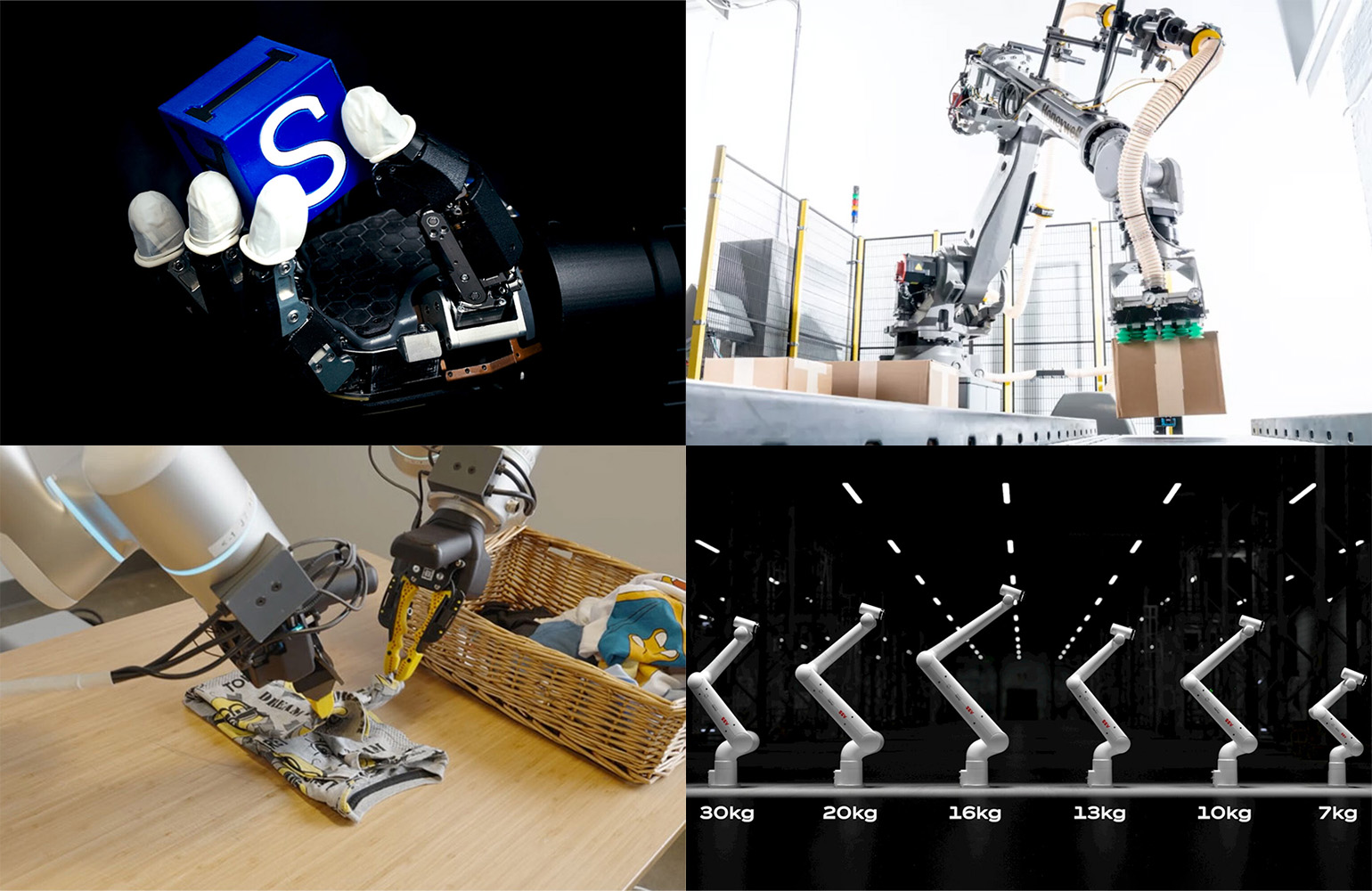
Meta acquired Assured Robot Intelligence, a humanoid robotics startup, to bolster its embodied AI ambitions, per TechCrunch. The deal brings both hardware and control stack in-house, alongside the data exhaust from real-world operation.
A major consumer platform now owns a first-party humanoid loop, from models to mechanics to deployment data.
The Bet: The next defensible surface for consumer platforms is physical presence, not just screens and headsets.
So What? This is the same playbook we saw with phones and headsets: own the device, own the OS, own the data. For embodied AI, that means big distribution platforms will want their own robots, or at least deep, exclusive integrations, to avoid being just another app on someone else’s hardware. If you’re building physical AI, your partnership and exit paths are being defined for you right now.
The Risk: If the platform bet on humanoids is early or mis-scoped, smaller robotics players that align too tightly with one ecosystem can get stranded when priorities shift or standards change.
Action: • Decide explicitly whether you’re building to be a neutral robotics layer or an ecosystem-aligned asset, and align your BD pipeline accordingly. • If you’re an operator in logistics, retail, or manufacturing, start vendor conversations that assume multi-year, multi-site humanoid deployments, not pilots, and ask how vendors plan to interoperate with major platform ecosystems. • Revisit your data strategy: clarify who owns task, environment, and failure data from robots on your premises and how it can be used for model training.
Robotics Business Review published a “Top 10 robotics stories of April 2026” roundup, spanning major milestones, funding rounds, and IP disputes, per The Robot Report. The fact that a single month now justifies a dense top-10 recap is a signal of volume and maturity.
Physical automation is exiting novelty and entering platform wars, multiple credible players, competing stacks, and real deployment scale.
The Bet: Robotics is moving from bespoke integration to standardized platforms and ecosystems.
So What? If you’re still running “innovation pilots” with one-off robots, you’re behind the curve. Your competitors are negotiating framework agreements, standardizing on fleets, and integrating robots into core workflows. The strategic question is no longer “should we try robots?” It’s “which stack do we standardize on, and how do we keep optionality?”
The Risk: Locking into a single vendor or proprietary interface layer now can limit your ability to adopt better hardware or models later, especially as humanoids and mobile platforms converge.
Action: • Audit your current and planned robotics deployments, list vendors, interfaces, and data flows, and identify where you’re already de facto locked in. • Start a requirements doc for a “robotics platform layer” in your org: identity, telemetry, task orchestration, and safety that can span multiple vendors. • If you’re a robotics startup, tighten your story around interoperability and lifecycle cost, buyers are now comparing platforms, not just pilots.

NATIONAL COMPUTE / SOVEREIGNTY
Agentic AI is now a security topic, not an innovation sandbox
The US, UK, Australia, Canada, and New Zealand jointly published guidance on organizational use of agentic AI systems, warning that many deployments give AI more access than can be safely monitored, per CyberScoop. The document frames agentic AI as a cybersecurity and governance issue, not just a productivity tool.
Five Eyes intelligence services are effectively saying: your bots already have more privileges than your humans, and you can’t see what they’re doing.
The Bet: Agentic AI will be pervasive enough that it needs the same control frameworks as human admins and contractors.
So What? This moves agentic AI out of “innovation” and into “security architecture.” If you’re wiring agents into CRMs, ERPs, CI/CD, or cloud consoles without least-privilege, audit trails, and kill switches, you’re building an unmanaged insider threat. Boards and regulators now have a reference document to ask you hard questions.
The Risk: Overreaction is as dangerous as underreaction. Blanket bans or freezing experimentation can push AI use into shadow IT, where it’s even harder to monitor and secure.
Action: • Inventory every agentic AI integration this week, where it runs, what systems it touches, and what credentials it holds. • Implement least-privilege for agents: scoped API keys, role accounts, and explicit approval flows for high-risk actions. • Assign a single accountable owner, likely CISO or CIO, for agent governance, with a mandate to define policies and monitoring before further expansion.
LABOR, TALENT & CULTURE
Headcount, not headcount cuts, AI is changing who you hire, not whether you hire
AWS CEO Matt Garman said Amazon plans to hire 11,000 software engineering interns in 2026, in line with recent years, pushing back on AI job loss fears, per Business Insider via Techmeme. This is one of the largest single engineering talent pipelines in the world, and it’s not shrinking.
Top-tier operators are betting that AI increases the leverage of engineers rather than replacing them.
The Bet: The constraint in an AI-native world is still great builders, just ones who can orchestrate systems, not only write code.
So What? If Amazon is holding intern intake steady, they’re planning for a future where more, not fewer, humans are designing, supervising, and productizing AI systems. If you’re using “AI will replace engineers” as a justification to slow hiring or training, you’re handing advantage to competitors who are compounding talent and institutional knowledge.
The Risk: Blindly copying big-tech hiring patterns without a clear plan for how those engineers will use AI can bloat payroll without increasing output.
Action: • Reassess your 2026–2027 hiring plan: are you underweight on early-career engineers who can grow into AI-native roles? • Stand up an internal AI enablement program, training, tooling, and patterns, so new hires are productive in an AI-augmented environment from week one. • Stop framing AI as a headcount reduction lever in internal comms; frame it as leverage, or you’ll lose the talent you most need.
Bloomberg reporting highlighted that women are using AI at similar rates to men but are less likely to admit it due to higher judgment and stigma, per Techmeme. The gender gap in “visible AI use” is more about perception than actual adoption.
Your AI usage metrics, and your talent bets, are likely skewed by culture, not reality.
The Bet: Social norms and internal narratives will shape who gets credit, and promotion, for AI leverage.
So What? If women are quietly using AI but not talking about it, your org will overestimate male “AI leadership” and under-recognize actual productivity gains. Culture becomes a performance constraint: teams that stigmatize visible AI use are taxing half their workforce and misallocating training and leadership opportunities.
The Risk: Pushing “everyone must use AI visibly” without addressing bias can backfire, reinforcing judgment and making underrepresented groups feel surveilled rather than supported.
Action: • Review your AI adoption surveys and telemetry with a bias lens; assume underreporting from groups that face more scrutiny. • Normalize AI use in performance frameworks, reward outcomes, not theater, and make it explicit that using AI is expected, not suspect. • Run small, mixed-gender AI working groups and showcase outputs, not individuals, to de-risk visible participation.
SECURITY / TRUST & SAFETY
Telecom and messaging are now hostile terrain, your auth and comms assumptions are broken
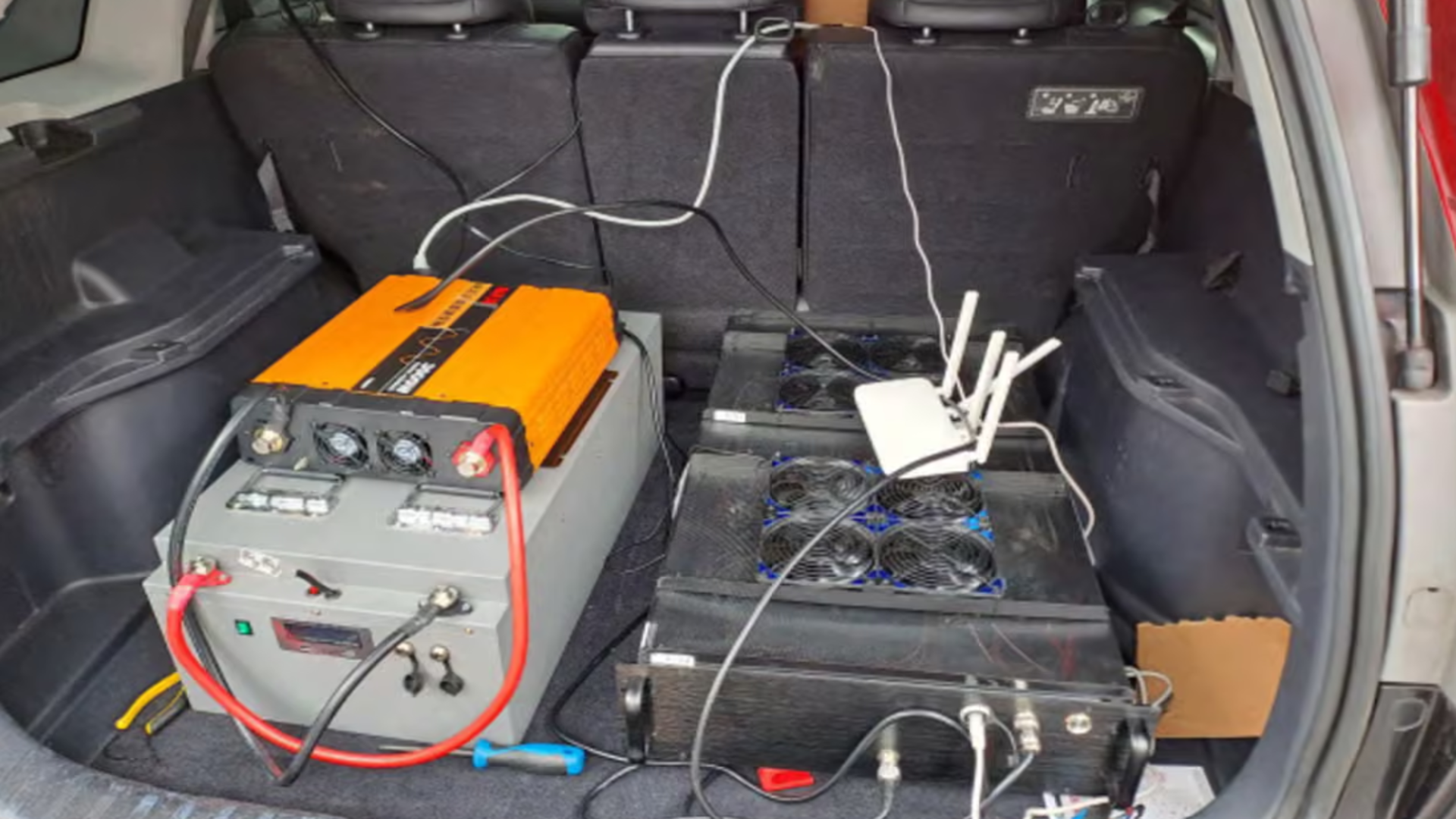
Hackers in Canada used vehicle-mounted SMS blasters to drive through cities, triggering 13 million network disruptions and compromising thousands of devices, per TechRadar Pro. The attacks weaponized the telecom layer itself, not just phishing content.
“Out-of-band” SMS is now a fully compromised channel.
The Bet: Legacy telecom rails will remain insecure faster than enterprises will migrate off them.
So What? If your ops, auth, or incident response flows still assume SMS is trustworthy, you’re already late. Attackers can now hit entire neighborhoods or cities with drive-by exploits. This isn’t just about 2FA codes; it’s about any workflow that assumes a phone number is a secure identity anchor.
The Risk: Ripping SMS out of flows without a replacement can degrade UX and lock out users, especially in markets where app-based auth is less common.
Action: • Identify every place you use SMS, auth, alerts, customer support, and rank them by blast radius if compromised. • Prioritize moving high-risk flows to app-based, hardware key, or WebAuthn-style authentication; start with admin and high-value accounts. • Pressure your telecom and CPaaS vendors for concrete mitigations and timelines; don’t accept “monitoring” as an answer.
Scammers posing as US immigration (ICE) agents are using WhatsApp to extort vulnerable people, per Gizmodo. They weaponize fear and the perceived authority of government on encrypted messaging platforms.
Encrypted messengers are now core infrastructure for both state power and predation.
The Bet: Identity and authority will be the primary attack vectors in a world where content is cheap and channels are encrypted.
So What? If you run comms, fintech, or any service that touches vulnerable populations, “trust and safety” is no longer a PR or moderation issue, it’s an existential risk control. Users will increasingly encounter your brand or adjacent authority figures through channels you don’t own, where impersonation is trivial and verification is hard.
The Risk: Overzealous verification schemes can add friction and exclude the very users you’re trying to protect, especially those with limited documentation or digital literacy.
Action: • Publish and promote clear, simple rules for how your organization will and will not contact users, and stick to them. • Explore verifiable sender frameworks, in-app verification, call-back codes, or public-key-backed identities, for high-risk communications. • Coordinate with NGOs or community organizations that serve vulnerable users to distribute anti-scam education tailored to your domain.
Meta reportedly laid off contractors who reviewed explicit video captured by its smart glasses, per Gizmodo. These workers were exposed to highly sensitive and disturbing content as part of the moderation pipeline.
Always-on capture devices are generating content that is at the edge of what human reviewers can safely process.
The Bet: On-device filtering and automated triage will eventually handle the worst content, but humans will absorb the gap in the meantime.
So What? If you’re shipping cameras on faces, cars, or robots, you’re not just a hardware company, you’re operating a content moderation system with real human harm embedded. Outsourcing that to contractors without redesigning the pipeline is a liability. Regulators and the press now have a template for scrutinizing how you protect the people in the loop.
The Risk: Relying too heavily on automated moderation without robust evaluation can miss edge cases and create new harms, especially in sensitive contexts like private spaces or minors.
Action: • Map your entire capture-to-review pipeline: what’s filtered on-device, what’s uploaded, who sees what, and under what protections. • Invest in on-device and near-device filtering for the most harmful classes of content; treat this as core R&D, not a cost center. • If you use human reviewers, audit their working conditions, mental health support, and exposure limits this week, and be prepared to defend them publicly.
IN PRACTICE
The throughline across these rails is governance, of compute, of agents, of physical systems, of humans in the loop.
The operators who win this cycle won’t just have better models. They’ll have better control planes: for where their compute lives, how their agents act, which robots they standardize on, and how their people safely interact with all of it.
We’re seeing a shift from “AI projects” to “AI infrastructure programs.” That demands different muscles, site selection instead of just cloud selection, security architecture instead of just feature flags, workforce design instead of just hiring plans.
If your AI strategy doc doesn’t have owners for power, security, embodiment, and culture, it’s not a strategy. It’s a wishlist.
For the full breakdown, reach out for a Field Report.
CONTRARIAN SIGNAL
AI isn’t killing jobs, it’s killing bad org design
The dominant narrative is still binary: AI will either wipe out software jobs or leave them untouched. Yesterday’s signals, Amazon holding intern hiring at 11,000, women quietly using AI while hiding it, Five Eyes warning about over-empowered agents, tell a different story.
AI isn’t primarily a headcount story. It’s a leverage and structure story.
Organizations that treat AI as a cost-cutting tool will under-hire, under-train, and over-automate, then get blindsided by security incidents, cultural drag, and brittle systems. Organizations that treat AI as a leverage layer will hire aggressively into new roles, agent designers, robotics integrators, AI-native PMs, and redesign workflows so humans supervise and orchestrate rather than grind.
The real job losses will come from companies that refuse to redesign how work is done, not from the technology itself.
The Takeaway: If your AI plan starts with “reduce headcount,” you’re optimizing for the wrong variable, and setting yourself up to lose the talent and resilience you’ll actually need.
THE QUESTION FOR TODAY
Defense and space are where late-stage capital is hiding. Funds are buying land and power, not just cloud credits. Agentic AI is now a security problem, not an innovation toy. Humanoids and robotics are becoming platform plays, not pilots. Top-tier firms are hiring more engineers, not fewer, in an AI world.
Are you still treating AI as a feature, or are you reorganizing your infrastructure, security, and talent around it as a core operating environment?
Signal + Noise is strategic intelligence, not engagement-specific advice. For guidance calibrated to your org, start with Advisory.
See exactly how this impacts your specific industry and function. Upgrade to PRO to get bespoke tactical breakdowns generated instantly for your operating model.
Go deeper with the Weekly Signal
This is the daily take. The Weekly goes further — full strategic analysis across 8–10 sections, each with a signal read and operator action items. Source panel included.
Sign up free → then upgrade