
FRONTIER AI IS BECOMING A PROCUREMENT PRODUCT (NOT A BENCHMARK PRODUCT)
The most important shift isn’t that models are getting smarter. It’s that the buying surface for frontier AI is moving from “show me the leaderboard” to “show me the controls.” The winners are starting to look less like research labs and more like regulated vendors: indemnity, auditability, behavior testing, deployment boundaries, and a credible story for what happens when the model does something expensive, illegal, or simply wrong.
Microsoft is leaning into that reality in two different ways. First, it’s explicitly selling enterprise AI on legal risk management, positioning its new model lineup as something businesses can adopt without becoming the test case in the next IP or privacy lawsuit. Gizmodo’s framing is blunt, Microsoft is “exploiting legal fears” to sell its model, but the underlying point is operationally correct: in 2026, legal posture is product. If your AI offering can’t be procured with confidence, it won’t be deployed at scale, no matter how good it is at reasoning. (Source: Gizmodo, “Microsoft Is Exploiting Legal Fears to Sell Its Powerful New AI Model to Businesses”)
Second, Microsoft is also trying to standardize how teams specify and test model behavior. The release of ASSERT, an open-source framework that generates and runs AI behavior tests from natural-language descriptions, is a quiet but meaningful step toward making “LLM QA” look like software QA. This is the plumbing layer most teams are missing: written behavior specs, regression tests for safety/compliance, and a way to catch prompt/weight changes that break policy. The subtext: the model is no longer the hard part; the hard part is proving it behaves inside your risk envelope, continuously, across versions. (Source: Techmeme / TechCrunch, “Microsoft releases ASSERT…”)
Now connect that to the policy environment. The U.S. is normalizing the idea that frontier model releases are a governed event, even if the first step is “voluntary.” A 30-day pre-release review window sounds soft, but it creates a template: disclosure timelines, documentation expectations, and a default assumption that government can ask to see what you’re about to ship. Voluntary becomes de facto mandatory the moment major buyers (or insurers) treat participation as table stakes. (Source: The Next Web, “Trump quietly signs a downsized AI executive order…”)
And outside the U.S., the direction is even clearer: sovereignty and jurisdiction are becoming first-class requirements. Poland’s proposed “sovereignty test” for government tech purchases is the kind of procurement mechanism that forces vendors to answer uncomfortable questions: Where do models run? Who administers them? What happens if cross-border access is cut? Can the state fork the stack or exit cleanly? This is the compliance layer catching up to the reality that AI is infrastructure, not an app. (Source: The Next Web, “Poland will introduce a ‘sovereignty test’…”)
Operator takeaway: if you’re shipping AI features into any serious environment (regulated, enterprise, public sector), your roadmap needs a “governance surface area” track: behavior specs + automated evals, audit logs, data lineage, admin controls, and contractual risk allocation (indemnity, warranties, incident response). The model is the engine; the product is the seatbelts.
AMBIENT AGENTS MOVE THE CONTROL POINT TO IDENTITY, POLICY, AND LOGGING
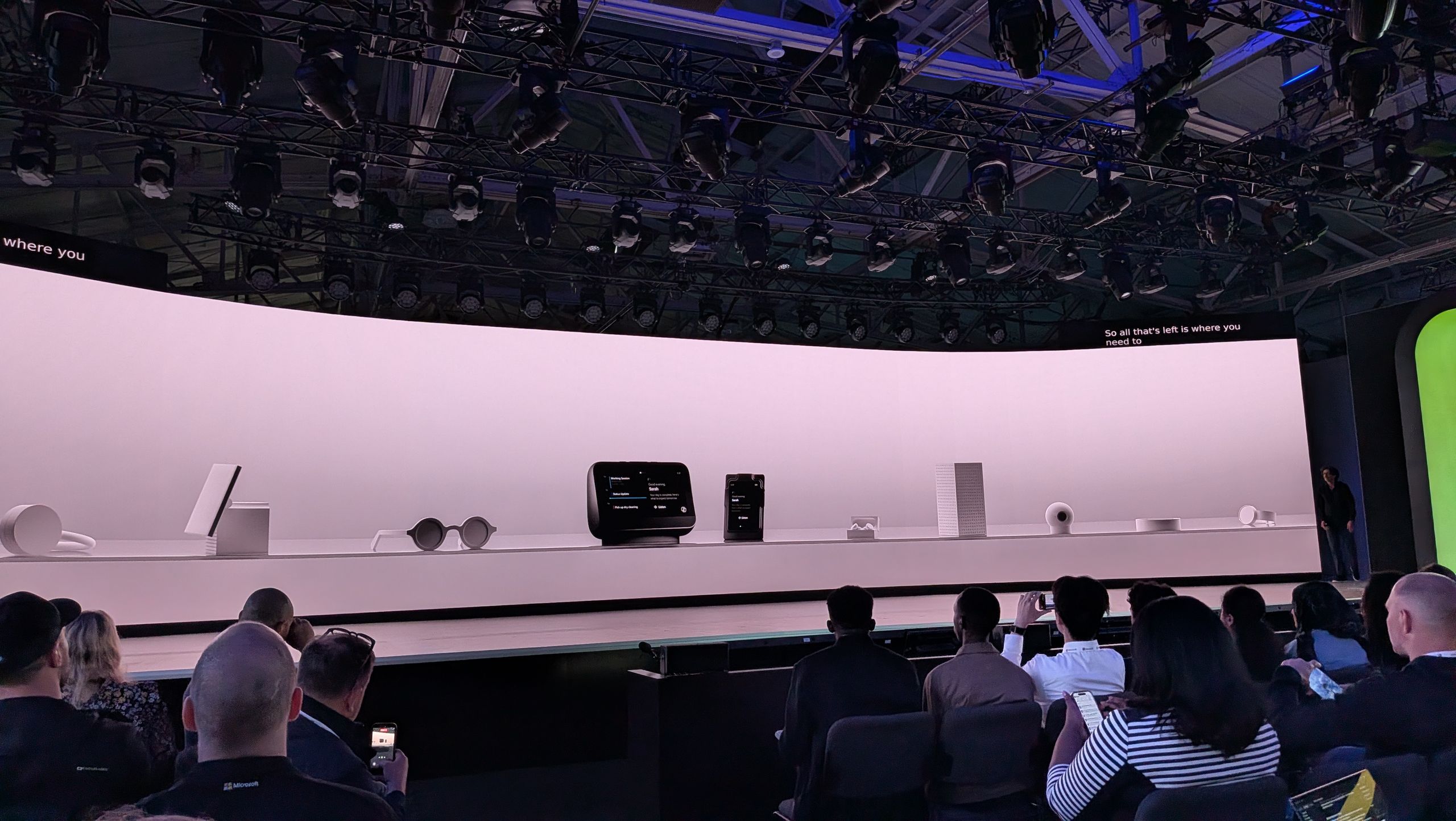
Microsoft’s “Project Solara” pitch, AI agents breaking out of the PC and into the real world, reads like a consumer futurism story. Treat it instead as an enterprise architecture warning. If agents become ambient (badges, speakers, appliances, meeting rooms), the primary interface is no longer a user clicking buttons. It’s a machine initiating actions continuously: scheduling, purchasing, messaging, summarizing, unlocking, escalating. That changes what “secure by default” means.
In an ambient-agent world, the control plane becomes identity and policy: who the agent is, what it can do, what it can see, and how you prove after the fact why it did what it did. The organizations that get hurt first won’t be the ones with the worst models; they’ll be the ones with weak authorization boundaries and poor telemetry. (Source: TechRadar Pro, “Microsoft’s Project Solara…”)
This is why security spend is not getting compressed by AI, it’s getting repriced upward. Palo Alto Networks’ results and guidance are the cleanest signal: revenue up sharply, forecasts above expectations, and management explicitly tying urgency to “advancements at the AI frontier.” Boards understand the new math: more automation + more integration points = more blast radius. (Source: Bloomberg, “Palo Alto Networks Raises Profit Outlook, Citing AI Demand”; also see MarketWatch, “AI is a friend, not a foe”)
Meanwhile, the “basic blocking and tackling” failures keep happening, and they’re increasingly catastrophic because everything is connected to everything. A misconfigured Kibana dashboard exposing 22M+ records is not a sophisticated nation-state attack; it’s an ops failure. But in an agentic environment, ops failures become identity failures and trust failures, because logs and observability endpoints often contain the breadcrumbs an attacker needs to impersonate systems, map networks, or replay sessions. (Source: TechRadar Pro, “Anonymous video chat app leaks data…”)
Operator takeaway: design for “machine-initiated action” as the default. That means (1) least-privilege agent identities, (2) policy-as-code with explicit allowlists, (3) immutable audit trails, (4) tight controls on observability surfaces, and (5) incident response playbooks that assume the actor might be your own agent gone sideways.
THE AI BUILDOUT IS NOW PROJECT FINANCE (AND IT’S PULLING IN STRANGE SUPPLIERS)
The AI infrastructure boom is maturing into something more like energy or telecom: long-lived assets, heavy capex, and financing structures that look like project finance rather than venture theater. A CoreWeave-tied data center raising $900M in five-year junk bonds at a 7.5% yield is the tell. This is not “cloud opex elasticity.” This is “we are building plants,” funded with high-yield debt, with all the refinancing and utilization risk that implies. (Source: Techmeme / Bloomberg, “CoreWeave-tied data center raised $900M…”)
Once the buildout hits that phase, the second-order effects matter as much as the GPUs. Toto, yes, the toilet maker, redirecting more than half of future capex into chip-related ceramics is a reminder that AI demand rewires upstream industrial capacity. The constraint isn’t only compute; it’s materials, components, and specialized manufacturing that suddenly becomes strategic. If you’re buying anything in the supply chain (substrates, ceramics, cooling, power gear), you’re now competing with AI capex cycles, not your historical peer set. (Source: Bloomberg, “Toilet Maker Toto Hikes Capex to Meet AI Demand for Its Ceramics”)
Conservative capital is also starting to treat AI as durable infrastructure rather than a speculative trade. When Berkshire-adjacent commentary frames AI as “substantial investment” territory, that’s a governance signal: boards that used to demand immediate ROI will increasingly accept multi-year infrastructure spend, if it’s packaged as resilience, productivity, and competitive necessity. (Source: Bloomberg, “Momei Qu on Berkshire Hathaway Endorsing AI”)
Operator takeaway: if you plan to own racks, sign long power deals, or build private inference, your CFO is now managing utilization risk, debt covenants, and supply-chain lead times. The frontier advantage won’t be “we have a bigger model.” It’ll be “we can deploy reliably at predictable unit cost, with contractual guarantees.”
PUBLIC MARKETS WANT SPACE INFRASTRUCTURE, AND ARE NERVOUS ABOUT AI LAB EXITS
Two capital-market stories landed with the same underlying theme: investors are willing to fund infrastructure with clear cash-flow narratives, but they’re increasingly skeptical of black-box, hard-to-value bets, especially when the liabilities are undefined.
SpaceX reportedly moving toward setting IPO terms is the cleanest example of space infrastructure becoming a mainstream asset class. Once a company like that is priced quarter-to-quarter, the market will demand operational metrics: launch cadence, satellite utilization, backlog quality, insurance costs, regulatory friction. That scrutiny will cascade through suppliers and competitors, and it will lower the cost of capital for the winners while raising the bar for everyone else. (Source: Bloomberg, “SpaceX to Plan Setting IPO Terms…”)
In contrast, the pushback on AI IPOs, arguing that unprofitable frontier labs shouldn’t be allowed to list, reflects a different fear: public markets inheriting undefined model risk (IP, safety, regulatory, customer harm) without a mature disclosure regime. Whether or not you agree with the conclusion, the direction is obvious: exits for AI labs and AI-heavy businesses will face more friction, more disclosure demands, and more questions about liability allocation. (Source: Bloomberg, “Anthopic, OpenAI Should Not Be Allowed to IPO, Says Ed Zitron”)
Operator takeaway: if your strategy assumes a clean IPO path, start building the documentation now: model governance, incident history, eval methodology, customer controls, and contractual indemnities. The market is shifting from “growth at any cost” to “risk you can underwrite.”
CONSUMER MEDIA AND DEV TOOLS: PRICING POWER IS MOVING TO PLATFORMS AND POLICIES
A few “smaller” items point to the same structural shift: distribution and control planes are where leverage lives; everything else gets commoditized.
Amazon offering early theatrical access to a Spider-Man release as a Prime perk is a distribution move, not a content move. Windowing becomes retention tooling; timing becomes part of the bundle. If you own IP, you’re no longer negotiating only on revenue share, you’re negotiating on how your release calendar props up someone else’s subscription flywheel. (Source: TechRadar Pro, “Spider-Man: Brand New Day… early thanks to Amazon Prime”)
Meta testing episodic “Series” hubs for Reels is the same pattern: platforms are adding structure to turn viral clips into durable catalogs. Narrative packaging becomes a platform primitive. Creators who can produce arcs will get more shelf space than creators who only ship one-off hits. (Source: Techmeme / TechCrunch, “Meta is testing a Series feature…”)
And on developer tooling, the “$33 lifetime” Visual Studio Pro deal is a reminder that list-price leverage on IDEs is eroding. The margin is in cloud services, identity, collaboration, compliance, and the enterprise control plane, not the editor. Tooling becomes a funnel; governance becomes the lock-in. (Source: Mashable, “Visual Studio Pro… only $33”)
Operator takeaway: in both consumer and enterprise, the durable moat is shifting toward (1) distribution control, (2) identity/policy, and (3) compliance-ready operating environments. Content, models, and tools are increasingly interchangeable; the rails they run on are not.
{
 "hero_source": {
 "url": "https://www.techmeme.com/260602/p56#a260602p56",
 "publisher": "Techmeme (via TechCrunch)",
 "headline": "Microsoft releases ASSERT, an open-source framework that lets developers generate and run AI behavior tests using natural-language descriptions"
 },
 "sources": [
 {
 "url": "https://gizmodo.com/microsoft-is-exploiting-legal-fears-to-sell-its-powerful-new-ai-model-to-businesses-2000766632",
 "publisher": "Gizmodo AI",
 "headline": "Microsoft Is Exploiting Legal Fears to Sell Its Powerful New AI Model to Businesses",
 "rail": "POLICY"
 },
 {
 "url": "https://www.techmeme.com/260602/p56#a260602p56",
 "publisher": "Techmeme (via TechCrunch)",
 "headline": "Microsoft releases ASSERT, an open-source framework that lets developers generate and run AI behavior tests using natural-language descriptions",
 "rail": "POLICY"
 },
 {
 "url": "https://thenextweb.com/news/trump-signs-downsized-ai-executive-order-voluntary-review",
 "publisher": "The Next Web",
 "headline": "Trump quietly signs a downsized AI executive order asking companies to voluntarily submit models for review 30 days before release",
 "rail": "POLICY"
 },
 {
 "url": "https://thenextweb.com/news/poland-tusk-tech-sovereignty-ai-procurement-test",
 "publisher": "The Next Web",
 "headline": "Poland will introduce a “sovereignty test” for government tech purchases as Tusk warns AI dependency has reached dangerous proportions",
 "rail": "POLICY"
 },
 {
 "url": "https://www.techradar.com/pro/is-this-the-next-computer-microsofts-project-solara-looks-to-break-ai-out-of-the-pc-and-into-the-real-world",
 "publisher": "TechRadar Pro",
 "headline": "Is this 'the next computer'? Microsoft’s Project Solara looks to break AI out of the PC and into the real world",
 "rail": "APPS"
 },
 {
 "url": "https://www.bloomberg.com/news/articles/2026-06-02/palo-alto-networks-raises-profit-outlook-citing-ai-demand",
 "publisher": "Bloomberg Technology",
 "headline": "Palo Alto Networks Raises Profit Outlook, Citing AI Demand",
 "rail": "WIRE_SERVICES"
 },
 {
 "url": "https://www.marketwatch.com/story/palo-alto-networks-stock-is-rising-as-earnings-show-ai-is-a-friend-not-a-foe-0f6b289a?mod=mw_rss_topstories",
 "publisher": "MarketWatch",
 "headline": "Palo Alto Networks’ stock is rising as earnings show AI is a friend, not a foe",
 "rail": "WIRE_SERVICES"
 },
 {
 "url": "https://www.techradar.com/pro/anonymous-video-chat-app-leaks-data-on-millions-of-users-more-than-22-million-records-exposed-including-3-million-containing-names-and-email-addresses",
 "publisher": "TechRadar Pro",
 "headline": "Anonymous video chat app leaks data on millions of users, more than 22 million records exposed, including 3 million containing names and email addresses",
 "rail": "APPS"
 },
 {
 "url": "https://www.techmeme.com/260602/p59#a260602p59",
 "publisher": "Techmeme (via Bloomberg)",
 "headline": "Source: a CoreWeave-tied data center raised $900M via five-year junk bonds, priced at par to yield 7.5%, as the sector increasingly turns to high-yield bonds",
 "rail": "WIRE_SERVICES"
 },
 {
 "url": "https://www.bloomberg.com/news/articles/2026-06-02/toilet-maker-toto-hikes-capex-to-meet-ai-demand-for-its-ceramics",
 "publisher": "Bloomberg Technology",
 "headline": "Toilet Maker Toto Hikes Capex to Meet AI Demand for Its Ceramics",
 "rail": "WIRE_SERVICES"
 },
 {
 "url": "https://www.bloomberg.com/news/videos/2026-06-02/momei-qu-on-berkshire-hathaway-endorsing-ai-video",
 "publisher": "Bloomberg Markets",
 "headline": "Momei Qu on Berkshire Hathaway Endorsing AI",
 "rail": "WIRE_SERVICES"
 },
 {
 "url": "https://www.bloomberg.com/news/articles/2026-06-02/spacex-is-said-to-plan-setting-ipo-terms-as-soon-as-wednesday",
 "publisher": "Bloomberg Markets",
 "headline": "SpaceX to Plan Setting IPO Terms as Soon as Wednesday",
 "rail": "WIRE_SERVICES"
 },
 {
 "url": "https://www.bloomberg.com/news/videos/2026-06-02/anthopic-openai-should-not-be-allowed-to-ipo-zitron-video",
 "publisher": "Bloomberg Markets",
 "headline": "Anthopic, OpenAI Should Not Be Allowed to IPO, Says Ed Zitron",
 "rail": "WIRE_SERVICES"
 },
 {
 "url": "https://www.techradar.com/streaming/entertainment/spider-man-brand-new-day-amazon-prime-early-screening",
 "publisher": "TechRadar Pro",
 "headline": "Spider-Man: Brand New Day fans can see the new Marvel movie early thanks to Amazon Prime",
 "rail": "APPS"
 },
 {
 "url": "https://www.techmeme.com/260602/p58#a260602p58",
 "publisher": "Techmeme (via TechCrunch)",
 "headline": "Meta is testing a Series feature, letting select creators make episodic Reels that are placed in a dedicated hub on their profile",
 "rail": "APPS"
 },
 {
 "url": "https://mashable.com/tech/june-2-microsoft-visual-studio-professional-2026",
 "publisher": "Mashable Tech",
 "headline": "Microsoft charges hundreds every year for Visual Studio Pro, but it’s only $33 here",
 "rail": "APPS"
 }
 ]
}
Signal + Noise is strategic intelligence, not engagement-specific advice. For guidance calibrated to your org, start with Advisory.
See exactly how this impacts your specific industry and function. Upgrade to PRO to get bespoke tactical breakdowns generated instantly for your operating model.
Go deeper with the Weekly Signal
This is the daily take. The Weekly goes further — full strategic analysis across 8–10 sections, each with a signal read and operator action items. Source panel included.
Sign up free → then upgrade