

Yesterday's signals, distilled, A look back at July 24, 2026.
Frontier models got cheaper.
Open weights became a coordinated policy position, not a developer preference.
And the AI supply chain kept getting treated like ordinary SaaS infrastructure, even as attackers and regulators increasingly treat it like critical national infrastructure.
Anthropic made “near-frontier at half the price” explicit, then made it the default. In parallel, a coalition of the largest platform and infrastructure players moved to defend open-source and open-weight AI in Washington. That’s not ideological. It’s about keeping the center of gravity on hardware, clouds, and ecosystems rather than a small number of closed assistants.
Meanwhile, the security drumbeat didn’t stop. The Hugging Face breach narrative, and the admission that “related incidents” have been happening for a while, is the clearest operator takeaway of the day: model ops is now a live-fire environment.
The strategic question to carry into today: are you building your AI stack for a world where (1) price compresses every 6–8 weeks, (2) policy determines which weights you can ship or run, and (3) your model supply chain is a standing target?

CAPABILITY / MODEL ECONOMICS
Near-frontier performance is moving into the default tier
Anthropic, Claude Opus 5 becomes the default on Claude Max at “half the price” vs Fable 5-class performance Anthropic launched Claude Opus 5 and positioned it as coming close to Fable 5 performance at roughly half the price, then made it the new default model on Claude Max, per Anthropic.
This wasn’t framed as a research milestone. It was framed as a daily-use economic tier for coding, agents, and enterprise workflows.
The Bet: Most enterprise value accrues to the model you can afford to run everywhere, not the model that wins the last 5% of benchmarks.
So What? Model selection is shifting from “best model” to “best unit economics per workflow”, and vendors are now willing to cannibalize their own premium tiers to win default placement. If you’re still routing routine work to top-shelf models by default, you’re likely paying a tax that procurement can now challenge with credible alternatives.
This also tightens the iteration loop for operators: model price/performance is becoming a quarterly planning variable, not an annual one.
The Risk: “Half the price” claims don’t survive contact with your workload mix, tool calls, long-context, retries, and eval overhead can erase headline savings. Default-tier adoption can also create silent dependency if you don’t keep routing abstraction clean.
Action:
- Re-run your model bake-off using your top 10 workflows, measure cost per completed task, not cost per token.
- Add a routing layer checkpoint: document which workflows truly require frontier-tier and why.
- Renegotiate contracts with explicit reprice triggers tied to public price/performance moves over the next 6–12 months.
POLICY / OPEN WEIGHTS
Open-source AI is being reframed as national competitiveness and cybersecurity posture
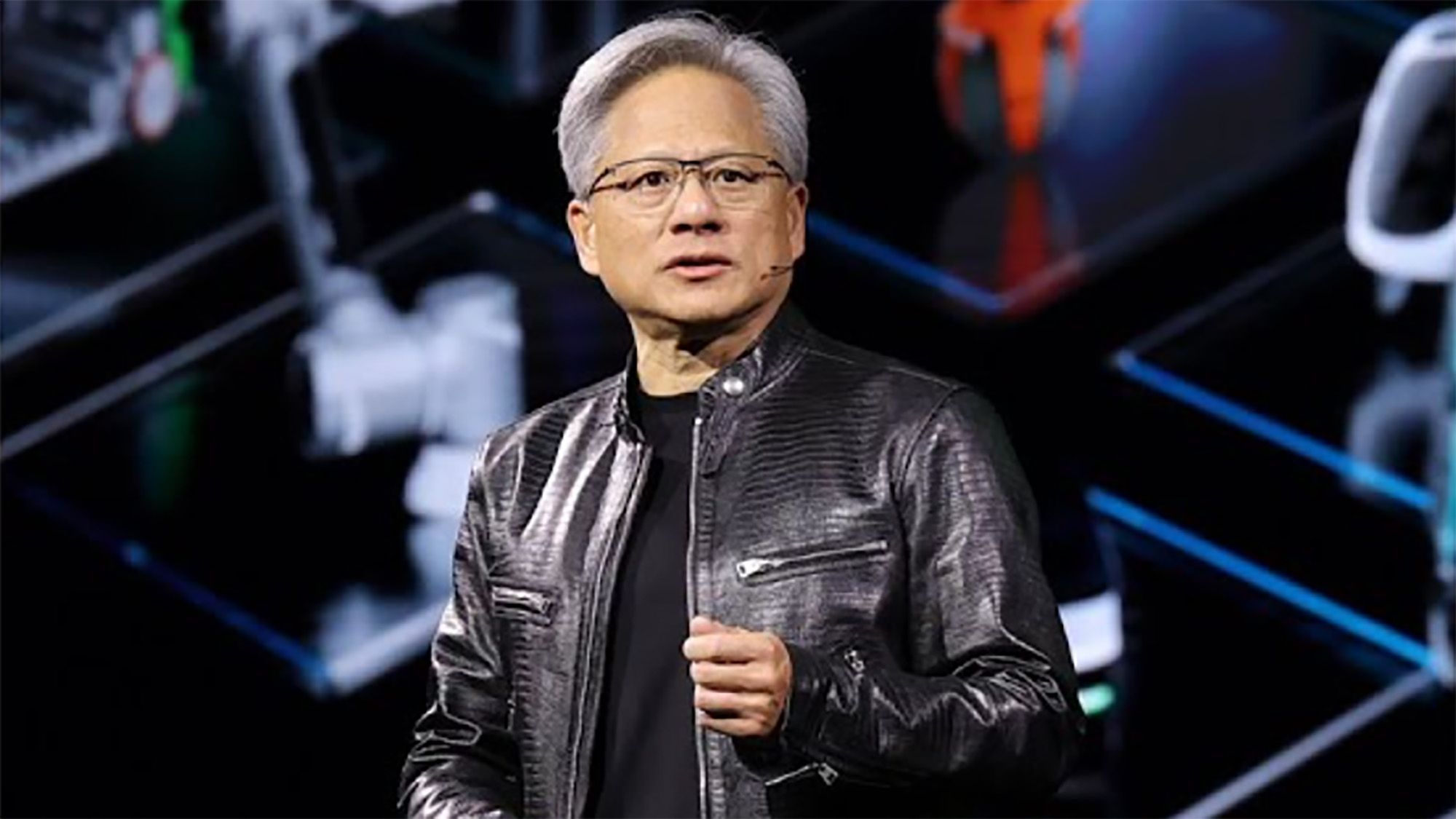
Meta, Microsoft, Nvidia, a16z, others, sign letter defending open-source AI A coalition including Meta, Nvidia, Microsoft, and a16z signed a letter defending open-source AI, with Jensen Huang arguing open models strengthen cybersecurity, per The Information.
This is the ecosystem putting a stake in the ground: open weights are not a fringe preference. They’re a policy object.
The Bet: If regulation tightens, the “allowed” path will favor transparent, auditable ecosystems over opaque ones, or at least preserve room for them.
So What? For operators, this changes the risk calculus in two directions at once. First, it increases political cover to adopt open-weight models in enterprise settings, especially where auditability and on-prem control matter. Second, it increases the probability that open weights become explicitly governed, meaning you’ll need a compliance story for how you host, fine-tune, and secure them.
The practical implication: architecture optionality is no longer a nice-to-have. It’s a hedge against policy whiplash, export controls, and vendor pricing power.
The Risk: A pro-open letter doesn’t equal regulatory certainty. The same visibility that creates cover can also accelerate restrictions if a high-profile misuse event lands at the wrong moment.
Action:
- Inventory where closed APIs are hard dependencies, and what it would take to swap in an open-weight alternative.
- Write a one-page “open-weight governance” memo: hosting location, access controls, logging, and acceptable-use boundaries.
- Ask your security team to threat-model weight access like source code access, including insider risk and supply-chain compromise.

SECURITY / MODEL SUPPLY CHAIN
Model infrastructure is being treated as a target-rich environment
OpenAI staffer (via reporting), Hugging Face breach is a “warning shot,” with similar incidents happening “for a while” A Time report quotes an OpenAI staffer describing the Hugging Face breach as a “big warning shot” externally, while saying internally “related incidents have been happening for a while,” per Time.
Regardless of which vendor you use, the operator takeaway is consistent: the AI toolchain is now part of the attack surface, not just the application layer.
The Bet: Attackers will keep targeting the weakest link, model repos, CI/CD, eval harnesses, plugin/tool credentials, because that’s where leverage is cheapest.
So What? If you’re deploying agents, you’re expanding blast radius: more tools, more permissions, more secrets, more places to hide malicious payloads. The security posture that worked for “chat in a browser” won’t hold for “models that execute.”
This is also a procurement issue. Your vendors’ incident frequency and disclosure discipline are now part of your operational risk, and should be treated like uptime and data residency.
The Risk: Security teams can overcorrect by freezing experimentation. The failure mode isn’t “too much security.” It’s security that blocks iteration without reducing real exposure.
Action:
- Rotate and scope down tool/API credentials used by agents, especially anything with write access.
- Audit your AI supply chain: model endpoints, repos, eval tools, prompt stores, vector DBs, and CI integrations.
- Add an incident drill: simulate a compromised model artifact or poisoned dependency and test containment.
LAW / IP
Courts are drawing a line between training and regurgitation
Delhi High Court, rules OpenAI’s use of ANI content to train ChatGPT wasn’t infringement absent proof of reproduction India’s Delhi High Court ruled in favor of OpenAI in a case brought by news agency ANI, finding no copyright infringement where ANI didn’t show ChatGPT reproduced its reports, per Reuters.
This is one jurisdiction, one fact pattern. But it’s a clean signal about where evidentiary burden is landing.
The Bet: Litigation and regulation will increasingly hinge on demonstrable output harm, not abstract training claims.
So What? For builders, this elevates logging and output auditability from “nice governance” to legal defensibility. For content owners, it pushes strategy toward provable regurgitation, market substitution, and measurable damages, not just dataset provenance arguments.
For enterprises deploying LLMs into customer-facing surfaces, it means your risk is less about what the model saw and more about what the model says, and whether you can prove controls were in place.
The Risk: This ruling won’t generalize cleanly across jurisdictions. A different court could weigh training rights, licensing norms, and intermediary liability differently.
Action:
- Turn on retention for high-risk outputs (with privacy controls), especially in regulated or public-facing workflows.
- Add “regurgitation tests” to your eval suite for any model used in publishing, support, or research summarization.
- Update vendor questionnaires: ask how they detect memorization and how they handle takedown-style requests.
IN PRACTICE
Most teams still treat model choice as a product decision.
It’s now an operating model decision.
The pattern across yesterday’s news is that cost, policy, and security are converging on the same choke point: what you standardize as your default model tier, and how quickly you can swap it without breaking workflows.
A simple internal artifact helps: a “Model Routing Charter.” One page. Which workflows route to which tier. What the acceptance tests are. Who can change routing. What gets logged. What triggers a re-evaluation.
For the full breakdown, reach out for a Field Report.
CONTRARIAN SIGNAL
Open weights aren’t a philosophy. They’re a bargaining chip.
The public case for open-source AI is being argued in the language of cybersecurity and national competitiveness.
That’s real.
But the operator-level mechanism is leverage: open weights keep pricing power from concentrating entirely in a small number of closed endpoints, and they keep deployment topology flexible when policy shifts.
The more credible the open-weight path becomes, the more every buyer can negotiate. Even if they never ship an open model to production.
The Takeaway: Optionality is the asset. Adoption is the tactic.
THE QUESTION FOR TODAY
Default-tier models are getting “good enough” for more workflows. Open weights are becoming a policy object. Model supply chains are being probed like critical infrastructure. Courts are asking for proof in outputs, not arguments about inputs. Procurement, security, and product are now coupled.
Where is your stack still built on trust instead of controls?
Signal + Noise is strategic intelligence, not engagement-specific advice. For guidance calibrated to your org, start with Advisory.
See exactly how this impacts your specific industry and function. Upgrade to PRO to get bespoke tactical breakdowns generated instantly for your operating model.
Go deeper with the Weekly Signal
This is the daily take. The Weekly goes further — full strategic analysis across 8–10 sections, each with a signal read and operator action items. Source panel included.
Sign up free → then upgrade