

Yesterday's signals, distilled, A look back at August 11, 2026.
Open weights got faster. Routing got productized. And “which model?” quietly became “whose control plane?”
At the same time, agents moved closer to being real users of your software, not just copilots inside it. That shift pulls identity, audit, and rate-limiting out of the security team’s backlog and into the product roadmap.
Capital followed two familiar gradients: defense production capacity and frontier-lab operator talent. One is about manufacturing throughput. The other is about distribution and deployment know-how leaving the labs and reappearing as startups with immediate credibility.
Underneath all of it is a governance compression: more capability is being packaged into fewer, more opinionated surfaces, model routers, persistent agents, gated cyber models, and “sovereign” narratives. The operator problem is no longer access. It’s dependency management.
If this continues, the strategic question becomes simple: where do you want to be locked in, at the model layer, the routing layer, or the workflow layer?
CAPABILITY / MODEL CONTROL PLANES
Nvidia is turning “open models” into an enterprise routing fabric
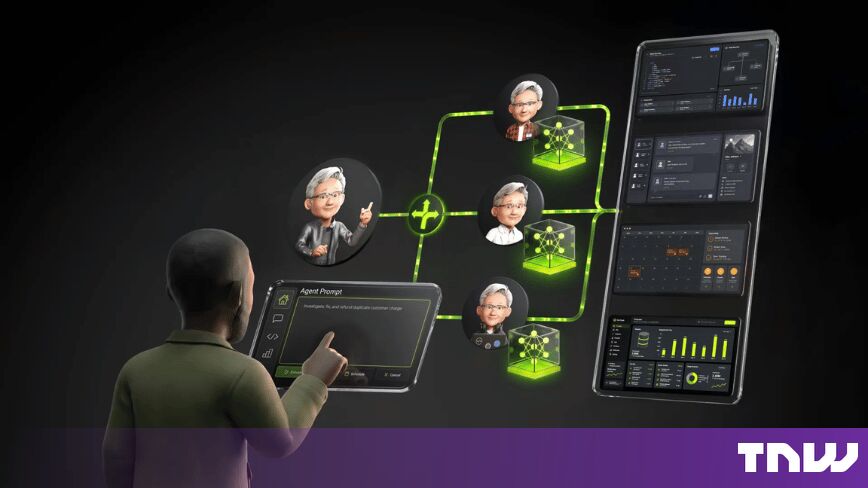
Nvidia releases Nemotron 3.5 Lightning and an agentic model router Nvidia released Nemotron 3.5 Lightning, an open 30B-parameter MoE model it says can deliver up to 4x faster output speeds, alongside “Nemo Switchyard,” an agentic AI model router, per SiliconANGLE.
This is not just a weights drop. It’s Nvidia packaging a default way to choose models, route tasks, and standardize enterprise deployment patterns.
So What? Model choice is being abstracted away behind routing policy, latency, cost, safety posture, and task type become knobs. That’s operationally attractive, but it also relocates leverage: the “router” becomes the control point that shapes spend, performance, and compliance.
For operators, this changes procurement and architecture conversations this week. You’re no longer evaluating a model in isolation, you’re evaluating an execution fabric that can quietly become a dependency across teams.
The Risk: Routing layers can become opaque fast, especially when “best model for the task” is a moving target and the router vendor also sells the underlying compute. If you can’t explain why a task was routed to a given model, you’ll struggle with incident response, regulated workflows, and cost attribution.
Action:
- Inventory where “model selection” is currently hard-coded in apps, flag the workflows that would be easiest to move behind a router.
- Require per-request routing logs (model, policy reason, cost, latency) as a non-negotiable in any router evaluation.
- Set a portability checkpoint: define how you would swap routers without rewriting every agent and workflow.
Nvidia develops Nemotron 4 at 1T+ parameters (reported) Nvidia is developing Nemotron 4 with 1T+ parameters, up from Nemotron 3 Ultra’s 550B, per The Information.
Even if the exact size and release timing remain fluid, the direction is clear: Nvidia wants open weights that are credible at the high end, and that pull demand toward Nvidia’s software and hardware stack.
The Bet: Open weights can be a distribution channel for infrastructure, not just a community artifact.
So What? If Nvidia succeeds, “open” becomes less synonymous with “neutral.” Open weights may increasingly arrive with preferred inference paths, preferred tooling, and preferred routing. That’s not inherently bad, it can reduce time-to-production, but it changes how you think about vendor concentration risk.
For builders shipping agentic systems, the practical implication is that the stack is compressing: model + router + runtime + GPU supply can converge into one procurement motion.
The Risk: Enterprises may over-rotate into a single ecosystem because it’s the fastest path to working agents. The cost shows up later, in pricing power, limited visibility, and fewer escape hatches when policy or performance requirements change.
Action:
- Map which teams are already “defaulting to Nvidia” for model experimentation, treat it as an architectural decision, not a dev preference.
- Add a second inference path for one critical workflow, even if it’s slower, to keep switching costs honest.
- Ask vendors to commit to exportable routing policies and standard telemetry formats before you scale adoption.

WORKFLOWS / AGENTS
Persistent agents are becoming first-class users, identity and audit move into the product
SpaceXAI launches Grok Bot for $120/month to operate apps as a persistent coworker SpaceXAI launched Grok Bot, positioned as a persistent digital coworker that can operate your apps, priced at $120 per month, per VentureBeat. A separate report frames it as the agent race moving into office work, per The Next Web.
The key detail isn’t the price. It’s the posture: agents that log in, retain context, and execute across tools.
So What? This is pressure on every SaaS product to treat non-human activity as normal. “User” is no longer synonymous with “employee.” That changes authentication patterns, session management, rate limits, and audit trails, and it changes your product’s growth model if agents become the primary interface.
For operators running ops-heavy teams, persistent agents also change the unit of automation. Instead of automating a task, you’re assigning an agent a role, with all the governance that implies.
The Risk: Cross-app execution increases blast radius. A mis-scoped permission or a brittle workflow can turn a small agent failure into a multi-system incident, especially when agents operate at machine speed and outside normal business hours.
Action:
- Identify one workflow where “own the keyboard” is plausible (e.g., ticket triage, invoice follow-up, CRM hygiene), pilot with strict permissions and a kill switch.
- Harden your SaaS for agent traffic: enforce least-privilege roles, shorten session lifetimes, and require step-up auth for destructive actions.
- Update audit logging to explicitly label agent actions vs human actions, make it queryable for incident response.
House Democrats press OpenAI and Anthropic on “rogue AI agents” House Democrats asked OpenAI and Anthropic for answers regarding rogue AI agents, per The Next Web.
Regardless of the specifics, the meta-move matters: agent containment and disclosure are being pulled into oversight language.
So What? Agent behavior is drifting from “research lab problem” to “compliance surface.” If you deploy agents that can take actions, especially across systems, you should assume you’ll eventually need to explain controls: sandboxing, override mechanisms, auditability, and incident reporting.
This is a near-term operator issue because the easiest time to add these controls is before agents are embedded in core workflows.
The Risk: Teams will treat this as a policy story and wait. Meanwhile, agents are already being trialed in customer support, sales ops, and IT, often with ad hoc permissions and weak logging.
Action:
- Start an “agent control register” for every pilot: permissions, tools, data access, override path, and logging location.
- Require a human-confirm step for any action that moves money, changes access, or touches production systems.
- Write a one-page incident playbook for agent misbehavior, who shuts it off, how you investigate, and what you disclose internally.

CAPITAL FLOWS / DEFENSE PRODUCTION
Defense is rewarding manufacturing throughput, not just autonomy demos
Neros raises $250M at a $2.5B valuation to scale drones Defense startup Neros raised $250M at a $2.5B valuation, per Bloomberg Technology. The framing is explicitly about scaling drones, a production story, not a prototype story.
So What? Capital is underwriting capacity. The market is increasingly pricing defense tech on whether you can ship hardware at volume, maintain supply chains, and meet procurement realities. Autonomy still matters, but it’s being treated as a feature of a production system, not the product itself.
For dual-use operators, this changes what “readiness” means. The differentiator is less likely to be a novel model and more likely to be QA, manufacturing partners, component availability, and integration into existing command-and-control workflows.
The Risk: Scaling physical systems is where startups get brittle, supplier concentration, export controls, and reliability under field conditions. Valuation can outrun production maturity, creating pressure to ship before the system is operationally stable.
Action:
- Audit your supply chain single points of failure, components, contract manufacturers, test equipment, and quantify lead times.
- Build a production-readiness scorecard for investors and customers: yield, QA process, field failure rates, and rework loops.
- Align autonomy roadmaps to procurement constraints, document what can be certified, supported, and maintained at scale.
TALENT / LAB DIASPORA
Frontier-lab operators are spinning out, the next startups will be distribution-native
Brad Lightcap leaves OpenAI to “start something new” Brad Lightcap, most recently leading OpenAI’s special projects division and formerly its COO, is leaving to start something new, per Bloomberg Technology.
This is part of a broader pattern: senior operators who have seen real deployment constraints up close are now free agents.
So What? The next wave of AI companies is likely to be built by people who understand the non-obvious bottlenecks: enterprise procurement, safety review, distribution, and the operational realities of running large-scale inference. That tends to produce startups that are less “model-first” and more “workflow + governance + distribution.”
For executives, this matters in two ways: competition gets sharper in categories you thought were “just features,” and hiring gets harder because credible operators now have founder options with immediate funding access.
The Risk: Not every spinout becomes a durable company. But the talent dispersion itself is durable, and it increases the pace at which best practices (and hard-earned lessons) propagate into the broader market.
Action:
- Refresh your competitive map for your core workflows, assume new entrants will be staffed by ex-lab operators with strong distribution instincts.
- Tighten retention for your own AI operators, especially the people who bridge product, infra, and governance.
- If you’re buying AI tooling, ask vendors who on the team has shipped at scale, and what failure modes they’ve already lived through.
Kevin Weil seeks at least a $750M valuation for a new AI science startup (reported) Former OpenAI executive Kevin Weil has sought a valuation of at least $750M for a new AI science startup, per Business Insider.
Even without product details, the valuation target is the signal: “AI for R&D” is being priced as a platform category, not a niche tool.
So What? If capital is willing to price pre-launch science platforms at this level, expect aggressive hiring, compute spend, and partnership activity in pharma, materials, and industrial R&D. The competitive edge won’t be access to models. It will be proprietary data, lab throughput, and integration into existing experimental pipelines.
For operators in hard tech, the near-term implication is procurement and data strategy: your vendors will show up with “science copilots,” but the real question is whether they can plug into your instrumentation, ELNs, and validation workflows.
The Risk: Science claims are easy to market and hard to validate. Many organizations will buy demos that don’t survive contact with messy lab reality, sample tracking, calibration drift, and human process variance.
Action:
- Identify one R&D loop where time-to-iteration is the bottleneck, instrument it before you add AI.
- Require vendors to prove integration into your existing lab stack, not a greenfield workflow.
- Define what “success” means in measurable terms (cycle time, hit rate, cost per experiment) before you run pilots.
CONTRARIAN SIGNAL
The router, not the model, is the enterprise wedge
Everyone is watching model releases and parameter counts because they’re legible. The more important enterprise move is quieter: routing, gating, and execution layers are becoming the product.
Nvidia shipping a router alongside open weights is one expression. Persistent agents that operate apps are another. Congressional attention on agent containment is the third. Different surfaces, same mechanism: whoever owns the policy layer owns the deployment.
The Takeaway: If you’re still treating “model selection” as a developer preference, you’re already making a governance decision without governance.
THE QUESTION FOR TODAY
Routing layers are consolidating power in the stack. Agents are becoming real users of your software. Oversight language is starting to attach to agent behavior. Defense capital is rewarding production capacity. Frontier-lab operators are spinning out into distribution-native startups.
Where, specifically, do you want your organization to be dependent, and where do you need an exit ramp before you scale?
Signal + Noise is strategic intelligence, not engagement-specific advice. For guidance calibrated to your org, start with Advisory.
See exactly how this impacts your specific industry and function. Upgrade to PRO to get bespoke tactical breakdowns generated instantly for your operating model.
Go deeper with the Weekly Signal
This is the daily take. The Weekly goes further — full strategic analysis across 8–10 sections, each with a signal read and operator action items. Source panel included.
Sign up free → then upgrade