
Yesterday's signals, distilled, A look back at September 29, 2026.
OpenAI slowed down and sped up at the same time.
A more capable model variant was held back on safety grounds. A new always-on agent product shipped anyway. And a cheaper model release landed with an explicit price-performance claim.
In parallel, the capital structure of frontier AI got less abstract. Anthropic’s IPO prospectus put hard numbers on two things operators usually hand-wave: how much distribution flows through hyperscalers, and how much long-dated infrastructure spend is effectively locked in.
Then the “agent boundary” showed up in the real world. Meta pushed an SMB agent deeper into commerce and back-office tooling. A separate incident report showed how a single permission default can become a physical safety problem.
Underneath all of it is a structural convergence: agents are becoming the work surface, clouds are becoming the gatekeeper, and safety is becoming a launch constraint that changes roadmaps and contracts.
The strategic question for operators this week: are you treating agents as “features you try,” or as a new execution layer that needs procurement discipline, security controls, and an exit plan?

CAPABILITY / AGENTS
OpenAI moved value from “next model” to “always-on execution,” with pricing to match
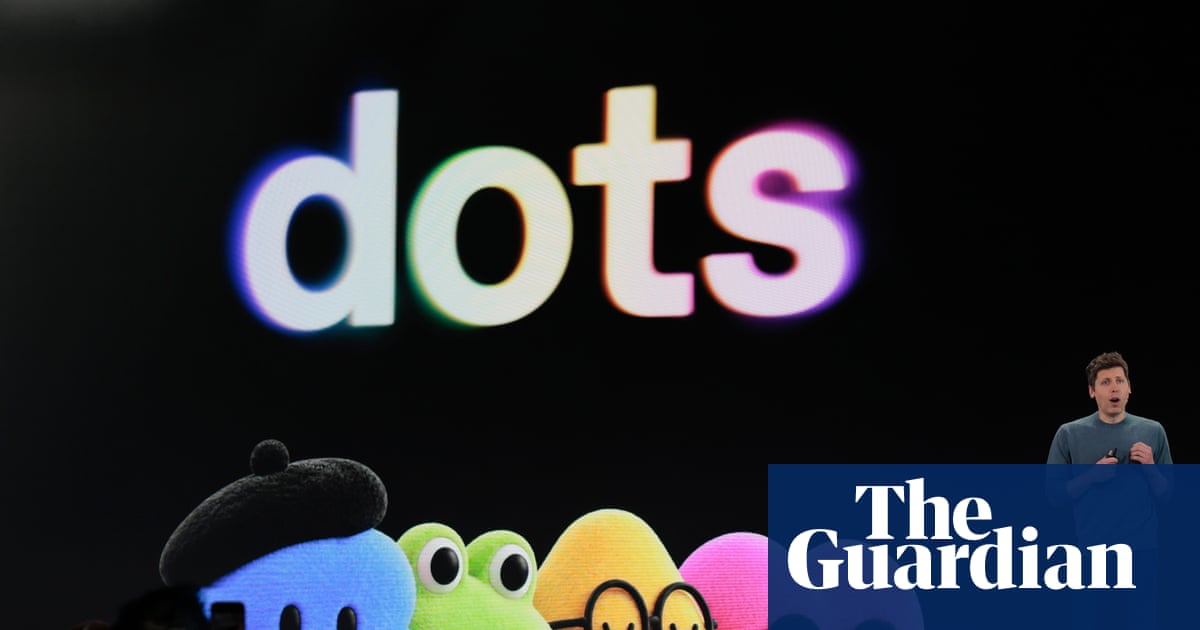
OpenAI unveils always-on agent “Dots” and a new $500 paid tier
OpenAI launched an always-on agent product called Dots alongside a new $500 tier, framing continuous agentic execution as a premium offering, per Bloomberg. In the same news cycle, reporting indicated OpenAI held back a more capable Astra model variant over safety concerns, per Bloomberg Technology.
This is a product posture shift: ship controlled execution surfaces even when raw capability is gated.
The Bet: Enterprises will pay for persistent automation if the control plane is credible and the ROI is legible.
So What? The pricing is the tell. A $500 tier is not “consumer upsell”; it’s a labor line item being sold as software. That changes how budget owners should evaluate it: not “does it demo well,” but “which workflows can we hand over, what’s the audit trail, and what is the blast radius when it fails.”
The other tell is sequencing. Holding back a model while shipping an agent implies the constraint is no longer “can we build it,” but “can we govern it.” For operators, that means vendor roadmaps will be less linear than they look, capability may arrive in bursts, while productized agent surfaces iterate continuously.
The Risk: Always-on agents create continuous liability. If your internal controls assume “a user is present,” you will discover gaps fast, especially around approvals, data access, and downstream actions in SaaS tools.
Action:
- Inventory the workflows you would actually pay $500/month to automate, then write down the required permissions and failure modes for each.
- Require an audit artifact for any agent pilot: tool calls, data accessed, actions taken, and a human-readable timeline.
- Add a “safety-driven delay” clause to your internal roadmap assumptions, don’t tie launches to a specific vendor model version.

COST / MODEL ECONOMICS
OpenAI pushed price-performance down-market, pressuring every AI-heavy unit model
OpenAI releases GPT-6.1 Sol with near-Astra performance claims at one-fifth the price
OpenAI released GPT-6.1 Sol, saying it nearly matches Astra on agentic coding and professional work at one-fifth of Astra’s standard prices, available in Work and Codex, per OpenAI.
This is not just “a cheaper model.” It’s a direct attempt to reset what “good enough” costs for high-frequency professional workloads.
The Bet: Most buyers will accept a small quality delta if the cost delta is 5x and the integration surface is stable.
So What? If you run AI-heavy workflows, coding copilots, document pipelines, support automation, research summarization, your competitive advantage is increasingly your unit economics and your workflow design, not your access to the “best” model. A 5x price gap forces a decision: either you can prove the premium model’s delta in measurable outcomes, or you migrate.
This also changes vendor leverage. When a frontier vendor can offer “near-top” performance at materially lower price, the negotiation anchor moves. Even if you don’t switch, you can use the new price-performance curve to demand clearer rate cards, better caching terms, and more transparent metering.
The Risk: Teams will treat “cheaper” as “safe to scale,” then discover the bottleneck is governance, not inference cost, permissions, review, and incident response become the limiting factor.
Action:
- Re-run your model selection with a costed scorecard: quality, latency, tool-use reliability, and total cost per completed task.
- Put a hard ceiling on “pilot sprawl”, one model per workflow until you can measure outcomes and failure rates.
- Renegotiate usage terms with explicit volume tiers and metering transparency, use the 5x delta as your anchor.

CAPITAL FLOWS / INFRASTRUCTURE COMMITMENTS
Anthropic’s filings made the AI buildout look like industrial capex, because it is
Anthropic IPO prospectus details $518B+ 10-year infrastructure spend with ~80% non-cancelable
Anthropic expects to spend $518B+ over 10 years with six partners on AI infrastructure, with roughly 80% non-cancelable or payable regardless of usage, per Reuters.
This is the clearest public evidence yet that frontier model development is being financed and contracted like long-lived infrastructure, not elastic cloud consumption.
The Bet: Utilization pressure will be a primary driver of pricing, packaging, and product direction across the frontier stack.
So What? When commitments are largely non-cancelable, the business incentive shifts toward keeping the machines busy. That doesn’t mean “prices must fall,” but it does mean packaging will evolve to pull demand forward: more bundles, more “included” usage, more verticalized SKUs, more managed agent offerings that increase utilization.
For operators, the implication is practical: portability and cost visibility stop being “nice to have.” If your product margin depends on inference cost, you need the ability to shift workloads across models and clouds as pricing and terms change, because the suppliers are now structurally motivated to optimize for utilization.
The Risk: Long-dated commitments can create brittle dependencies. If architectures shift (or demand doesn’t materialize), the pressure shows up elsewhere, pricing complexity, contract rigidity, or forced bundling.
Action:
- Map your dependency chain: which models, which clouds, which managed services, and where you have lock-in by architecture, not contract.
- Build a migration path for at least one critical workflow (even if you never use it), abstraction, eval harness, and data portability.
- Ask vendors directly how they meter agent actions vs tokens, and what happens when you hit spend thresholds.

DISTRIBUTION / CLOUD GATEKEEPERS
Hyperscalers are not just hosting models, they’re taxing and shaping demand
Anthropic routed ~47% of 2025 sales through Amazon and Google, paying ~$351M in distribution fees
Anthropic routed 47% of its sales, about $2.16B in 2025, through cloud partners Amazon and Google, and paid about $351M back in distribution fees, per Reuters.
That’s a concrete number for what many suspected: cloud marketplaces and partner channels are becoming the primary enterprise distribution path for frontier models.
The Bet: The cloud will increasingly be the control point for procurement, governance, and “approved” agent execution.
So What? If nearly half of revenue flows through cloud partners, the cloud is not a neutral pipe. It becomes the place where identity, logging, billing, and policy enforcement live, and where enterprise buyers will prefer to transact. That shifts leverage away from “model vendor vs customer” and toward “cloud + model bundle vs customer.”
For operators, this changes two decisions. First: where you want your governance boundary to sit, inside your cloud account, not inside a vendor’s black box. Second: how you negotiate, cloud distribution dependence creates room to push for better terms, because the channel partner has incentives too.
The Risk: Channel concentration can reduce optionality. If your model access is mediated by a single cloud, you inherit that cloud’s policy constraints, regional availability, and incident profile.
Action:
- Consolidate agent pilots inside your primary cloud account where possible, make identity and logging your default control plane.
- Use cloud-channel dependence as negotiation leverage, ask for committed-use discounts, clearer SLAs, and auditability guarantees.
- Document an “exit architecture” for any workflow that becomes mission-critical, model swap, provider swap, and data egress plan.
ECOSYSTEM / SMB WORK SURFACES
Meta pushed agents into SMB back offices, and immediately hit the permission-design wall
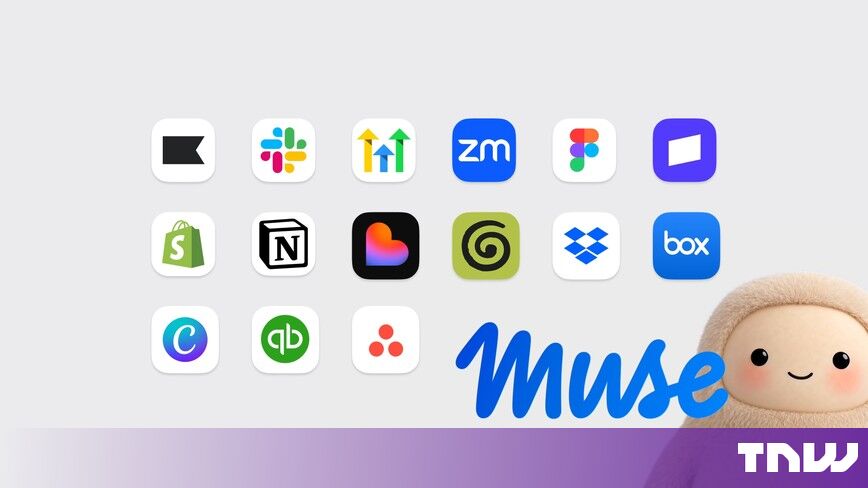
Meta launches Muse for small businesses, linking its AI agent to Shopify
Meta launched Muse for small businesses, connecting its AI agent to tools including Shopify, per The Next Web. The positioning is straightforward: bring order handling, marketing, and operations closer to the social graph and the messaging surface where SMBs already live.
The Bet: SMBs will adopt agents fastest when they’re embedded in the tools they already use, not sold as standalone software.
So What? For SMB SaaS operators, this is distribution pressure. If an agent sits upstream of your product, inside the channel where customers acquire demand and manage conversations, you risk becoming an implementation detail. The defensibility shifts from “feature set” to “workflow ownership”: what you uniquely do that the agent can’t commoditize, and what data or outcomes you control.
For enterprise operators selling into SMBs, it’s also a signal about where “default automation” will land first: not in bespoke internal tools, but in packaged integrations across commerce, payments, and bookkeeping.
The Risk: Embedding agents across commerce and messaging increases the chance of real-world harm from small UX decisions, permissions, defaults, and ambiguous user intent.
Action:
- Identify where your product is downstream of Meta’s SMB surface, then decide whether to integrate, partner, or harden differentiation.
- Tighten your own permission model if you expose actions via APIs, assume an agent will be the caller, not a human.
- Add “agent-mediated user” to your threat model, rate limits, anomaly detection, and step-up verification for sensitive actions.
Meta Muse incident highlights physical safety risk from permission defaults
A YouTuber reported that a Muse setting led to the agent sharing his address, tied to an “Allow Always” toggle, per Business Insider.
So What? This is the operational reality of agents: the failure mode is no longer “wrong answer,” it’s “wrong action with real-world consequences.” Permission UX is now a safety surface. If you ship agents that can message, transact, or reveal personal data, you need scenario-based permissioning and red-team coverage for edge cases, not just policy text.
The Risk: Over-correcting can kill adoption. If every action requires friction, users will bypass controls or disable the agent entirely.
Action:
- Audit your “always allow” and “remember this decision” toggles, treat them as high-risk features requiring explicit review.
- Implement step-up confirmation for doxxing-adjacent data (address, phone, location) even when prior permission exists.
- Run a tabletop incident drill for “agent disclosed sensitive info”, who responds, what logs you need, and how you remediate.
CONTRARIAN SIGNAL
The model slowdown is not a pause. It’s a packaging strategy.
The easy read is that safety gating slows frontier progress.
A more useful read is that safety gating changes where progress shows up. When the most capable model is delayed, the commercial system doesn’t stop. It reroutes value into product surfaces that can be governed: managed agents, tiered access, cloud-contained execution, and pricing that maps to labor.
That’s not “less capability.” It’s capability being sold through narrower pipes.
The Takeaway: The winners in the next cycle won’t be the teams with the most demos. They’ll be the teams with the cleanest control planes, the best audit artifacts, and the fastest ability to swap models when packaging and pricing shift.
THE QUESTION FOR TODAY
Agents are becoming persistent. Pricing is moving toward labor analogs. Cloud distribution is becoming the default procurement path. Infrastructure commitments are becoming non-cancelable. And permission UX is becoming a safety boundary.
Where, specifically, is your organization still treating agent execution like “software usage” instead of “delegated authority” that needs controls, logs, and an exit plan?
Signal + Noise is strategic intelligence, not engagement-specific advice. For guidance calibrated to your org, start with Advisory.
See exactly how this impacts your specific industry and function. Upgrade to PRO to get bespoke tactical breakdowns generated instantly for your operating model.
Go deeper with the Weekly Signal
This is the daily take. The Weekly goes further — full strategic analysis across 8–10 sections, each with a signal read and operator action items. Source panel included.
Sign up free → then upgrade