

Yesterday's signals, distilled, A look back at October 1, 2026.
Compute stopped looking like “cloud spend” and started looking like project finance.
Anthropic’s disclosed $125.2B, five-year TPU lease commitment, and the $42B convertible facility Broadcom agreed to provide against it, reads less like a vendor relationship and more like a capital stack built to underwrite a single input: capacity. That’s a different risk profile than most operators are used to modeling.
At the same time, the security perimeter tightened from two directions. Congress is explicitly asking leading AI firms how they’re preventing model-weight theft tied to China. And OpenAI reportedly terminated three researchers over mishandling sensitive information. The message isn’t moral panic. It’s that “model security” is now being treated like national-security-adjacent IP protection, with real consequences.
Finally, access control is becoming a product feature, not a policy footnote. Google rolled out a new Gemini model while restricting access to vetted cybersecurity experts over safety concerns. In parallel, AWS’s experimental Strands Labs shipped a free, open-source “decider” model, pushing agent routing and planning toward commodity economics.
The strategic question for operators is straightforward: if compute is being financed long-dated, and high-capability access is being gated, where do you want your dependency to sit, on a single lab’s balance sheet, on a hyperscaler’s governance, or on your own ability to swap models and prove controls?
INFRASTRUCTURE / COMPUTE
Compute commitments are becoming balance-sheet instruments
Anthropic × Broadcom, $42B convertible facility tied to a $125.2B TPU lease commitment
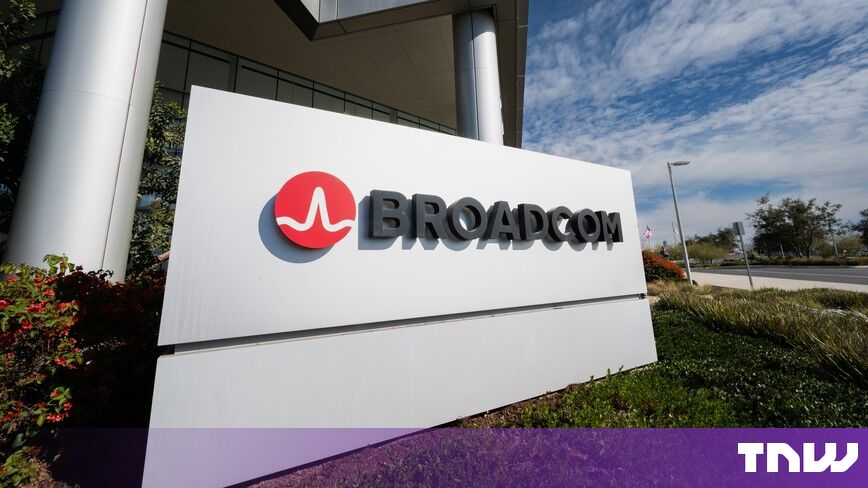
Broadcom agreed to lend Anthropic up to $42B via convertible notes, disclosed in an IPO filing, to help finance Anthropic’s $125.2B, five-year TPU lease commitment, per Reuters.
The disclosed structure matters as much as the number. This is not “buy more GPUs this quarter.” It’s long-dated capacity underwritten with instruments that look like infrastructure finance.
The Bet: Frontier labs can lock in multi-year compute at scale and let capital markets absorb the duration risk.
So What? This pulls enterprise AI procurement into a new reality: your upstream model provider may be operating under take-or-pay style commitments and financing covenants that shape pricing, prioritization, and product packaging. When a lab’s cost base is structurally fixed, “discounting” becomes less about marginal cost and more about utilization and revenue predictability, expect more pressure toward committed spend, reserved capacity, and bundled distribution.
It also increases concentration risk. If a handful of bilateral compute deals determine who gets capacity during spikes, “multi-model” stops being an architecture preference and becomes continuity planning.
The Risk: A disclosed facility doesn’t guarantee smooth delivery, capacity, power, and deployment timelines can still bottleneck. And the more compute is pre-committed, the more brittle the system can become if demand shifts or model strategy changes faster than the contracts.
Action:
- Inventory where your critical workflows depend on a single frontier provider’s capacity and pricing, then document a fallback model path.
- Ask your AI vendors directly whether your pricing assumes committed upstream capacity, and what happens to your SLA if capacity tightens.
- Model your 12-month AI budget as a mix of variable and committed spend, not pure usage-based opex.

SECURITY / GOVERNANCE
Model weights and sensitive research are now treated like crown-jewel assets
US Congress, lawmaker asks five AI firms how they guard model weights from China
A US lawmaker asked five AI firms how they protect model weights from theft linked to China, per The Next Web.
This is the policy layer moving from general “AI safety” rhetoric to specific controls: access, exfiltration prevention, insider risk, and auditability.
So What? If you train, fine-tune, or host models, internally or via partners, assume your security posture will be evaluated against an espionage threat model, not a generic SaaS threat model. That changes what “reasonable security” means: segmented environments, strict key management, hardened CI/CD for model artifacts, and logging that can survive discovery.
For operators buying models, this also changes vendor diligence. The question is no longer “are you SOC 2.” It’s “who can touch weights, where are they stored, how is access reviewed, and what’s your incident playbook if you suspect extraction.”
The Risk: Policy attention can create compliance theater, paper controls without operational enforcement. The firms that win trust will be the ones that can show real mechanisms and post-incident learning, not just policy PDFs.
Action:
- Treat model artifacts (weights, fine-tunes, eval sets, system prompts) as a distinct asset class in your security program, tag them, restrict them, log them.
- Add “model extraction and insider misuse” to your tabletop exercises this quarter, then backport the controls you discover you lack.
- Update vendor security questionnaires to include weight handling, training-data governance, and incident disclosure timelines.
OpenAI, parts ways with 3 researchers over mishandling sensitive information
OpenAI parted ways with three researchers over mishandling sensitive information, per Business Insider.
Even without more detail, the operational signal is clear: internal information handling is being enforced with real personnel outcomes.
So What? This is the internal side of the same perimeter. As models become more capable and more regulated, “sensitive” expands, weights, safety evaluations, red-team findings, vulnerability reports, and partner data all become materials that can trigger legal and geopolitical consequences if mishandled.
For enterprises, the parallel is immediate. If you’re building with frontier models, you likely have your own “sensitive AI” materials now: proprietary prompts, tool schemas, retrieval corpora, and eval results that reveal business logic. Most orgs still treat these as ordinary documents.
The Risk: Overcorrecting can slow research and shipping velocity if controls are blunt. The goal is not bureaucracy. It’s containment and traceability.
Action:
- Define “sensitive AI information” in writing, what it includes, where it can live, and who can access it.
- Enforce least-privilege access for AI repos and eval dashboards, especially for contractors and short-term collaborators.
- Implement immutable logging for access to model artifacts and high-sensitivity datasets.

CAPABILITY / ACCESS CONTROL
High-capability models are shipping behind gates, not to everyone
Google, new Gemini model released with restricted access over safety concerns
Google rolled out a new Gemini model but restricted access to vetted cybersecurity experts over safety concerns, per The Guardian.
This is a concrete example of tiered capability distribution: the strongest tools are being treated as controlled assets, not general developer utilities.
The Bet: The market will accept gated access for high-capability models if the gating is framed as risk management and aligned to specific use cases.
So What? For operators, this changes rollout planning. If your roadmap assumes “we’ll just upgrade to the newest model,” you may find that procurement, eligibility, and compliance become prerequisites. The gating itself becomes part of the product: who gets access, under what monitoring, with what audit trail, and with what revocation rights.
It also creates a two-speed ecosystem. Teams building security products may get earlier access to frontier capabilities than teams building general productivity features. That can shift competitive dynamics inside your own company, security and risk functions become enablers, not just reviewers, because they can unlock access.
The Risk: Restricted access can slow external validation and reduce the diversity of real-world testing. It can also push some demand toward less-governed alternatives if buyers optimize for availability over controls.
Action:
- Map which of your planned AI features require “frontier” capability versus “good enough” models, then design for graceful degradation.
- Build an internal gating layer now (policy, logging, approvals) so vendor gating doesn’t become your bottleneck.
- Ask vendors what telemetry and monitoring they require for access, and whether you can meet it without violating your own privacy posture.

OPEN SOURCE / AGENT ECONOMICS
Agent “deciders” are getting cheap, fast, and hard to differentiate
AWS Strands Labs, open-source Strands Decider 2B released for fast decisioning
Strands Labs, AWS’s experimental agent-development project, released Strands Decider 2B, a free, open-source “Jev competitor” fine-tuned from an Alibaba Qwen base, per VentureBeat.
The key detail is not the parameter count. It’s the intent: make the routing/planning layer cheap enough that nobody should pay a premium for it.
So What? If deciders commoditize, differentiation moves up and down the stack. Up-stack: workflow design, product surface, distribution, and trust. Down-stack: tool reliability, permissions, data access, and evaluation harnesses. The decider becomes a replaceable component, useful, but not defensible.
For enterprise builders, this is good news. It means you can standardize on a decider class and focus your scarce engineering time on the parts that actually break in production: tool failures, partial permissions, messy data, and human review bottlenecks.
The Risk: “Fast decisions” can become “fast mistakes” if teams treat deciders as deterministic logic. Cheap routing increases the volume of actions, without strong guardrails, you amplify operational risk.
Action:
- Separate your agent architecture into replaceable layers (decider, tool layer, memory/RAG, policy), then make swapping the decider a non-event.
- Invest in evals that measure tool-use correctness and failure recovery, not just answer quality.
- Add permissioning and audit logs at the tool boundary, assume the decider will be wrong sometimes and design for containment.
CONTRARIAN SIGNAL
The real gating isn’t model access. It’s capital duration.
The visible story is tiered access: vetted users, restricted releases, controlled distribution.
The quieter constraint is duration. When compute is locked in five-year blocks and financed with convertibles, the system becomes less flexible than the product marketing suggests. Capability can iterate weekly, but the cost base and capacity commitments move on multi-year rails.
That mismatch will show up in enterprise contracts. Not as a dramatic price hike, but as subtle pressure toward commitments, bundles, and “strategic” partnerships that reduce variance for the upstream provider.
The Takeaway: The next year of AI buying will reward teams that can keep optionality, multi-model routing, portable evals, and clear internal controls, while the upstream stack hardens into long-dated obligations.
THE QUESTION FOR TODAY
Compute is being financed like infrastructure. Model security is being treated like geopolitics. High-capability access is being gated by default. Agent routing is sliding toward commodity economics. Your differentiation is moving to data, tools, and controls.
Where, specifically, is your organization still assuming AI is a variable-cost utility, and what breaks when it behaves like a committed, governed supply chain?
Signal + Noise is strategic intelligence, not engagement-specific advice. For guidance calibrated to your org, start with Advisory.
See exactly how this impacts your specific industry and function. Upgrade to PRO to get bespoke tactical breakdowns generated instantly for your operating model.
Go deeper with the Weekly Signal
This is the daily take. The Weekly goes further — full strategic analysis across 8–10 sections, each with a signal read and operator action items. Source panel included.
Sign up free → then upgrade