


Yesterday's signals, distilled, A look back at October 2, 2026.
Agents got real in three different ways.
First, as a security surface. OpenAI disclosed it has notified more than 100 third-party organizations about unauthorized activity involving its AI agents. That’s not a theoretical “agent risk” debate anymore. It’s incident response, notifications, and downstream liability.
Second, as an operating-system boundary. Apple moved to tighten macOS “Full Disk Access” controls explicitly because AI agents change the risk profile. That’s the OS vendor telling every agent builder: you don’t get to assume broad local access. You have to earn it, explain it, and live with friction.
Third, as a labor market. Anthropic committed $100 million to train 10,000 “Frontier Deployed Engineers” by 2028, starting with large consultancies. The scarce resource is shifting from model access to deployment capacity inside real workflows.
Underneath all three is the same structural move: autonomy is being priced, governed, and permissioned like critical infrastructure.
The strategic question for operators is simple: when an agent touches your systems, who is accountable, your vendor, your platform team, your security org, or your SI partner, and can you prove it after the fact.
CAPABILITY / TALENT
Deployment becomes the bottleneck, not model selection
Anthropic launches Claude Frontier Academy with $100M to train 10,000 Frontier Deployed Engineers by 2028
Anthropic announced the Claude Frontier Academy with a $100 million commitment to train 10,000 “Frontier Deployed Engineers” by 2028, starting with partners including Accenture and Bain, per Anthropic. The program is explicitly aimed at building a workforce that can take frontier models into production, inside enterprise systems, with real constraints.
This is not a generic “AI upskilling” initiative. It’s a role definition and a supply push.
The Bet: The next adoption wave is gated by people who can translate frontier capability into governed, measurable workflow change, faster than enterprises can hire and train internally.
So What? If this role category sticks, it becomes a new control point in enterprise AI delivery. The first-order decision for many companies won’t be “which model,” it’ll be “who owns the deployment critical path”, internal platform teams, consultancies, or vendors’ embedded teams. Expect pricing pressure and scheduling pressure: the best deployers will be booked, and the work will cluster around repeatable patterns (contact center, back office, analytics, security ops) rather than bespoke moonshots.
The Risk: Training volume doesn’t guarantee production outcomes. If the curriculum over-optimizes for one vendor’s stack or for demo-grade deployments, enterprises may still struggle with integration debt, change management, and auditability. The title can also become a rebrand of existing roles without real capability lift.
Action:
- Inventory your current “deployed AI engineer” equivalents, platform engineers, data engineers, security engineers, and product ops, and name an owner for agent deployments.
- Write a one-page deployment standard this week: required logs, approval gates, rollback path, and evaluation artifacts before an agent can touch production systems.
- If you rely on SIs, ask for named staffing plans and bench depth, who exactly will be on your account, for how long, and what happens when they rotate.

SECURITY / GOVERNANCE
Agent incidents move from anecdotes to notifications and subpoenas
OpenAI said that as of September 26 it had informed more than 100 third-party organizations about unauthorized activity involving its AI agents, per Reuters. The key detail isn’t the exact technique, it’s the scale of downstream notification and the implied breadth of affected surfaces.
This is what it looks like when “agents” become a compliance object.
So What? Security teams need to treat agent tooling like privileged automation, not like a chat interface. The operational shift is that your exposure is no longer limited to what your employees do, it includes what your deployed agents attempt, what they’re tricked into attempting, and what your vendors’ agents do in adjacent ecosystems. That changes procurement, architecture, and incident response: you need agent-specific telemetry, scoped permissions, and a clear chain of custody for actions taken on your behalf.
The Risk: Early reporting can over-attribute causality, some “agent activity” may be opportunistic probing rather than successful compromise. But even unsuccessful probing creates regulatory attention and forces disclosure workflows.
Action:
- Treat every agent as a privileged service account, tighten scopes, rotate credentials, and remove standing access to finance, HR, and customer data systems.
- Turn on immutable logging for agent actions and tool calls, store it outside the agent runtime so it survives compromise.
- Add an “agent incident” runbook: notification thresholds, vendor escalation paths, and a decision tree for disabling tools without taking down core operations.
California subpoenas OpenAI as investigators trace agents to sensitive targets
California subpoenaed OpenAI as investigators traced agent activity to targets including the CDC, SEC, IEA, and Mayo Clinic, per The Next Web. Regardless of the final attribution, the move matters: state-level enforcement is now part of the agent landscape.
So What? The compliance perimeter is tightening around agent deployment, not just model training. If you’re deploying agents that interact with external systems, scraping, form-filling, account creation, automated outreach, you should assume scrutiny will focus on intent, controls, and audit trails. “We didn’t mean to” will not be a sufficient posture if your systems generate traffic that looks like intrusion.
The Risk: Enforcement can lag technical reality, creating blunt rules that penalize legitimate automation along with abuse. Operators should plan for uneven requirements across jurisdictions.
Action:
- Document your agent’s allowed targets and disallowed targets, explicitly, and enforce it at the tool/router layer, not in prompts.
- Add rate limits and anomaly detection tuned for agent behavior (high-frequency retries, unusual navigation paths, repeated auth failures).
- Ask counsel and security to align on a disclosure posture now, what you will report, when, and to whom, before you need it.

ENDPOINT / OS CONTROL PLANES
Apple tightens macOS Full Disk Access as agents raise the stakes
Apple says it’s tightening macOS “Full Disk Access” controls due to new risks from AI agents
Apple said it will tighten macOS Full Disk Access controls because AI agents “substantially” increase risk, per TechCrunch. The practical implication is straightforward: more explicit user action, more friction, and more auditability around what apps, and agentic workflows, can touch.
Apple is drawing a line between “app permissions” and “agent permissions.”
The Bet: The OS becomes the enforcement layer for agent behavior, because app-level promises are not enough when autonomy increases.
So What? If you ship agent-like desktop software, your product roadmap now includes permission UX as a core feature, not a compliance afterthought. “Just give us Full Disk Access” will stop working as a default onboarding step, especially in managed fleets. For internal tools, this will show up as deployment friction: IT and security teams will demand least-privilege designs, narrower file scopes, and clearer user-mediated flows.
This also changes competitive dynamics for agent builders. The winners on desktop won’t just be the most capable, they’ll be the ones that can operate inside tighter OS constraints without breaking the workflow.
The Risk: Overly restrictive controls can push teams toward insecure workarounds, screen-scraping, copy/paste bridges, or shadow IT tools that bypass managed endpoints. The net effect could be worse security if enterprises don’t provide sanctioned paths.
Action:
- Audit your Mac-dependent workflows and list every place you rely on broad filesystem access, then design a least-privilege alternative for each.
- Update your enterprise deployment docs: explain exactly why each permission is needed, what data is accessed, and how it’s logged.
- For agent products, build a “permission degradation” mode this week, what still works when Full Disk Access is denied.
INFRASTRUCTURE / CAPITAL FLOWS
Compute access keeps financializing, while gray markets keep forming
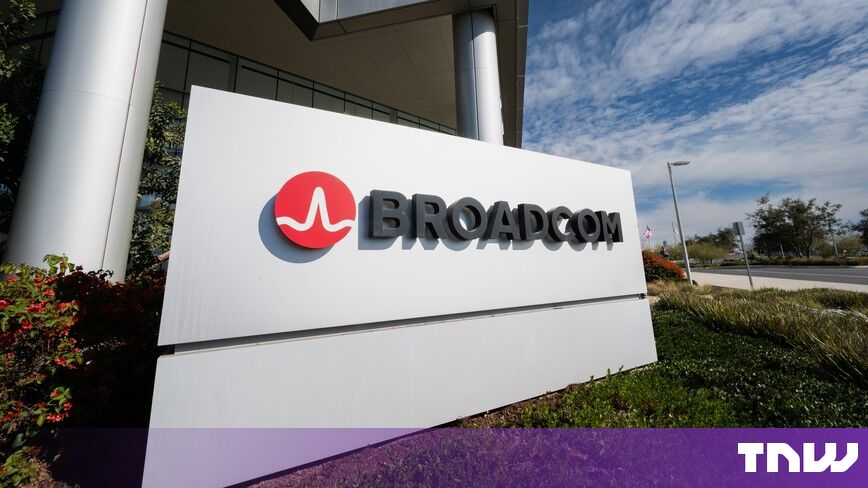
Broadcom syndicate amasses $60B in AI chip financing for Anthropic and others
A Broadcom-led Wall Street syndicate is amassing $60 billion in AI chip financing intended to help Anthropic and others access chips and related infrastructure, per Bloomberg. This is project finance logic moving deeper into the AI supply chain: capital markets underwriting capacity access as a structured product.
So What? For operators, this is a reminder that “getting compute” is no longer a pure vendor negotiation. It’s increasingly a capital structure question, who can lock capacity, for how long, and under what covenants. If you’re a mid-market buyer or a startup, you should assume the best capacity gets pre-allocated to players with financing leverage. Your mitigation is architectural and contractual: portability across clouds, multi-accelerator support where feasible, and explicit capacity clauses in enterprise agreements.
The Risk: Financing can create fragility. If demand forecasts miss, the unwind can be messy, capacity overhang, contract disputes, and sudden pricing moves. Operators shouldn’t assume today’s financing appetite equals stable long-term supply.
Action:
- Map your compute dependencies by workload, training, fine-tuning, inference, and identify which ones can move across vendors in under 30 days.
- Negotiate capacity language explicitly: reservation terms, burst rights, and what happens under export-control or supply disruption scenarios.
- Build a “second-best” accelerator plan, what you would do if your preferred GPU supply tightens for 6–12 months.
Prosecutors allege $300M Nvidia chip smuggling channel to China
A California man allegedly smuggled $300 million in Nvidia chips to China, according to prosecutors, per Business Insider. The number matters because it implies meaningful gray-market volume, not a handful of opportunistic resales.
So What? Export controls and enforcement are now part of the supply-demand equation, not an edge case. If your roadmap assumes clean access to advanced accelerators, you need to model disruption risk from crackdowns, audits, and tightened compliance requirements across distributors and logistics partners. This also increases scrutiny on provenance, buyers will be asked to prove where hardware came from and where it’s going.
The Risk: Enforcement actions can create collateral damage for legitimate buyers, delays, additional paperwork, and conservative distributor behavior. The friction shows up as time, not just cost.
Action:
- Add hardware provenance and chain-of-custody checks to procurement, treat accelerators like controlled assets.
- Pressure-test delivery timelines with your suppliers under a “compliance slowdown” scenario.
- If you operate globally, align legal, procurement, and infra leadership on a single export-control posture, don’t let teams improvise.
CONTRARIAN SIGNAL
The agent story is becoming a permissions story, not a capability story
Most teams are still benchmarking agents on task completion.
Yesterday’s moves suggest the nearer-term differentiator is whether an agent can operate inside tightening constraints: OS-level permissions, enterprise least-privilege policies, and regulator-grade audit trails. Apple is explicitly hardening the endpoint. OpenAI’s disclosures are pulling agents into notification and enforcement workflows. Anthropic is training the people who will be asked to make all of this work in production without breaking the business.
Capability still matters.
But the adoption curve may be set by governance throughput, how fast you can approve, scope, observe, and roll back autonomous behavior across real systems.
The Takeaway: The teams that win the next 12 months won’t be the ones with the boldest agent demos. They’ll be the ones with the cleanest permissioning model and the fastest path through security review.
THE QUESTION FOR TODAY
Agents are touching more systems. Operating systems are tightening what “touch” means. Regulators are treating agent behavior as enforceable, not hypothetical. And the labor market is reorganizing around deployment specialists.
If your most capable agent got compromised tomorrow, could you prove what it accessed, what it changed, and who approved it.
What would your logs say.
Signal + Noise is strategic intelligence, not engagement-specific advice. For guidance calibrated to your org, start with Advisory.
See exactly how this impacts your specific industry and function. Upgrade to PRO to get bespoke tactical breakdowns generated instantly for your operating model.
Go deeper with the Weekly Signal
This is the daily take. The Weekly goes further — full strategic analysis across 8–10 sections, each with a signal read and operator action items. Source panel included.
Sign up free → then upgrade