


Yesterday's signals, distilled, A look back at November 6, 2026.
Capital moved like the frontier is no longer a “sector” but a balance-sheet category.
OpenAI reportedly closed roughly $11B of new funding at a $1.25T valuation, with the round potentially reaching $20B. Anthropic, separately, is reportedly still aiming to list before Thanksgiving, targeting an $80B–$100B raise at a $1.25T–$1.75T valuation.
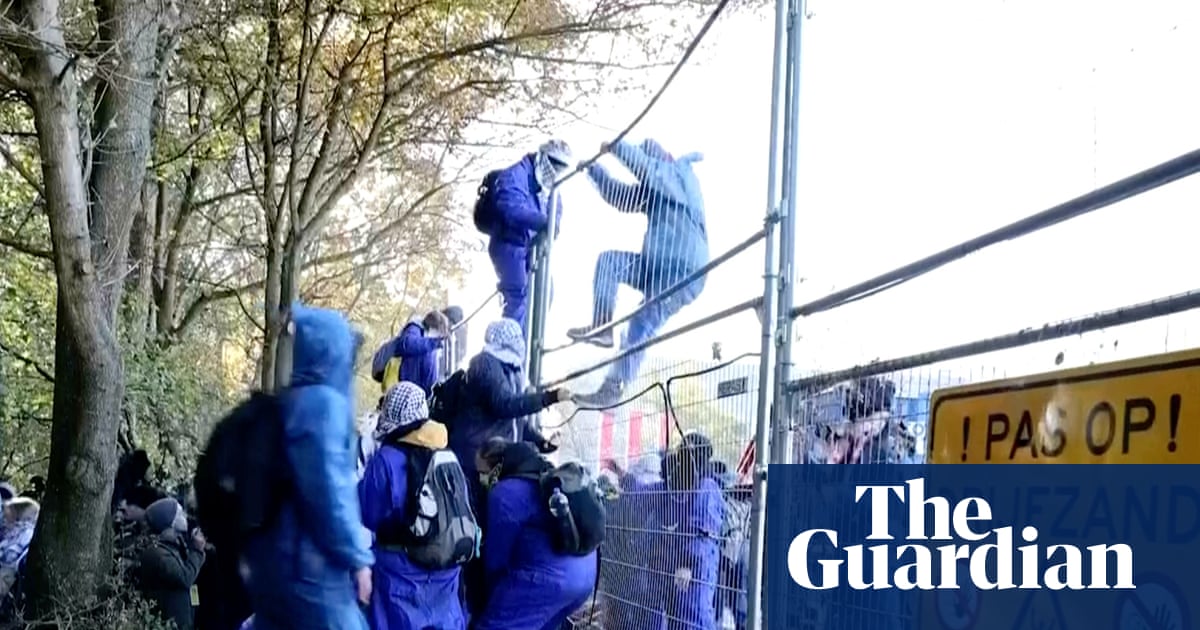
In parallel, the physical layer showed its teeth. Protesters breached a Microsoft data center construction site in Amsterdam. That’s not a policy debate. It’s schedule risk, security risk, and permitting risk collapsing into one operational variable.
And the chip stack kept tightening around bottlenecks that aren’t just “GPUs.” TSMC is reportedly considering moving into 3D DRAM manufacturing at Nvidia’s request, while China’s YMTC is pushing local equipment sourcing to 70% for its fourth fab.
The throughline: the AI economy is being financed at trillion-dollar scale while its delivery is being constrained by social license and supply-chain sovereignty. That combination changes how operators should think about dependency, contracting, and time-to-capacity.
The strategic question to carry into today: if your AI roadmap assumes “capacity will be there when we need it,” what is your actual plan for capital concentration, community friction, and memory supply becoming gating factors at the same time?
CAPITAL FLOWS / FRONTIER LABS
Frontier labs are being financed like infrastructure-grade counterparties
OpenAI closes roughly $11B at a $1.25T valuation, with up to $20B total in play OpenAI has reportedly closed on new funding of roughly $11B at a $1.25T valuation, and the round could increase to as much as $20B in total, per Bloomberg.
This is not just “more runway.” At this scale, the lab can underwrite multi-year compute commitments, talent density, and product expansion without needing near-term unit economics to carry the full load.
The Bet: The market is treating frontier capability as a durable asset class worth pre-financing, even if margins remain volatile.
So What? For operators, this changes the negotiation posture with the model layer. When a provider is capitalized like this, “we’ll switch later” becomes less credible unless you’ve already built portability and evaluation discipline into your stack. It also increases the odds that the lab pushes further up the value chain into packaged workflows, because distribution and product surfaces become the fastest way to turn capex into durable cashflow.
The practical implication: dependency is becoming longer-lived. Not because switching is impossible, but because the best-capitalized labs can keep moving the frontier and subsidizing adoption long enough to become embedded.
The Risk: A funding headline doesn’t guarantee delivered capacity, power, permits, and hardware still gate real throughput. And if the round expands toward $20B, expectations for monetization pressure can rise with it, which can show up as pricing changes or tighter commercial terms.
Action:
- Inventory where your product or internal workflows are hard-coupled to a single frontier provider (APIs, eval harnesses, fine-tunes, tool schemas).
- Renegotiate renewal terms with explicit exit ramps, data export, log retention, and model/version pinning, before your usage becomes “too big to move.”
- Stand up a quarterly bake-off cadence across at least two providers for your top 3 revenue-critical model workloads.
Anthropic reportedly plans to list before Thanksgiving, targeting $80B–$100B raised at a $1.25T–$1.75T valuation Anthropic is reportedly continuing with plans to list before the Thanksgiving holiday, expecting to raise $80B–$100B at a valuation of $1.25T–$1.75T, per Financial Times.
If accurate, this is the public-market translation of the same pattern: frontier labs moving from venture logic to mega-cap logic, governance, disclosure, and long-duration capital.
The Bet: Public markets will accept frontier labs as long-horizon infrastructure builders, not near-term margin machines.
So What? An IPO path changes the incentives around stability, roadmap signaling, and enterprise contracting. Operators should expect more formalized product tiers, longer-term commitments, and clearer “supported” vs “experimental” boundaries, because public-market scrutiny rewards predictability.
It also means procurement teams will increasingly treat frontier labs like strategic vendors, not developer tools. That shifts internal buying dynamics: security, compliance, and finance will have more say in model selection, and “shadow AI” becomes harder to justify.
The Risk: IPO intent is not IPO completion. Market windows close. Regulatory and disclosure burdens can slow shipping velocity in some areas. And valuation targets can create pressure to standardize offerings in ways that don’t match edge-case enterprise needs.
Action:
- Decide which workloads require “public-company-grade” vendor assurances (SLAs, auditability, incident response) and which can stay experimental.
- Ask your model vendors for their forward policy on deprecations and version lifetimes, then write it into your internal platform contract.
- Update your board-level AI dependency narrative, who you rely on, what you can switch, and what you cannot, before it becomes a diligence scramble.
INFRASTRUCTURE / SOCIAL LICENSE
Data center delivery is now a community and security problem, not just a construction problem
Activists breach Microsoft data center construction site in Amsterdam Activists broke into the building site of a Microsoft datacentre in Amsterdam, per The Guardian.
This is a different category than “local opposition.” Physical disruption is a reminder that AI infrastructure has become a visible political object, energy use, land use, water use, and perceived legitimacy are now part of the critical path.
The Bet: AI capacity buildouts will increasingly face direct action and local political friction in high-scrutiny regions.
So What? If you run AI workloads at scale, your risk isn’t only GPU availability or cloud pricing. It’s whether the next tranche of capacity shows up on time. Delivery risk is now shaped by community acceptance and site security, especially in Europe, where permitting and public sentiment can move faster than corporate build schedules.
For operators, this changes vendor diligence. “Where is your capacity coming from?” is no longer a curiosity. It’s a reliability question. If your provider’s expansion plan depends on contested sites, your own product timelines inherit that fragility.
The Risk: One incident doesn’t define a trendline. But it does reveal a playbook: opposition can move from hearings to disruption. Overreacting can be as costly as ignoring it, teams need measured contingency planning, not panic.
Action:
- Ask your primary cloud and neocloud providers to map your workloads to regions and specific capacity expansion plans, then flag any dependency on contested geographies.
- Build a capacity contingency plan for 2 scenarios: 90-day delay and 180-day delay in incremental compute availability.
- Add “social license and site security” to your infrastructure risk register alongside power, water, and interconnect.

SEMICONDUCTORS / SUPPLY CHAIN
The bottleneck is shifting from “GPUs” to memory and sovereignty
TSMC reportedly considers manufacturing 3D DRAM at Nvidia’s request amid shortages TSMC is reportedly considering expanding into manufacturing 3D DRAM at the request of Nvidia, its biggest customer, amid memory chip shortages, per The Information.
If this happens, it’s a structural move: the leading foundry stepping deeper into advanced memory to serve the leading AI compute buyer.
The Bet: Advanced memory becomes strategic enough that the ecosystem tolerates more vertical coordination to unblock AI system throughput.
So What? Operators should treat memory as a first-class constraint in AI planning. The next wave of performance and availability pressure may come from HBM/DRAM dynamics, packaging, and supply coordination, not just GPU die supply. If TSMC expands into 3D DRAM, it also tightens concentration risk: more of the AI system stack becomes dependent on a smaller set of manufacturing chokepoints.
For buyers, this shows up as lead times, pricing, and “who gets served first.” If you’re negotiating multi-year capacity, you should be asking how your provider is securing memory, not just accelerators.
The Risk: “Considering” is not “committing.” Even if TSMC proceeds, timelines for meaningful output can be long, and memory markets can swing. The near-term reality may still be scarcity and allocation.
Action:
- Add memory assumptions to your compute roadmap, HBM/DRAM availability, not just GPU counts, and review them with your providers this week.
- Pressure-test your 2027 capacity plan against a memory-constrained scenario where GPU supply improves but system-level throughput does not.
- If you’re building on-prem or colo, validate that your integrator’s BOM and delivery schedule explicitly covers memory and packaging constraints.
YMTC targets 70% local equipment sourcing for its fourth fab, up from just over 50% for its third China’s top memory maker YMTC plans to source up to 70% of equipment for its fourth chip factory locally, up from just over 50% for its third factory, per Reuters.
That’s a concrete step toward domestic toolchain substitution, less about rhetoric, more about procurement ratios.
The Bet: Export controls and geopolitical risk continue pushing China’s memory ecosystem toward local self-sufficiency, even if performance lags at the edge.
So What? For operators outside China, this matters in two ways. First, it suggests the China market for foreign semiconductor equipment and some upstream components may structurally compress over time, less cyclical demand, more permanent substitution. Second, it increases the odds of bifurcated supply chains: different tool stacks, different qualification regimes, different reliability profiles.
If you sell hardware, build infrastructure, or depend on memory supply, you should assume “global fungibility” keeps declining. Planning and compliance become more region-specific, and procurement gets less flexible.
The Risk: Local sourcing percentages don’t automatically translate into yield, reliability, or cost competitiveness. The substitution path can be uneven, and global supply chains still have interdependencies.
Action:
- Map your exposure to China-linked memory and equipment supply chains, direct and indirect, then identify where substitution could break your assumptions.
- Ask suppliers for region-specific BOM variants and qualification plans rather than assuming a single global configuration.
- Update your geopolitical risk model to include “toolchain divergence” as a driver of lead-time volatility.
CONTRARIAN SIGNAL
The trillion-dollar lab is not the whole story. The constraint is permissioning.
The loudest narrative is capital: trillion-dollar valuations, $11B wired, $80B–$100B IPO raises.
The quieter mechanism is permissioning, who is allowed to build, where, and under what social conditions. The Amsterdam breach is not “noise around AI.” It’s a preview of how capacity gets throttled without a single regulation changing: delays, security costs, political bargaining, and reputational risk that makes sites harder to approve.
If you’re an operator, the contrarian move is to stop treating compute as a purely financial input. It’s a stakeholder-managed asset. The best-funded labs can still be compute-constrained if the physical layer can’t expand on schedule.
The Takeaway: Capital can buy chips and talent. It can’t automatically buy local legitimacy. Your delivery plan needs both.
THE QUESTION FOR TODAY
Frontier labs are raising at trillion-dollar valuations. Data center sites are becoming protest targets. Memory is emerging as a system-level bottleneck, not a component detail. Supply chains are splitting along sovereignty lines.
Where, specifically, is your roadmap assuming “the world will cooperate”, and what is your fallback when it doesn’t?
Signal + Noise is strategic intelligence, not engagement-specific advice. For guidance calibrated to your org, start with Advisory.
See exactly how this impacts your specific industry and function. Upgrade to PRO to get bespoke tactical breakdowns generated instantly for your operating model.
Go deeper with the Weekly Signal
This is the daily take. The Weekly goes further — full strategic analysis across 8–10 sections, each with a signal read and operator action items. Source panel included.
Sign up free → then upgrade