

Yesterday's signals, distilled, A look back at November 19, 2026.
Anthropic went public. Not quietly, not as a “tech IPO,” but as a new kind of balance-sheet object: frontier model R&D and capex packaged for quarterly markets.
At the same time, Microsoft made the most important kind of model claim in 2026: not “best,” but “close enough for the workload at a materially lower unit cost.” That’s the move that changes procurement behavior.
Google pushed agent execution down to the desktop, Gemini on macOS as a computer-using layer, not a chat layer, and separately showed how much infrastructure it takes to make web agents testable and governable.
And Washington reminded everyone that the chip stack is now a policy surface, not a supply chain. Export approvals can speed up or freeze based on people and politics, not just rules.
The throughline is governance under capital pressure. Public markets want revenue discipline. Enterprises want predictable unit economics. Regulators want controllable surfaces. The question operators should carry into today is simple: where are you still assuming stability, in pricing, access, or permissioning, that the stack is no longer offering?

CAPITAL FLOWS / PUBLIC MARKETS
Frontier AI becomes a public-market asset class, and a new vendor risk profile
Anthropic begins trading on Nasdaq after IPO debut Anthropic’s debut put the company into public markets, with coverage noting the Amodeis ringing the Nasdaq bell and the stock trading above its IPO price in early sessions, per The Next Web. Tech coverage separately reported shares at $110, $27 above the IPO price, per TechCrunch.
The more structural detail is the financing shape: Reuters reported the IPO raised $81 billion and included a $26 billion strategic private placement, valuing Anthropic at about $1.5 trillion, per Reuters.
The Bet: Public investors will underwrite frontier capex as long as revenue growth and margin narratives stay legible quarter to quarter.
So What? This changes the operating environment for every enterprise buyer of frontier models. A private lab can optimize for multi-year positioning; a public lab has to explain gross margin, customer concentration, and capex cadence every 90 days. That doesn’t mean “prices go up” or “access gets worse.” It means pricing, packaging, and roadmap communication will be shaped by reporting cycles, and procurement teams should expect faster iteration on SKUs, commitments, and usage tiers.
It also tightens the coupling between “model vendor” and “capital markets mood.” If the market reprices AI infrastructure risk, your inference budget can become a second-order casualty through contract renegotiations, throttling policies, or shifting incentives toward higher-margin workloads.
The Risk: IPO-day trading is not adoption. The market can stay enthusiastic while enterprise usage patterns remain uneven, and public-market pressure can also push vendors toward short-term monetization choices that create churn for builders.
Action:
- Inventory where Anthropic (or any single frontier vendor) is a hard dependency in production flows, then document a fallback model and a fallback execution path.
- Re-open renewal language for price-change clauses, throttling, and deprecation windows, assume faster SKU churn post-IPO.
- Add a quarterly “vendor financial posture” checkpoint to your model risk review, not to speculate, but to anticipate packaging and policy shifts.
MODEL ECONOMICS / PROCUREMENT
“Near-parity at lower cost” becomes the procurement wedge
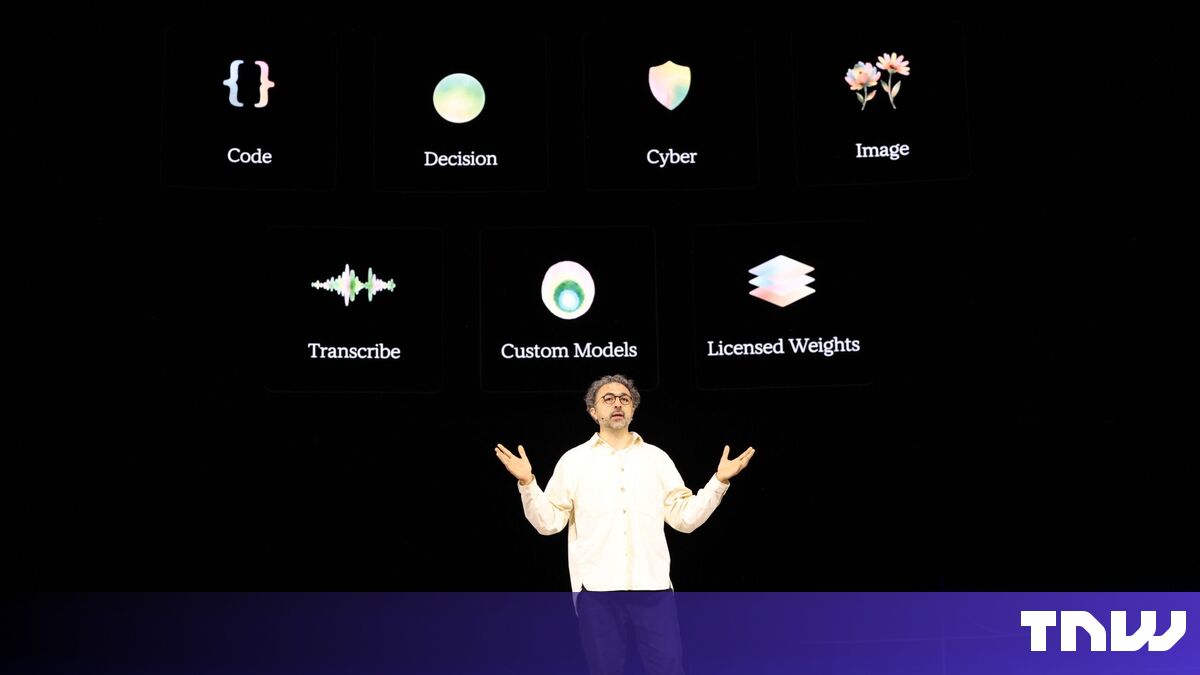
Microsoft claims MAI Code 2 reaches 98% of GPT-6.1 Sol at 40% of the price Microsoft said its MAI Code 2 matches 98% of GPT-6.1 Sol at 40% of the price, per The Next Web.
Even if the exact benchmark framing is debated, the strategic intent is clear: cost-optimized, vertically integrated coding capability positioned as a default for large-scale software work.
The Bet: For code workloads, “best model” matters less than “best cost per accepted change” at enterprise scale.
So What? This is the repricing mechanism for the next planning cycle. Coding is one of the few LLM categories where enterprises can measure ROI with real telemetry: PR throughput, incident rate, test coverage, cycle time. If a major platform can credibly offer near-parity at a steep discount, it forces every buyer to separate two things they’ve been conflating: model quality and workflow quality.
Operators should read this as pressure toward portfolio procurement. One premium model for the hardest tasks. One cheaper model for the long tail. And a harness that routes work based on risk, not developer preference. The winners won’t be the teams that pick the “best” model. They’ll be the teams that can swap models without breaking their SDLC, and can prove cost-per-outcome.
The Risk: “98%” claims can hide where the remaining 2% lives, security-sensitive code, concurrency edge cases, or long-horizon refactors. If you route too much work to the cheaper tier without guardrails, you can buy back the savings in review burden and production incidents.
Action:
- Run a two-week bake-off using your own repos, measure cost per merged PR and post-merge defect rate, not benchmark scores.
- Implement routing rules this week: premium model for auth, payments, infra, and security code; cheaper tier for tests, docs, refactors, and scaffolding.
- Renegotiate enterprise contracts around unit economics, ask for explicit price floors, volume tiers, and deprecation notice periods.

EXECUTION SURFACES / AGENTS
The desktop becomes a governed automation layer, and the browser becomes a test environment problem
Google brings Gemini “computer use” to macOS Google’s Gemini on Mac can now use your computer, per The Verge. TechCrunch described the same shift as Gemini gaining the ability to use your Mac for you, organizing files, filling forms, and running multistep workflows, per TechCrunch.
This is not just another assistant feature. It’s a permissioning event. The agent is now operating inside the user’s most privileged surface: local files, local apps, and identity-bearing sessions.
The Bet: The next distribution advantage is not “best chat,” but “best governed execution” on the surfaces people already live in.
So What? For operators, this is the moment to stop treating desktop agents as a novelty and start treating them like privileged automation. If an agent can click, type, drag files, and authenticate, it can also exfiltrate, mis-route, or silently change state. The control plane becomes: what can it touch, what does it log, and how do you prove what happened after the fact.
This also changes product strategy for macOS-native SaaS. Your UI is no longer only for humans. It’s for agents. Teams that make their workflows legible to automation, stable UI patterns, accessible semantics, robust audit logs, will be easier to integrate into the new execution layer. Teams that rely on fragile UI flows and hidden state will become “hard to automate,” which increasingly means “hard to buy.”
The Risk: Early “computer use” systems can be brittle. If reliability is uneven, enterprises may ban the feature outright rather than govern it. And if logging is insufficient, incident response becomes guesswork.
Action:
- Treat desktop agents as privileged software this week, define allowed apps, allowed directories, and blocked actions for corporate devices.
- Require logging for any agentic execution in regulated workflows, capture prompts, actions, and resulting state changes.
- Audit your product’s UI flows for automation brittleness, identify where an agent would fail silently and where you lack an audit trail.
Google builds a “mirror dimension” internet to test Chrome AI agents Wired reported Google built a giant “mirror dimension” internet to test its Chrome AI agents, per Wired.
The important part isn’t the spectacle. It’s the implied requirement: web agents at scale need controlled environments for evaluation, safety testing, and repeatability.
The Bet: Agent reliability will be won by teams with better harnesses and better test worlds, not just better base models.
So What? If you’re building web agents, you’re now in the business of simulation. Rate limits and ToS compliance are table stakes; the harder problem is reproducible evaluation across a web that changes daily. A “mirror internet” is a statement that the serious players are building deterministic sandboxes to measure success, failure, and policy adherence.
This matters because it shifts cost and timeline. The agent isn’t just a model call. It’s an environment, a harness, an eval suite, and a governance layer. Teams that budget only for inference will underbuild the real system and then misread reliability as “model weakness” rather than “test weakness.”
The Risk: Synthetic or mirrored environments can diverge from the real web. If your eval world is too clean, you’ll ship agents that fail in production in ways your harness never saw.
Action:
- Stand up a minimal “mirror” for your top 20 target sites, snapshot flows, freeze DOM variants, and build replayable tests.
- Instrument agent runs with step-level telemetry, timeouts, retries, DOM drift, auth failures, so reliability work is diagnosable.
- Add a governance gate before production rollout, define what “safe failure” looks like when the agent hits ambiguity.
GEOECONOMICS / SUPPLY CHAIN GOVERNANCE
Export controls are now a timing variable, not a static constraint
US official reportedly rushed Nvidia H200 approvals for China A report said a senior BIS official pushed to fast-track approvals for Nvidia H200 exports to China, per The Next Web.
Regardless of the specific outcome, the operational signal is that enforcement tempo and approval pathways can swing based on internal policy dynamics, not just published rules.
The Bet: Compute access will be governed through discretionary processes as much as through formal restrictions.
So What? If you’re an operator building capacity plans, you can’t treat export controls as a binary “allowed/not allowed.” You have to treat them as lead-time risk. Deals can slip or accelerate. Suppliers can change allocation behavior. And your own customers may face sudden constraints that change demand.
This is especially relevant for anyone selling AI products into globally distributed enterprises. Your customer’s ability to run workloads in a given region may change faster than your sales cycle. That creates contract risk, SLA risk, and reputational risk if you can’t deliver where you said you could.
The Risk: Policy volatility can cause overreaction. Teams can waste cycles building elaborate contingencies for scenarios that never materialize, while ignoring more probable operational bottlenecks like power, networking, and delivery timelines.
Action:
- Map your GPU and accelerator dependencies by region and supplier, include “approval lead time” as a first-class variable.
- Add contract language for region-specific delivery and substitution, don’t promise a geography you can’t control.
- Build a contingency plan for workload placement, identify which workloads can move, which cannot, and what breaks when they do.
IN PRACTICE
Most teams still run “model vendor management” like SaaS procurement.
That’s the wrong mental model now.
You’re buying a governed capability that sits inside your workflows, touches privileged surfaces, and is priced under capital-market pressure. The right operating unit is not “vendor.” It’s “dependency.”
In practice, that means three artifacts you can create quickly:
A dependency map that names where model calls sit in production, what they touch, and what breaks if they degrade.
A routing policy that defines which tasks can use cheaper models and which must use premium tiers.
And an execution log standard for any agent that can take action, not just generate text.
For the full breakdown, reach out for a Field Report.
CONTRARIAN SIGNAL
The real moat isn’t the model. It’s the audit trail.
The loud story yesterday was capital and capability: a frontier lab entering public markets, a hyperscaler claiming near-parity at lower cost, a platform pushing agents onto the desktop.
The quieter story is that every one of those moves increases the value of governance primitives: logging, permissioning, reproducible testing, and deprecation discipline.
When agents can act, the question stops being “is it smart.” It becomes “can you prove what it did.” That’s not a compliance tax. It’s the prerequisite for scaling automation into real work without turning incident response into folklore.
The Takeaway: If you can’t audit it, you can’t scale it. The teams that treat auditability as a product feature will move faster with less risk.
THE QUESTION FOR TODAY
Frontier AI is now priced by public markets. Coding models are being sold on unit economics, not mystique. Desktop agents are becoming privileged automation. Web agents are becoming an environment and eval problem. Compute access is increasingly a policy-timed variable.
Where are you still operating as if model access, pricing, and execution permissions are stable?
Signal + Noise is strategic intelligence, not engagement-specific advice. For guidance calibrated to your org, start with Advisory.
See exactly how this impacts your specific industry and function. Upgrade to PRO to get bespoke tactical breakdowns generated instantly for your operating model.
Go deeper with the Weekly Signal
This is the daily take. The Weekly goes further — full strategic analysis across 8–10 sections, each with a signal read and operator action items. Source panel included.
Sign up free → then upgrade