
Yesterday's signals, distilled, A look back at June 9, 2026.
Frontier capability got cheaper and more available.
On-device intelligence got real, at a scale that forces product teams to treat “offline” as a first-class mode, not a degraded fallback.
And the physical layer kept asserting itself: servers are now financed like infrastructure projects, and data centers are increasingly constrained by labor, components, and power-adjacent systems rather than “cloud capacity” in the abstract.
The throughline is a quiet repricing of assumptions. Model access is being tiered by risk class. Inference is being pulled toward the edge. And the capex stack is moving toward public-market discipline, where working capital, margins, and delivery schedules matter more than narrative.
The strategic question operators should sit with this week: where are you still planning as if capability, distribution, and capacity are all “flat”, when each is now gated by policy, device constraints, and capital?
CAPABILITY / MODEL ACCESS
Frontier models are splitting into permissioned tiers, and the price floor just moved
Anthropic, Claude Fable 5 goes generally available; Mythos access expands under gating
Anthropic released Claude Fable 5 as its most powerful generally available model, while keeping the full Mythos tier constrained and expanding access to more vetted organizations, with explicit blocks around high-risk domains like cyber and biology, per TechCrunch.
This is not just a model launch. It’s a productization of “capability classes”, where the same underlying frontier line can be packaged into different risk envelopes and sold to different buyers.
So What? The market is moving from “which model is best” to “which tier can you qualify for.” If your roadmap depends on high-risk assistance (security testing, exploit analysis, bio workflows, sensitive intel), access becomes a vendor relationship problem, controls, auditability, and use-case governance, not a prompt engineering problem. Separately, once Mythos-class capability is broadly usable for mainstream software and knowledge work, the baseline for internal automation jumps, teams still architecting around last year’s constraints will under-automate by default.
The Risk: Tiering can create brittle workflows, teams build processes that silently fail when a model refuses, rate-limits, or policy-blocks a step. Also, “safe” variants can lull buyers into skipping their own controls, your risk posture can’t be outsourced to a model card.
Action:
- Inventory workflows where “high-risk domain” blocks would break execution (cyber, bio, sensitive data handling) and design explicit fallbacks this week.
- Ask your model vendor for the qualification path to restricted tiers, what audits, logging, and governance artifacts they require.
- Re-run your automation roadmap assumptions for engineering and research tasks, assume higher baseline capability is now available to competitors.
EDGE / PLATFORM
Apple is making on-device inference a default product primitive
Apple, 20B-parameter on-device model (AFM 3 Core Advanced) and a new Siri app layer
Apple unveiled new Apple Foundation Models, including a 20B-parameter multimodal on-device model (AFM 3 Core Advanced) alongside additional cloud models, per The Next Web.
In parallel, Apple’s Siri direction is being framed less as “a better assistant” and more as a systemwide interface layer that can orchestrate actions across apps, an enterprise workflow surface as much as a consumer feature, per VentureBeat.
So What? On-device at 20B parameters changes what “AI-ready” means for iOS products: latency, privacy, offline operation, and cost structure can all shift, if you design for it. The bigger structural move is distribution. If Siri becomes the interaction layer for approvals, retrieval, and task execution, the front door to your product and your internal tools may become an OS-mediated agent surface, where Apple’s permissioning, UI conventions, and tool APIs shape what users do first.
The Risk: On-device capability will be uneven across the installed base, hardware fragmentation becomes model fragmentation. And if Siri becomes a workflow layer, enterprises will face a new governance problem: action execution through an OS agent can bypass the controls they built for “app-only” usage unless identity, logging, and policy hooks are explicit.
Action:
- Identify your top 3 iOS user journeys where offline or low-latency inference would materially change conversion, retention, or support load, prototype one.
- Map which internal workflows could become “Siri-addressable” (approvals, ticketing, CRM updates) and define the minimum audit/logging you’d require before enabling it.
- Review your iOS permissioning and data access assumptions, assume more actions will be initiated via an OS-level agent, not a single app UI.
INFRASTRUCTURE / CAPITAL FLOWS
AI hardware is now a balance-sheet game, and public markets are being pulled in
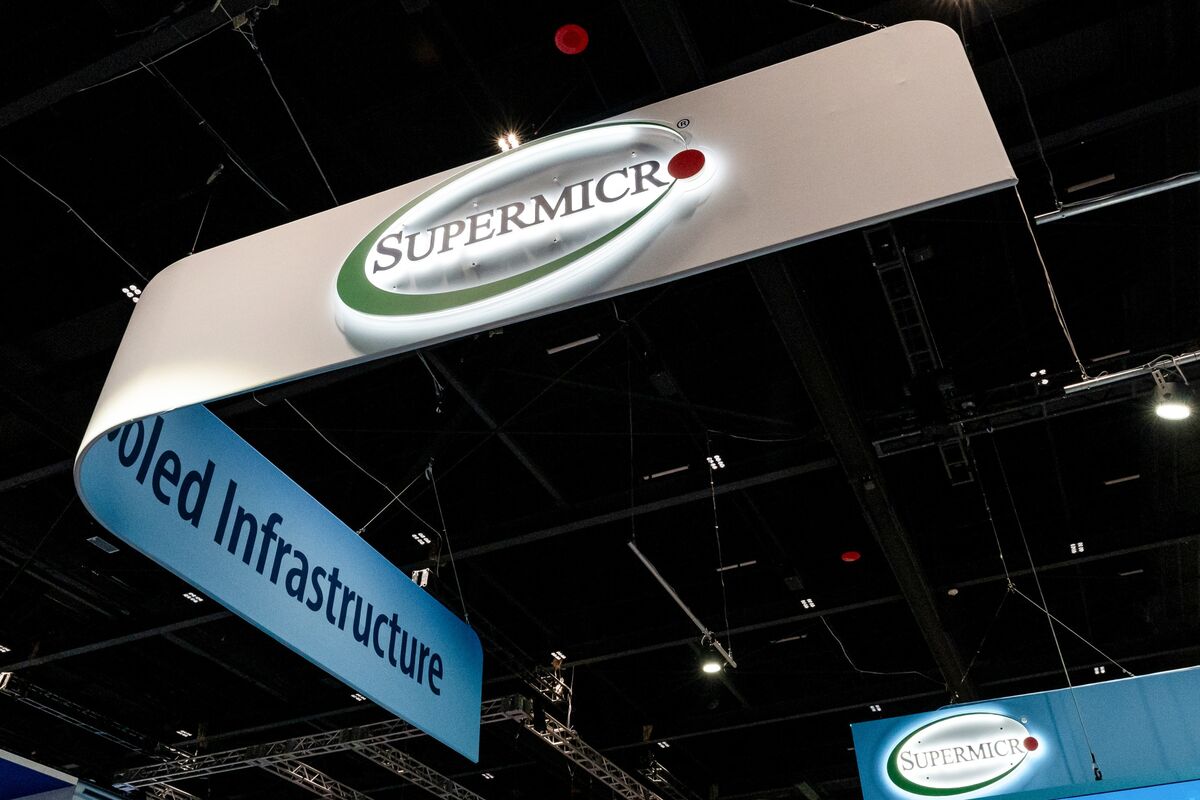
Super Micro, $7B equity raise to fund components for AI server orders
Super Micro said it aims to raise $7B through equity and equity-linked financing to purchase components needed to fulfill AI server orders, per Bloomberg.
This is a clean tell: demand is not just high; it’s working-capital intensive enough that server assembly starts to look like infrastructure finance.
So What? For operators, “vendor capacity” is increasingly “vendor financing.” Delivery timelines and pricing will track suppliers’ access to capital markets and their ability to pre-buy constrained components. If you’re planning cluster expansions, the risk isn’t only GPU allocation, it’s whether your rack supplier can finance the bill of materials fast enough to meet your schedule.
The Risk: Equity-funded component buying can amplify cyclicality, if demand softens or component pricing shifts, vendors can get caught with expensive inventory or compressed margins, and customers inherit schedule volatility. Also, concentration risk rises if everyone chases the same few assemblers.
Action:
- Stress-test your compute plan against a 8–12 week slip in rack delivery, document what breaks operationally and commercially.
- Diversify at the rack/integrator layer where feasible, qualify a second source for critical configurations.
- Negotiate delivery and substitution clauses now, treat “equivalent component” language as a performance and compatibility risk, not legal boilerplate.
INFRASTRUCTURE / LABOR
The constraint is shifting from “GPUs” to “people who can build the facility”
Meta, data center jobs and construction pipeline becomes a strategic dependency
Meta highlighted the labor reality behind data center buildouts, construction, electrical, fiber, and high-voltage roles as a gating factor for AI infrastructure expansion, per Business Insider.
This is the physical-world counterpart to the server financing story: even with capital and chips, you still need crews, permits, and timelines.
So What? If your roadmap assumes you can “burst to cloud” indefinitely, you’re implicitly assuming the supply chain for land, power, transformers, switchgear, and skilled labor is elastic. It isn’t. The organizations that plan capacity like a real estate and labor problem, multi-quarter, region-specific, permit-aware, will have fewer surprises than teams treating compute as a purely software procurement.
The Risk: Labor programs don’t instantly create capacity, training and certification take time, and local permitting can dominate schedules. Overbuilding in the wrong geography can strand capital if power delivery or community constraints tighten.
Action:
- Add a physical feasibility checkpoint to your compute plan, power availability, permitting timeline, and local labor capacity by region.
- Ask your colocation and cloud partners for their build pipeline constraints, where they are labor-limited versus equipment-limited.
- Identify which workloads can be shifted to lower-power or more flexible footprints (batch, asynchronous, off-peak) to reduce peak capacity pressure.
CONTRARIAN SIGNAL
“Safety gating” is becoming a commercial feature, and a procurement filter
The visible story yesterday was capability: Mythos-class intelligence is now broadly usable, and Apple can run serious models on-device.
The quieter story is that “who gets what” is becoming a product surface. Labs are learning to ship frontier capability in segmented forms, restricted tiers for vetted partners, constrained tiers for everyone else. That’s not only about safety. It’s also about controlling liability, shaping demand, and creating a qualification moat that looks a lot like enterprise procurement.
Meanwhile, Apple is doing a parallel move at the platform layer: shifting intelligence onto the device changes the privacy and data-flow story by default, which can become its own gating mechanism for what enterprises allow.
The Takeaway: Access, not raw capability, is becoming the differentiator in more workflows, your governance posture is now part of your feature set.
THE QUESTION FOR TODAY
Frontier capability is being packaged into tiers. On-device inference is becoming a default expectation in major ecosystems. Compute delivery is increasingly constrained by financing and labor, not just chips. Your competitors can buy more capability for less money than they could last quarter. Your workflows will break in new ways, policy refusals, device constraints, delivery slips.
Where are you still depending on “flat access” to models, “always-on cloud,” or “guaranteed capacity”, and what is your fallback when those assumptions fail?
Signal + Noise is strategic intelligence, not engagement-specific advice. For guidance calibrated to your org, start with Advisory.
See exactly how this impacts your specific industry and function. Upgrade to PRO to get bespoke tactical breakdowns generated instantly for your operating model.
Go deeper with the Weekly Signal
This is the daily take. The Weekly goes further — full strategic analysis across 8–10 sections, each with a signal read and operator action items. Source panel included.
Sign up free → then upgrade